Español
 English
 Français
 Português
 Deutsch
 Italiano
Banned Nvidia Blackwell Racks Emerge in China: A Data Center Linked to a $14M Loan and Alleged Spy Alice Huang
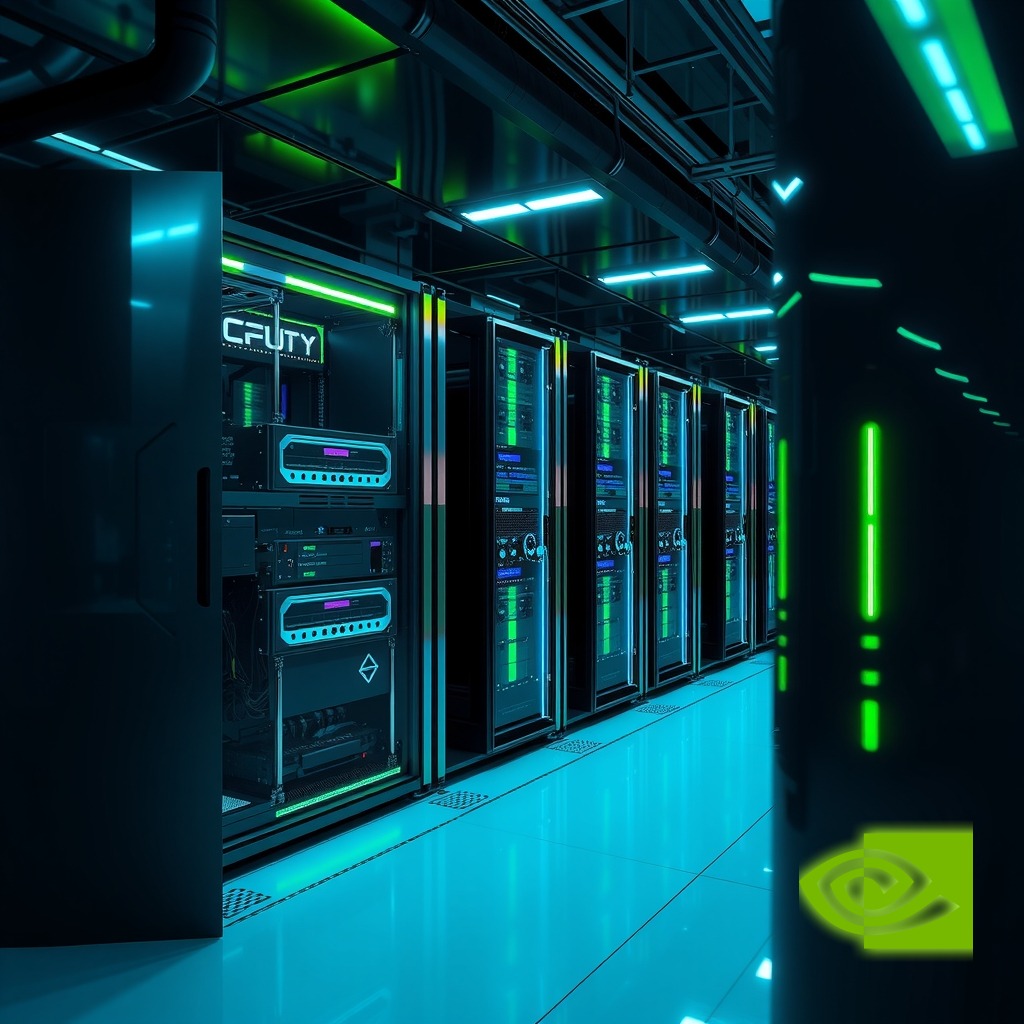 AI-generated
1. Context and Highlights
The geopolitics of advanced semiconductors has suffered a new earthquake following the detection of Nvidia Blackwell server racks, the flagship graphics processing architecture banned from export to the Chinese market, operating inside a data center on mainland territory. This finding does not merely constitute an administrative infraction of trade controls dictated by Washington, but rather the visible manifestation of an intricate financial network and covert operations involving a 14 million dollar credit line and the alleged participation of Alice Huang, a key figure in investigations regarding illicit transfers of critical technology.
The impact of this revelation transcends the strictly legal realm to strike at the waterline of AI supply chains on a global scale. While the world's most advanced laboratories compete to integrate high-density silicon to train complex models such as frontier models or the open-architecture ecosystem, the vulnerability of customs and secondary distribution channels demonstrates that physical restrictions on silicon encounter insatiable economic resistance. The ability to divert hardware valued in tens of millions of dollars toward embargoed jurisdictions exposes systemic traceability flaws that Western regulators are only beginning to comprehend.
For the tech industry, this episode redefines compliance risks and forces major infrastructure providers to tighten end-destination audit protocols. The presence of Blackwell silicon at the epicenter of Asian computing alters the tactical balance in the development of large language models and multimodal systems, forcing analysts to rethink the real effectiveness of trade bans in the era of financial hyperconnectivity and high-precision technological smuggling.
2. Key Technical Aspects
From a systems engineering perspective, Nvidia's Blackwell architecture represents a radical leap forward compared to previous generations like Hopper, designed specifically to resolve critical bottlenecks in training and inference for models with hundreds of billions of parameters. The integration of the second-generation Transformer Engine, combined with a high-speed NVLink interconnect capable of reaching massive bidirectional speeds per GPU, makes these racks irreplaceable infrastructure components for building AI superclusters. Their clandestine arrival in China implies that local actors have managed to bypass not only customs barriers, but also the complex thermal, electrical, and liquid cooling requirements demanded by these high-density cabinets.
Blackwell racks operate at power consumption levels exceeding one hundred kilowatts per cabinet, requiring advanced direct-to-chip liquid cooling systems to prevent thermal collapse. The fact that an installation in China was able to integrate and commission these systems suggests that the supporting infrastructure, specialized cooling piping, high-capacity redundant power supplies, and industrial power management systems, was adapted or imported in parallel long before the compute servers crossed borders. This demonstrates meticulous logistical planning that combines covert civil engineering with fragmented supply chains across intermediate jurisdictions.
The flow of the seized or detected racks reveals sophisticated evasion patterns that exploit free trade zones and shell companies in Southeast Asia and the Middle East. The units, originally billed to legitimate data centers in permitted geographies, experienced logistical diversions in transit or were re-exported after partial disassembly to mask their serial numbers and authentication firmware. This modus operandi poses a major technical challenge for Nvidia and original equipment manufacturers, who must now evaluate the implementation of remote shutdown mechanisms based on geofencing and mandatory hardware telemetry.
The discovered infrastructure was designed to power deep learning workloads at a scale that directly competes with Western clusters used to refine advanced architectures such as frontier models. By having Blackwell silicon, local engineers can bypass the memory bandwidth and latency limitations imposed by the adapted and trimmed chips that Nvidia was forced to legally market in China under previous performance thresholds.
Forensic analysis of the financial transactions associated with the data center reveals that the $14 million loan served as an initial liquidity vector to cover logistical cost overruns, bribe payments to customs intermediaries, and the acquisition of high-speed peripheral network components (such as InfiniBand switches) necessary to interconnect the compute nodes. The financial engineering behind this operation demonstrates that venture capital operates in parallel with industrial intelligence networks, using opaque corporate vehicles to mask the final destination of the funds.
Alice Huang's involvement in this framework underscores the convergence between traditional corporate espionage and the illicit acquisition of critical technological assets. Preliminary investigations indicate that Huang coordinated the network of front men responsible for signing data center space lease contracts and channeling tranches of the bank loan through accounts in tax havens, minimizing the digital traceability of the monetary operations linked to the direct purchase of the graphics processors.
3. Industry Impact and Market Consequences
The discovery of this equipment on Chinese territory shakes the foundations of the global semiconductor market and forces an urgent review of regulatory compliance policies in the enterprise sector. Technology companies operating internationally now face unprecedented regulatory scrutiny from the U.S. Bureau of Industry and Security, which will likely tighten audits on primary buyers of AI hardware, regardless of their declared geographic location.
| Risk Vector | Operational Impact | Current Mitigation Measure |
|---|---|---|
| Transit Diversion | High (Leakage of critical silicon to embargoed zones) | End-destination audits and activation telemetry |
| Front Companies | Critical (Opaque financing via cross-credits) | Reinforced Know Your Customer (KYC) and capital traceability |
| Component Resale | Moderate (Evasion of secondary customs controls) | Blockchain registry of GPU serial numbers |
For cloud service providers and hyperscalers, the incident dramatically increases the operational costs associated with regulatory compliance. Verification protocols now demand continuous monitoring of the physical location and operational status of every installed accelerator, limiting flexibility in reselling or transferring equipment between computing regions. This added friction slows down the expansion of infrastructure capacity globally and drives up the cost per gigaflop for model developers.
Within the Chinese AI ecosystem, the arrival of these racks temporarily relieves pressure on local laboratories that rely on maximum-power silicon to compete at the technological frontier. Although the domestic industry has made significant progress in developing alternative accelerators and algorithmic optimization techniques, the scarcity of nodes based on Blackwell-class architectures remained the main bottleneck to achieving parity in training massive, next-generation foundational models.
The financial implications for Nvidia translate into a complex dilemma: on one hand, the unbridled demand demonstrates the incalculable value of its technology; on the other, the risk of regulatory sanctions and government scrutiny over its distribution channels force the company to tighten controls, which inevitably slows down delivery times to legitimate clients and creates tensions with civic and commercial bodies in Washington.
4. Market Perspectives
Industry analysts agree that traditional trade sanctions based on national borders are showing accelerated obsolescence in the face of global capital fluidity and decentralized logistics networks. The ability to smuggle hardware as bulky and complex as Blackwell racks into a restricted jurisdiction demonstrates that controls based exclusively on export documentation are insufficient to stem the tide of technological demand.
From a corporate strategy standpoint, the legal departments of major technology companies in Silicon Valley and Europe are redesigning their supply contracts to include severe penalty clauses and audits by independent third parties. The figure of Alice Huang and the 14 million-dollar loan illustrate how money laundering and high-tech smuggling have merged into a new criminal typology that requires the coordinated intervention of financial intelligence and international law enforcement agencies.
Industrial cybersecurity experts suggest that the only effective long-term defense lies in the implementation of a native silicon "kill switch," a mechanism whereby graphics processors require a periodic authentication signal from Western root servers to remain operational. If a chip loses connection or detects a prolonged geographical or network anomaly, the hardware permanently self-deactivates, rendering the offender's investment useless.
However, the implementation of such absolute control measures raises concerns among legitimate users, who fear that dependence on constant remote validation violates their operational sovereignty and exposes their critical infrastructures to unforeseen security vulnerabilities. The debate over the balance between national security and the operational autonomy of commercial data centers thus enters a phase of maximum friction.
5. Future Outlook
In the short term, the disclosure of this case will trigger a wave of surprise inspections in data centers worldwide by foreign trade authorities of the United States and its allies. Over the next six months, licensing requirements are expected to tighten for the export of any high-speed networking or cooling component destined for emerging economies or regions with a risk of re-export.
In the medium term, silicon manufacturers will accelerate the adoption of hardware encryption technologies and cryptographic authentication on the silicon. By the end of the decade, artificial intelligence processors are likely to incorporate hardware geolocation systems and integrity certifications based on unalterable microcode, making the operation of components outside authorized geographic coordinates technically unviable.
In the long term, this episode will accelerate the definitive fragmentation of the global technology supply chain. With geopolitical blocs building independent and impermeable technological ecosystems, dependence on Western silicon in restricted markets will drastically decline, driving local self-sufficiency and consolidating parallel technological standards that will operate outside traditional regulations.
6. Conclusion and Assessment
The unauthorized emergence of Nvidia Blackwell racks in a mainland Chinese data center, fueled by a $14 million financing network and orchestrated with the alleged involvement of Alice Huang, definitively exposes the severe vulnerabilities inherent in physical semiconductor export controls. Throughout this analysis, we have dissected the immense thermal and architectural demands of operating Blackwell infrastructure, the sophisticated logistical routing and front-company mechanisms utilized to evade international customs, and the profound regulatory shockwaves rippling across global supply chains. Ultimately, this high-stakes episode demonstrates that traditional border-based trade restrictions are buckling under the intense economic pressure of frontier AI development, forcing both semiconductor manufacturers and international authorities toward radical technological enforcement measures like hardware telemetry and silicon-level kill switches to protect critical computing assets.