Español
 English
 Français
 Português
 Deutsch
 Italiano
FCC Approves SpaceX Deployment of Up to One Million AI‑Chip Satellites: The Revolution of Orbital Data Centers
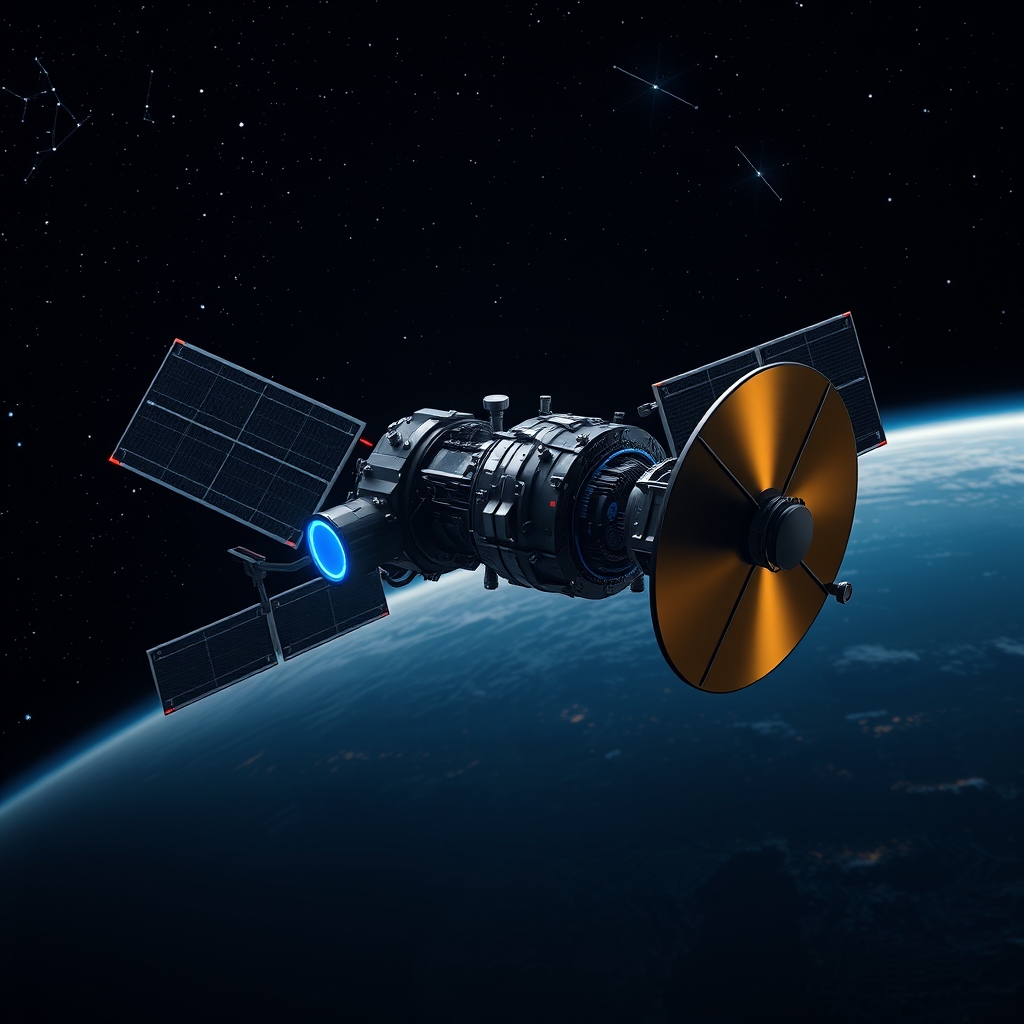 AI-generated
1. Context and Highlights
On Wednesday, the FCC issued final authorization for SpaceX to deploy up to one million satellites equipped with AI chips under the “Starmind” initiative. This decision marks the first formal approval of a large-scale orbital data center project in the United States. The authorization includes spectrum allocation in the Ka and Ku bands, the definition of orbital debris mitigation standards, and the requirement for performance reports from on-board processing modules.
The announcement comes at a time when Google, Blue Origin, and other space sector players are exploring similar architectures, suggesting the emergence of a distributed computing ecosystem outside Earth's atmosphere. Key stakeholders include cloud infrastructure operators, AI service providers, spectrum regulators, and governments seeking to secure technological sovereignty in space.
2. In-Depth Technical Analysis
The core of the Starmind project consists of “Starlink‑AI” class satellites, a variant of the existing Starlink constellation but featuring a dedicated processing architecture. Each unit incorporates a next-generation AI ASIC, developed in collaboration with semiconductor manufacturers that have not been publicly disclosed. The chip is optimized for large-scale model inference, supporting mixed-precision tensors (FP16/INT8) and featuring 16 GB of HBM2e memory, enabling the execution of inferences for models with up to 1 trillion parameters without the need for data exchange with Earth.
From an interconnection perspective, the satellites utilize high-speed laser links (up to 10 Gbps) to form a low-latency mesh network. The routing architecture is based on an adaptive routing protocol that prioritizes critical AI data flows, reducing latency variability to less than 30 ms between adjacent nodes. This approach allows AI models to run in a distributed manner, with weight fragmentation and parallel computation across multiple satellites.
The process of loading models into orbit is carried out via a secure supply chain based on elliptic curve cryptography and hardware signatures. Models are retrained on the ground and transmitted to the satellites via Ka-band links, where integrity is verified using SHA‑3 hash tests before activation. The ability to retrain models in orbit is limited by bandwidth availability and by FCC policy, which requires that any firmware update be approved through a security review process. Regarding thermal management, the satellites employ high-emissivity radiators and phase-change materials (PCM) to dissipate heat generated by the AI chips, which can reach continuous power consumption of up to 150 W. The power architecture combines high-efficiency solar panels (30% conversion rate) with high-density lithium-ion batteries, ensuring 24 hours of operational autonomy even during prolonged eclipses. Mass deployment presents collision and debris management challenges. The FCC mandates that each satellite be equipped with an autonomous maneuvering system based on low-power plasma thrusters, capable of executing avoidance maneuvers in less than 5 seconds. Additionally, the satellites must comply with the “deorbit within 25 years” regulation, which implies end-of-life planning that includes deactivating the AI modules and lowering the orbit to 200 km for a controlled reentry. From a security perspective, the AI modules include trusted enclaves based on Trusted Execution Environment (TEE) technology that isolate inference code from the rest of the operating system. The enclaves are signed by SpaceX and the FCC certification authority, reducing the attack surface against potential attempts at model manipulation or confidential data extraction. Finally, the software architecture relies on a specialized real-time operating system (RTOS), with support for lightweight containers (similar to Docker but optimized for low-latency environments). This approach allows multiple inference instances to be deployed in parallel, facilitating horizontal scalability without compromising node stability.
3. Industry Impact and Market Repercussions
The FCC authorization positions SpaceX as a pioneer in creating space-based AI infrastructure, which could shift part of the computational load from terrestrial data centers. Cloud providers that rely on minimal latency for critical applications (for example, autonomous vehicles, telemedicine in remote areas, and real-time data analysis for defense) will find in satellites an additional layer of redundancy and proximity to the end user.
Market analysts anticipate that the availability of processing capacity in orbit will generate a new category of services known as “AI‑as‑a‑Satellite.” Service contracts could be structured under subscription models based on “inference costs per million tokens” and “data transmission costs.” Since the FCC has not published specific rates, providers will need to negotiate spectrum usage and constellation access agreements with SpaceX.
The project also affects the semiconductor supply chain. The demand for AI ASICs for space environments will require manufacturing processes with radiation tolerance, which could drive investment in specialized foundries and chip hardening testing. Companies such as Nvidia, AMD, and AI ASIC manufacturers may see an opportunity to offer “space‑hardened” versions of their products. In the regulatory sphere, the approval sets a precedent for future applications for satellite constellations with computing capabilities. Other players, such as Google (with its “TerraCompute” project) and Blue Origin (with “Orbital Cloud”), will need to submit debris mitigation and data security plans that meet FCC criteria. Competition could accelerate the standardization of intersatellite communication protocols and interoperable AI model formats. From an investor perspective, the authorization reduces regulatory uncertainty and opens the door to funding rounds for startups developing AI orchestration software in space. Venture capital funds specializing in space technology and AI may redirect capital toward projects integrating both areas, which in turn will increase pressure on traditional data center providers to offer hybrid solutions.
4. Market Perspectives
Industry analysts agree that the key to Starmind's success lies in its ability to offer latencies below 50 ms for critical inferences, something that terrestrial infrastructure cannot always guarantee in regions with limited connectivity. The combination of high-speed laser links and edge orbital processing allows data to be processed near the source, reducing the need for long-distance transmission.
Cybersecurity experts emphasize the importance of trusted enclaves and end-to-end cryptography. They note that while the hardware architecture is designed to be radiation-resistant, the attack surface shifts toward the software supply chain and update protocols. They recommend the implementation of open code audits and key revocation mechanisms in case of compromises.
Telecommunications strategists highlight that spectrum allocation in the Ka and Ku bands is a limited resource and that congestion in these bands could affect service quality. They propose the adoption of dynamic spectrum sharing techniques and AI-based interference management to optimize the use of available bandwidth. From a sustainability perspective, orbital debris management specialists warn that the introduction of one million satellites with computing capabilities will increase the density of objects in low Earth orbit (LEO). They recommend coordination with the Space Debris Office and the adoption of international deorbitation standards to prevent the accumulation of debris that could trigger the Kessler effect. Financial analysts suggest that cloud operators who do not adopt an integration strategy with space infrastructure may lose market share in sectors where latency is a critical factor. They recommend evaluating strategic alliances with SpaceX or investing in the internal development of orbital computing capabilities.
5. Future Outlook
According to the timeline presented by SpaceX, the first phase of Starlink‑AI satellite deployment will begin in the second quarter of 2027, with a pilot fleet of 5,000 units intended for real-time workload testing. The expansion phase, which will bring the constellation to 100,000 satellites, is scheduled for 2029, while the goal of one million satellites is projected for 2032, provided that debris and spectrum mitigation requirements are met.
By 2035, the combined orbital processing capacity is expected to reach several exa‑FLOPs, enabling the execution of AI models with several trillion parameters without relying on terrestrial infrastructure. The convergence of space-based quantum computing and model compression algorithms could further reduce bandwidth requirements for transmitting results.
Analysts predict that by 2038, at least 15% of the global AI inference load will be executed in orbital environments, driven by environmental monitoring, disaster management, and emergency communications applications. The adoption of open standards for model serialization (for example, ONNX) will facilitate interoperability between different constellations and hardware providers. Finally, international regulation will likely evolve to include a framework for space AI governance, with the participation of the International Telecommunication Union (ITU) and the United Nations Office for Outer Space Affairs (UNOOSA). This framework will seek to balance innovation with the safety of the orbital environment and the protection of sensitive data.
6. Summary & Assessment
The FCC authorization for SpaceX represents a turning point in AI computing architecture. Chief Technology Officers and infrastructure leaders must evaluate the incorporation of orbital capabilities as an option for operational continuity and latency reduction. The immediate priority is to establish alliances with spectrum providers and radiation-resistant ASIC manufacturers, as well as to design software architectures that leverage distributed execution on satellites.
In parallel, it is essential to implement end-to-end security policies, firmware audits, and orbital debris mitigation plans. The combination of these imperatives will ensure that the adoption of space-based data centers is sustainable, secure, and aligned with long-term business objectives.