Español
 English
 Français
 Português
 Deutsch
 Italiano
Texas Lifts Moratorium on Over 1,800 Data Center Projects in Drastic Policy Shift by Greg Abbott
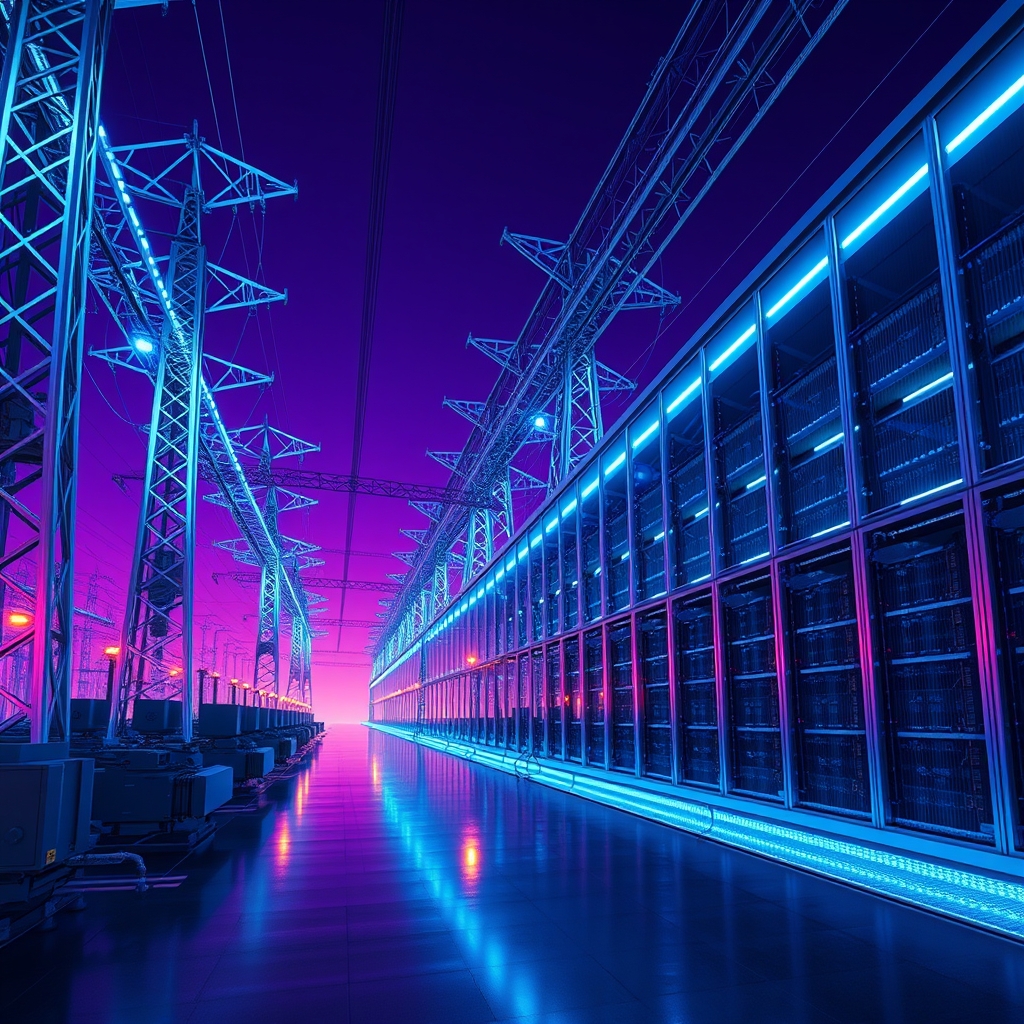 AI-generated
1. Context and Key Points
The administration of Texas Governor Greg Abbott has announced the official withdrawal of the temporary restrictions that had blocked more than 1,800 data center projects across the state. This moratorium, initially conceived as a containment measure to prevent the collapse of the power grid managed by the Electric Reliability Council of Texas (ERCOT), represented one of the major bureaucratic hurdles for the deployment of industrial-scale artificial intelligence infrastructure in North America.
Abbott's strategic pivot responds to unsustainable economic pressure and fierce competition with states such as Ohio, Virginia, and Oregon, which have been absorbing massive investments from hyperscalers dedicated to the training and inference of advanced models like GPT-6.2 Astra (from OpenAI), Gemini 4 Carbon (from Google), or distributed clusters based on dense hardware architectures. However, the measure rekindles questions about the resilience of the energy supply grid in a state characterized by extreme climatic peaks and constantly accelerating industrial demand.
This report breaks down the technical implications, electrical engineering challenges, pressure on local water resources, and geopolitical consequences for the global technology ecosystem following the reactivation of these 1,800 critical infrastructure developments.
2. Key Technical Aspects
The construction and commissioning of more than 1,800 data centers does not simply represent an increase in square meters of industrial land, but a monumental leap in the required computational power density. Modern facilities dedicated to training massive language models and omnimodal systems require rack configurations that far exceed 100 kilowatts per rack, a figure unthinkable just a decade ago, when traditional data centers operated with densities of between 5 and 10 kilowatts per rack.
To supply this demand, infrastructure engineers must solve complex challenges related to high-speed network interconnection, latency reduction between processing nodes, and, above all, thermal dissipation. Air cooling systems have become obsolete in the face of the thermal load generated by the latest generation of AI accelerators. As a result, the vast majority of these projects released in Texas will require advanced direct-to-chip liquid cooling systems or single-phase and two-phase immersion technologies, which drastically alters the hydrological design of the facilities.
From the perspective of electrical infrastructure, the massive integration of these continuous loads requires dedicated on-site substations, high-voltage transmission lines, and advanced battery energy storage systems (BESS) to mitigate fluctuations in the ERCOT grid. The inability to coordinate the arrival of these data centers with the expansion of generation capacity based on natural gas, solar energy, and storage would have meant an imminent collapse of regional voltages. The lifting of the ban forces developers to implement smart microgrids capable of operating in island mode during climatic contingencies. Fast switching technologies and load management via artificial intelligence will be mandatory to balance the intermittency of renewable sources with the inflexible and permanent demand of inference and training servers. Furthermore, the geographical location of these projects within Texas is not uniform. It is mainly concentrated in strategic corridors near major urban centers such as Dallas-Fort Worth, Austin, San Antonio, and Houston, where the availability of trunk fiber optics and qualified labor facilitates operations, but where competition for drinking water and network resources is fiercest.
| Technical Parameter | Historical Standard (2023) | Current Standard (2026) |
|---|---|---|
| Density per rack | 5 kW, 10 kW | 100 kW, 150 kW+ |
| Dominant cooling system | Forced air via perimeter air conditioning (CRAC/CRAH) | Direct-to-chip liquid cooling and immersion |
| Water consumption per megawatt-hour | High (evaporation in open cooling towers) | Optimized / Closed systems with zero consumptive use |
| Network architecture | Standard 100GbE Ethernet | Ultra-high-speed InfiniBand NDR / RoCEv2 (400G/800G) |
| Energy integration | Direct connection to public grid without massive backup | Own substation, solar energy, and mandatory BESS storage |
3. Sector Impact
The decision by the Texas administration reconfigures the global map of technology investments. Hyperscalers and investment funds specialized in digital infrastructure had been weighing the relocation of their capital budgets to jurisdictions with more predictable regulatory frameworks for months. With this turn, Texas regains its appeal as a territory free from state corporate income taxes and with an availability of land suitable for unprecedented large physical extensions.
On the financial plane, the reactivation of these 1,800 projects will mobilize billions of dollars in engineering, procurement, and construction (EPC) contracts, as well as in the acquisition of electrical switching equipment, power transformers, and specialized semiconductors. Original equipment manufacturers (OEMs) of electrical hardware and suppliers of critical components will experience sustained demand that will alleviate uncertainty about medium-term investment cycles.
However, the market faces severe bottlenecks that transcend simple government authorization. The waiting time for the manufacturing and delivery of high-power transformers globally is still measured in years, not months. Although the state of Texas eliminates the administrative block, the physical materialization of these data centers will be limited by the actual availability of heavy components in the international supply chain. In addition, competition for specialized technical talent will intensify notably. Power engineers, data center architects, industrial cybersecurity experts, and power grid operators will experience upward pressure on their compensation, as developers compete to recruit the professionals capable of managing infrastructure of this magnitude.
4. Market Perspectives
Market analysts agree that the lifting of the moratorium was an inevitable step if Texas wished to maintain its economic hegemony against the combined pressure of other states in the union. However, they warn that execution must be carried out under strict technical scrutiny to avoid systemic vulnerabilities in the ERCOT grid. The experience of previous crises demonstrated that uncontrolled demand combined with adverse weather phenomena can jeopardize the power supply of millions of citizens.
From a strategic perspective, Chief Technology Officers (CTOs) and infrastructure heads at major AI companies observe this move with cautious optimism. The geographical diversification of data centers reduces geopolitical and logistical risk, but regulatory uncertainty surrounding interconnection costs and dynamic electricity tariffs remains a considerable financial risk factor.
Sector analysts point out that the long-term success of this massive reactivation will depend on the ability of private operators to jointly invest in additional clean generation capacity. Exclusive dependence on traditional fossil fuels to power high-density AI loads contradicts corporate sustainability commitments and exposes facilities to the volatility of hydrocarbon prices. Therefore, the executive recommendation for operators planning to activate their projects in Texas is to adopt hybrid energy acquisition models, integrating long-term renewable power purchase agreements (PPA) with local battery storage, thereby ensuring operational stability and compliance with the environmental standards required by international markets.
5. Next Steps
The implementation of these 1,800 projects will not occur simultaneously, but through phased stages over the next decade. The estimated timeline projects that the first developments that already had advanced feasibility studies before the moratorium will begin their intensive construction phase towards the end of 2026 and early 2027.
- Phase 1 (Mid-2026 - End of 2027): Administrative unblocking and review of pending interconnection contracts in ERCOT, prioritizing those projects with lower water impact and greater energy self-sufficiency.
- Phase 2 (2028 - 2030): Physical deployment of medium and high-voltage infrastructure, construction of dedicated substations, and installation of the first server clusters optimized for liquid cooling.
- Phase 3 (2031 onwards): Commercial-scale operation of the mega-installations, full integration with smart power distribution networks, and evaluation of the actual impact on local water resources.
As the infrastructure matures, it is foreseeable that the regulatory framework will evolve towards stricter energy efficiency regulations per watt consumed, forcing operators to certify the performance of their artificial intelligence workloads to mitigate the overall environmental impact.
6. Conclusion and Assessment
The lifting of the moratorium on data centers in Texas marks a decisive turning point for the global technology industry. It represents the confirmation that the demand for computational power to drive advanced artificial intelligence is economically prioritized over traditional regulatory restrictions.
For engineering leaders and Chief Technology Officers, the message is clear: the availability of land and bureaucratic flexibility in Texas offer a unique window of opportunity, but they require rigorous planning in terms of energy design and thermal management. Ignoring the risks associated with power grid stability or underestimating the costs of advanced cooling can transform a multi-billion dollar investment into an unsustainable operational liability. Precise technical execution and operational sustainability will be the only common denominators of success in this new era of gigawatt-scale infrastructure.