Español
 English
 Français
 Português
 Deutsch
 Italiano
The Memory Crisis: Electronics Manufacturers Deploy War Rooms Amid Historic DRAM Shortage
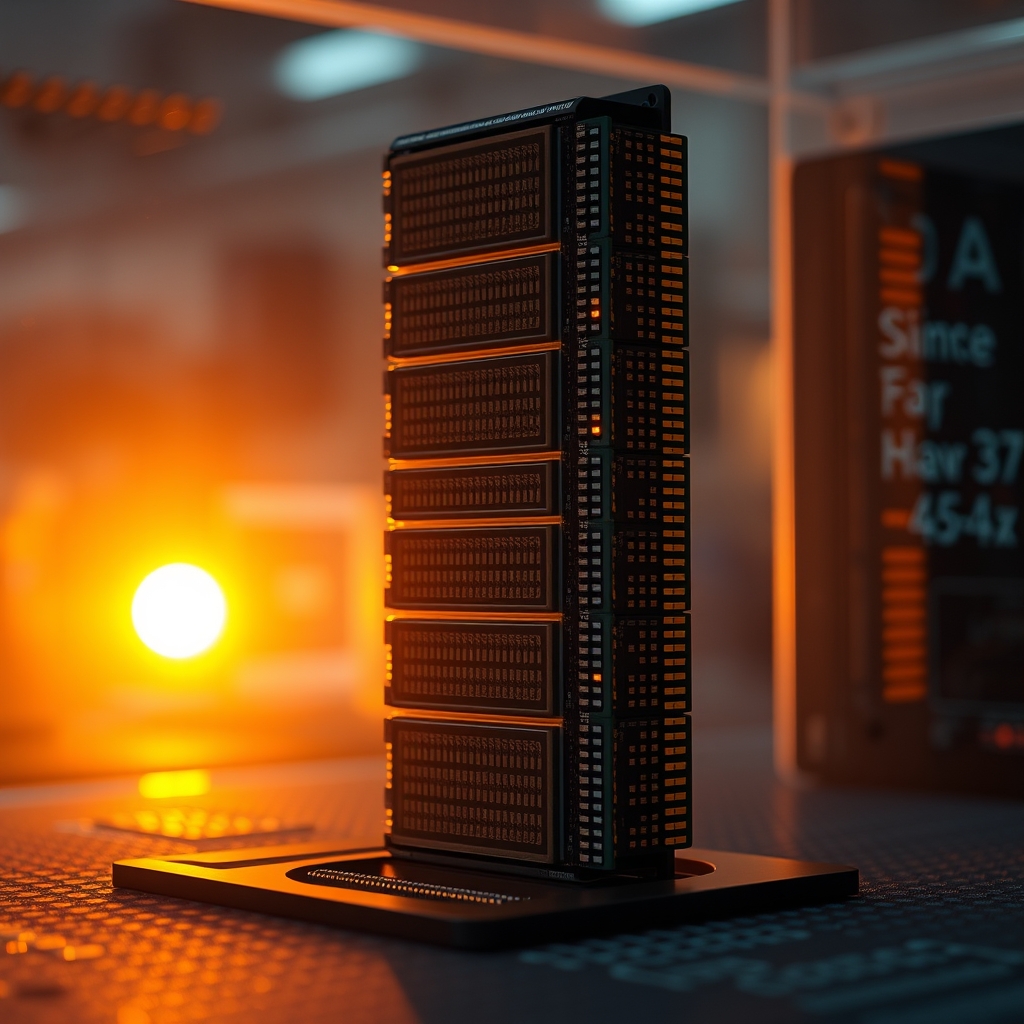 AI-generated
1. Context and Key Points
By late November 2026, the global technology ecosystem is navigating one of the most severe supply crises of the last two decades. The convergence of insatiable demand for high-bandwidth memory (HBM) DRAM for training large-scale language models and an unexpected recovery in the consumer electronics sector has triggered a critical shortage. Major hardware manufacturers have responded by establishing operational 'war rooms,' dedicated multidisciplinary teams focused exclusively on prospecting, negotiating, and securing long-term memory inventories.
This phenomenon is not a simple market fluctuation; it represents a structural shift in how technology companies manage their operational resilience. The shortage is directly impacting the deployment capacity of advanced computing infrastructure, affecting everything from the availability of servers for GPT-6.2 Astra to the production of consumer devices. For executives and procurement leaders, the priority has shifted from cost optimization to ensuring continuity, marking the end of the just-in-time supply era in the semiconductor sector.
2. Key Technical Aspects
The architecture of current AI systems, from the clusters running Claude Mythos 5.5 to the Gemini 4 Carbon inference farms, critically depends on the memory hierarchy. DRAM, and specifically its HBM3e variant and the latest iterations, has become the scarcest and most valuable component. Unlike conventional memory, HBM production requires a vertical stacking process (TSV - Through-Silicon Via) that drastically reduces yield per wafer, exacerbating any supply imbalance.
The technical problem is compounded by the architecture of large-context models. Models like Llama 4, with its 10-million-token capacity, require a massive KV-cache (Key-Value cache) footprint that resides entirely in high-speed memory. When DRAM is scarce, inference latency increases exponentially, as the system must resort to slower memory levels, invalidating the advantages of new silicon accelerators. The current shortage is not just of volume, but of cutting-edge technical specifications.
Memory manufacturers, such as the market leaders in South Korea and Taiwan, have prioritized HBM production for cloud service providers (CSPs), leaving consumer electronics and Edge device manufacturers in a vulnerable position. This market segmentation has created a black market for components and price volatility not seen since the 2021 crisis. The complexity of memory integration in new SoCs (System on Chip) means that it is not possible to substitute one module for another without redesigning the entire motherboard. The 'war rooms' established by electronics manufacturers operate under a supply war logic. They use advanced predictive models to anticipate competitor movements and changes in foundry yields. These elite units are authorized to make forward purchases at significant premiums, securing production capacity in memory fabrication plants up to 18 months in advance. Memory dependency is not just a hardware problem; it is a software bottleneck. The optimization of model weights, such as those of DeepSeek-V4.1-Flash or Qwen 3.8-Max, is limited by the available memory bandwidth. If the hardware cannot feed the compute cores at the necessary speed, energy efficiency drops, increasing the operational cost per generated token. This is the core of the crisis: the DRAM shortage is stalling the profitability of artificial intelligence on a global scale.
3. Sector Impact
The impact of this shortage is felt throughout the value chain. Server manufacturers are reporting delays of up to 40 weeks in the delivery of units configured with high memory density. This has forced companies to revise their model deployment roadmaps, prioritizing inference over massive retraining to conserve memory resources.
In the consumer electronics sector, the situation is equally tense. Mobile device manufacturers, which integrate LPDDR5X/6 memory, are competing for the same production lines as AI server suppliers. This has led to an increase in the cost of high-end devices, which is passed directly to the end consumer. The shortage has forced many companies to reduce the base memory capacity of their products, affecting the user experience in local AI tasks.
Market consolidation is an inevitable consequence. Companies with greater capitalization and negotiating power are absorbing the available inventory, leaving small and medium-sized technology enterprises (SMEs) without access to critical components. This creates an artificial barrier to entry that favors dominant players, further consolidating the oligopoly in the high-performance computing sector. At the macroeconomic level, the DRAM shortage is influencing national inventory policies. Supply chain resilience has become a matter of national security, leading governments to incentivize the construction of local memory plants, although the results of these investments will not be seen until the end of the decade.
4. Market Outlook
The consensus among industry analysts is that the shortage will persist for much of 2027. The strategic recommendation for CTOs is clear: diversify memory architecture and explore more aggressive quantization techniques that reduce dependence on high-capacity DRAM. Software optimization, through model compression techniques and efficient KV-cache management, is now an operational necessity, not just a performance improvement.
The 'war rooms' must evolve into supply intelligence centers. It is not enough to secure inventory; it is necessary to integrate supply chain visibility with software development cycles. If the engineering team knows that memory will be scarce, the product team must adjust the model specifications before training begins.
Transparency in the supply chain is the biggest challenge. Many manufacturers operate with asymmetric information, which generates panic and speculative purchases that worsen the shortage. The implementation of tracking systems based on real production data, rather than optimistic projections, is fundamental to stabilizing the market.
| Risk Factor | Impact on Production | Mitigation Strategy |
|---|---|---|
| HBM3e Shortage | Critical (Delays > 6 months) | Long-term supply contracts |
| DRAM Price Volatility | High (Cost Increase) | Financial hedging and design optimization |
| Packaging Bottlenecks | Moderate | Diversification of assembly suppliers |
5. Next Steps
For the first half of 2027, HBM production capacity is expected to increase slightly as new fabrication lines come online. However, demand for next-generation models, such as future versions of GPT and Claude, will absorb any increase in supply, keeping prices at elevated levels.
In the long term, the industry will move toward disaggregated memory architectures and the use of optical interconnection technologies to reduce latency and dependence on physical DRAM close to the processor. In-Memory Computing will begin to gain traction as a disruptive solution to avoid the Von Neumann bottleneck that currently limits AI performance.
Market normalization is not expected before 2028, when the production capacity of new semiconductor plants reaches maturity. Until then, agility in supply management will be the differentiating factor between companies leading the AI race and those falling behind due to a lack of hardware.
6. Conclusion and Assessment
The DRAM memory crisis is a reminder that artificial intelligence, despite its virtual nature, is deeply anchored in the physical reality of atoms and electrons. Technology leaders must abandon complacency and treat memory infrastructure as a first-order strategic asset.
The imperatives for the next 12 months are: first, secure the supply chain through direct alliances with memory manufacturers; second, invest in software optimization to maximize the efficiency of every available gigabyte; and third, develop a rapid response capability to market fluctuations. The era of hardware abundance has ended; the era of strategic resource management has begun.