Español
 English
 Français
 Português
 Deutsch
 Italiano
The robot I never expected to build: The evolution of Agility Robotics from ATRIAS to Digit
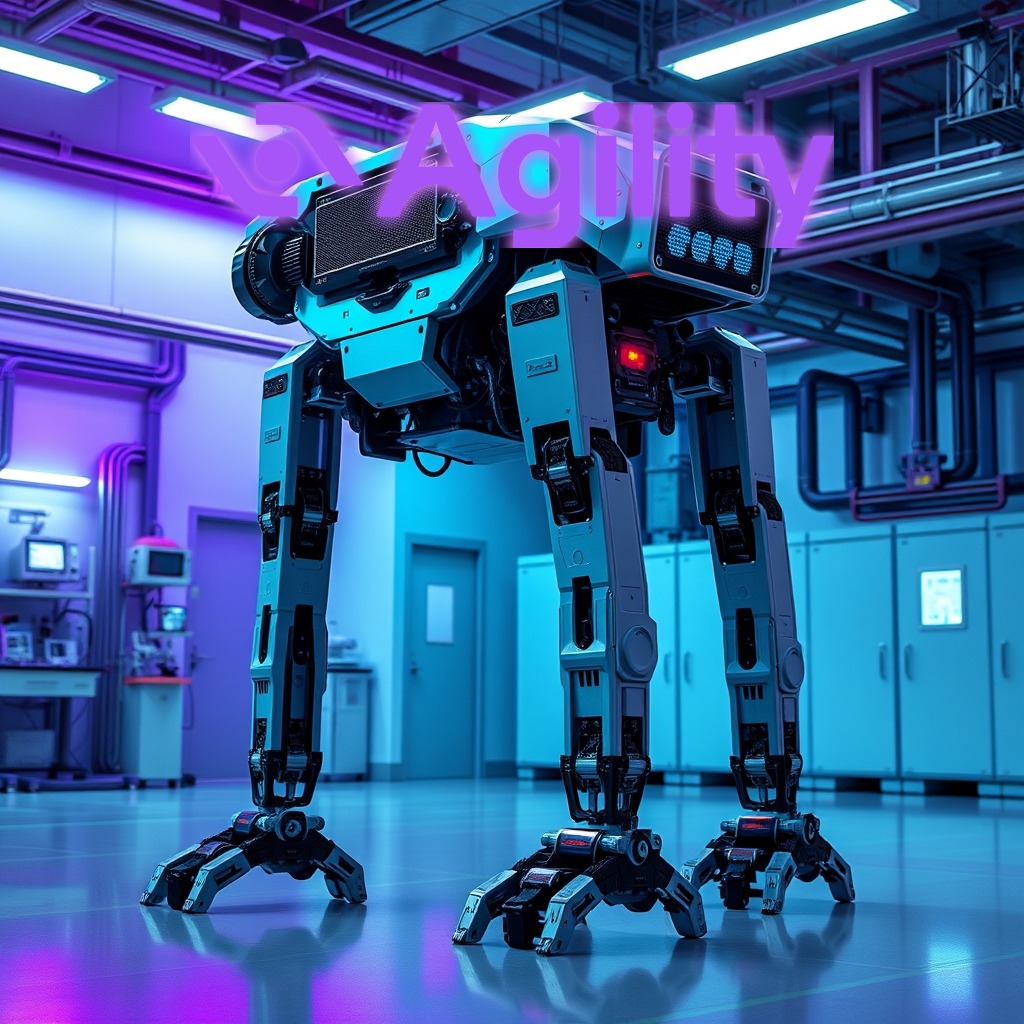 AI-generated
1. Context and Key Points
The evolution of humanoid robotics has reached an inflection point with the launch of Digit by Agility Robotics, a company originally born in 2015 at Oregon State University's Dynamic Robotics Laboratory. This new industrial milestone represents a monumental effort to deploy tens of thousands of humanoid workers in real-world environments, specifically designed to handle heavy loads and mitigate labor shortages in monotonous and physically demanding tasks within modern warehouses.
However, this commercial breakthrough entails a series of profound technical trade-offs. To meet the economic and operational demands of large-scale logistics, Digit prioritizes robustness and payload capacity, such as lifting 23-kilogram totes onto elevated shelving, over the natural, fluid grace that characterized early academic prototypes. The result is a robust, bulky machine driven by an energy system optimized for intensive work cycles.
This report examines the technical trajectory that led from the earliest spring-biomechanics-based models to today's commercial reality. We analyze the impact of these engineering decisions on the industrial ecosystem and evaluate the strategic implications for the future of labor automation, where theoretical elegance inevitably yields to the relentless constraints of applied physics and operating costs.
2. Technical Highlights
The technological lineage of Agility Robotics is rooted in 2008, a period when foundational theories derived from biomechanics were developed at Oregon State University. The initial premise held that a simple "spring-mass" model, a body supported by limbs that mechanically operate like springs, was theoretically capable of faithfully reproducing any walking and running pattern observed in animal biological systems.
To translate this hypothesis into the physical realm, engineers developed ATRIAS, an acronym for "Agile Terrestrial Robot for Intelligent Autonomous Systems," an ironic nod to the system reduction principle commonly used by theoretical physicists. Architecturally, ATRIAS resembled a bulky household appliance on spindly legs, strictly conceived to prove the validity of bipedal locomotion physics without aesthetic or commercial pretensions.
Despite its rudimentary appearance, ATRIAS materialized the foundational vision of combining locomotion and manipulation to interact with environments designed by and for humans. However, the transition from that academic physical demonstrator to a marketable product required a radical redesign of engineering goals, moving away from organic, fluid movements toward heavier, more utilitarian mechanical architectures. Digit's current design reflects this operational metamorphosis. Equipped to handle 23-kilogram totes and place them on high-level shelving, the robot incorporates highly optimized energy subsystems. Its battery architecture allows for continuous operations sustained by a rapid charge cycle of just 9 minutes for 90 minutes of autonomy, a critical parameter to guarantee operational continuity across successive industrial shifts. At the kinematic level, the need to support high loads and maintain structural stability has made it necessary to dispense with the natural grace exhibited by Digit's direct predecessors. The mass and volume of the chassis have increased significantly to withstand the torques required for handling heavy goods, highlighting the chasm between the theoretical elegance of bio-inspired models and the harsh demands of manufacturing engineering.
3. Industry Impact
The massive introduction of platforms like Digit fundamentally alters the economic equation of the global supply chain and warehouse logistics. Faced with a chronic shortage of personnel willing to perform physically strenuous, repetitive, or ergonomically harmful work, humanoid automation ceases to be an experimental research line and becomes a capital investment oriented toward operational efficiency.
Logistics and e-commerce companies face a scenario where the integration of robotic labor at scale promises to mitigate costs associated with staff turnover, workplace injuries, and the limitations of continuous human shifts. Digit's ability to operate in existing infrastructure designed for people, from narrow aisles to elevated shelving, eliminates the need to redesign physical facilities, drastically reducing the cost of technology adoption.
However, this massive deployment poses significant challenges in terms of systems integration and fleet management. Warehouse operators must implement software platforms capable of coordinating heterogeneous fleets of autonomous mobile robots and bipedal humanoid systems. Mechanical reliability and component durability under continuous stress conditions become critical business metrics to justify return on investment. Likewise, the service robotics market is experiencing a clear bifurcation: on one hand, academic developments focused on dexterity and biomimetic fluidity; on the other, commercial products oriented strictly toward profitability, payload capacity, and structural robustness. The prioritization of utility over kinematic aesthetics sets the tone for the sector's maturity.
4. Market Outlook
Industry analysts agree that Agility Robotics' transition from academic prototypes to massive commercial deployment illustrates the classic dilemma between scientific perfection and product viability. The technical community recognizes that building a robot capable of replicating the elegance of human movement in unstructured environments is a fascinating challenge, but building a robot that generates immediate economic value requires inescapable pragmatic trade-offs.
From a strategic perspective, the decision to focus Digit's design on heavy payload handling and operational endurance responds to an urgent, unmet demand in the industrial sector. Various experts point out that companies do not buy humanoid robots for their walking grace, but for their ability to execute specific tasks reliably, shift after shift, without performance degradation.
However, warnings are raised regarding reputational and social acceptance risks associated with bulky industrial robots operating in proximity to people. Human-robot interaction in shared spaces demands rigorous functional safety standards, redundancy in perception systems, and absolute predictability in the machine's kinetic behaviors. Strategic recommendations for organizations evaluating the adoption of these technologies suggest a phased approach: initiating pilot tests in controlled environments, evaluating predictive maintenance metrics, and securing a robust energy charging infrastructure to support the demanding operational cycles of platforms like Digit.
5. Next Steps
The timeline for commercial humanoid robotics is projected through clear phases of technological maturation and operational deployment:
| Timeframe | Expected Technological Milestone | Market Objective |
|---|---|---|
| Short Term (2026, 2027) | Initial deployment of pilot fleets in optimized logistics centers for load and endurance validation. | Demonstration of operational ROI and reliability in controlled environments. |
| Medium Term (2028, 2030) | Optimization of fast-charging systems and improvement in the autonomy of electromechanical actuators. | Massive expansion of the robotic fleet in warehouses and light manufacturing plants. |
| Long Term (Post-2030) | Evolution toward hybrid architectures combining industrial robustness with greater kinematic adaptability. | Introduction of humanoids in complex sectors outside traditional logistics (construction and services). |
As battery technology advances and reinforcement learning techniques are more deeply integrated into motor control, future successors of Digit may recover some of the agility and fluidity lost in this first phase of industrialization, bridging the gap between commercial efficiency and natural movement elegance.
6. Conclusion and Assessment
Digit's development symbolizes the moment when humanoid robotics leaves the territory of academic speculation to fully integrate into the global industrial economy. Although the final outcome differs markedly from initial dreams of building machines with the biological grace of living beings, the practical impact of this pragmatic engineering is undeniable.
Organizations wishing to lead the next era of automation must understand that adopting humanoid robotics is not an exercise in technological aesthetics, but a structural transformation of the workforce. The current strategic imperative consists of balancing performance expectations with a realistic understanding of the physical and mechanical limitations of current systems, preparing the ground for productive and safe collaboration between humans and machines.