
 Español
 English
 Français
 Português
 Deutsch
 Italiano
AI on Mars: How NASA and SpaceX Are Redefining Space Exploration
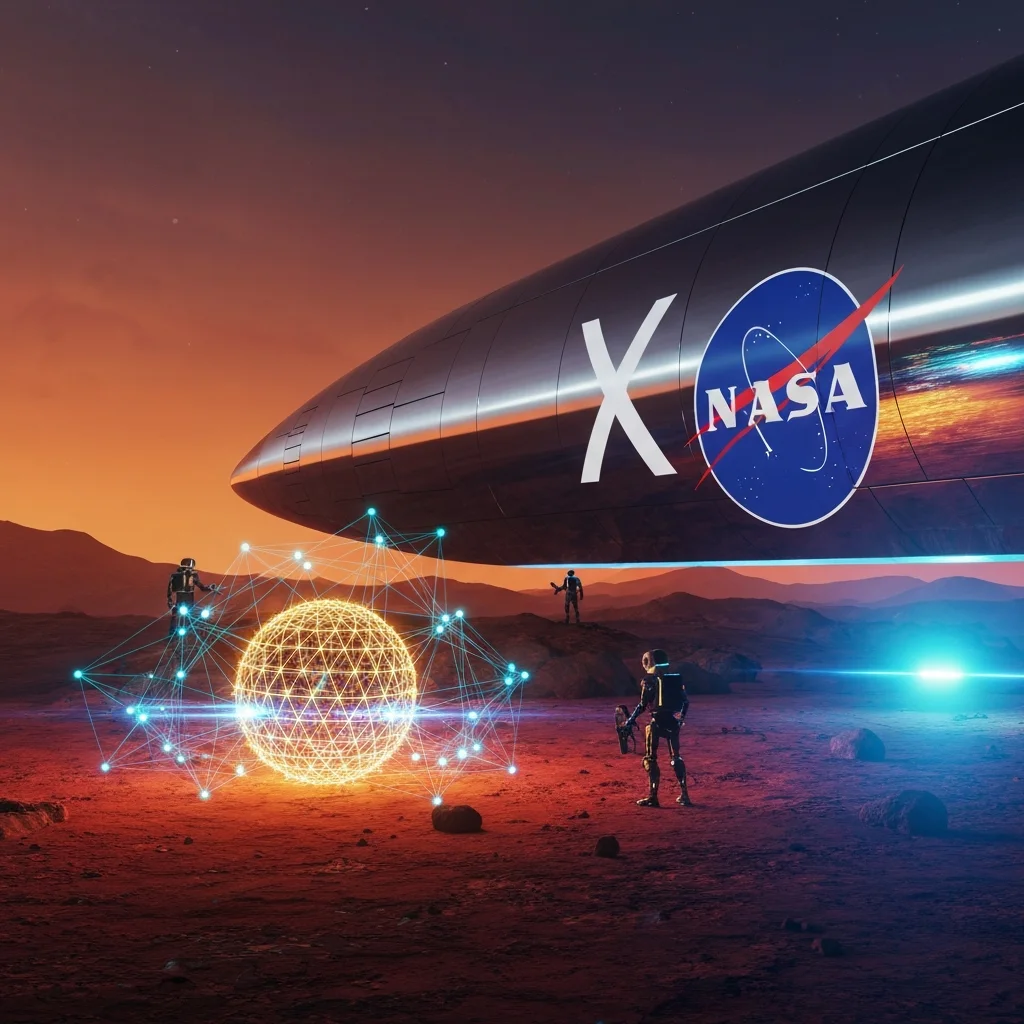
The quest to conquer the Red Planet has long been the ultimate frontier for humanity. However, the vast distance between Earth and Mars presents a challenge that human intuition alone cannot solve: a communication delay that ranges from four to twenty-four minutes. This is where artificial intelligence steps in, transforming from a mere tool into an essential navigator for the next generation of space missions led by NASA and SpaceX.
Autonomous Navigation: The Brains Behind the Rovers
NASA’s recent missions have demonstrated that AI-driven autonomy is the key to exploring the Martian surface. Older rovers required constant instructions from Earth, leading to slow and cautious movements. Today, the latest Martian explorers utilize sophisticated computer vision systems to map terrain in real-time. By identifying obstacles and plotting paths independently, these machines can travel further and faster than ever before. This self-driving capability allows scientists to focus on high-level objectives while the AI handles the hazardous task of crossing the rocky Martian landscape.
SpaceX and the Precision of Landing
While NASA focuses on exploration, SpaceX is redefining how we reach the planet. The ambitious Starship program relies heavily on machine learning algorithms to manage the complex physics of planetary entry and vertical landing. Landing a massive spacecraft on a world with a thin atmosphere requires millisecond-accurate adjustments that are impossible for a human pilot to execute remotely. AI systems analyze atmospheric density, wind speeds, and fuel consumption in real-time to ensure a safe touchdown on the Martian soil.
Processing Data at the Edge
One of the most significant bottlenecks in space exploration is data transmission. Sending high-resolution images back to Earth takes immense bandwidth. To solve this, NASA is implementing edge computing on its spacecraft. Instead of sending every single photo, the AI identifies which images contain significant geological features or signs of ancient water. This selective processing ensures that only the most valuable data reaches Earth, maximizing the scientific output of every mission.
The Future: AI-Managed Habitats
Looking ahead, the role of AI will expand from transportation to survival. Both NASA and SpaceX envision autonomous life-support systems that can manage oxygen production, water recycling, and crop growth without human intervention. These systems must be resilient and capable of predicting mechanical failures before they happen. As we move closer to establishing a permanent human presence on Mars, intelligent automation will be the silent guardian keeping the first Martian colonists alive in one of the most hostile environments known to man.
The synergy between advanced robotics and AI is not just making Mars more accessible; it is making the impossible inevitable. As these technologies continue to evolve, the Red Planet moves from being a distant point of light to a tangible destination for the human spirit.