Español
 English
 Français
 Português
 Deutsch
 Italiano
Anthropic Acquires 1.7GW of Gas Generators for $3.4 Billion to Escape Energy Bottleneck
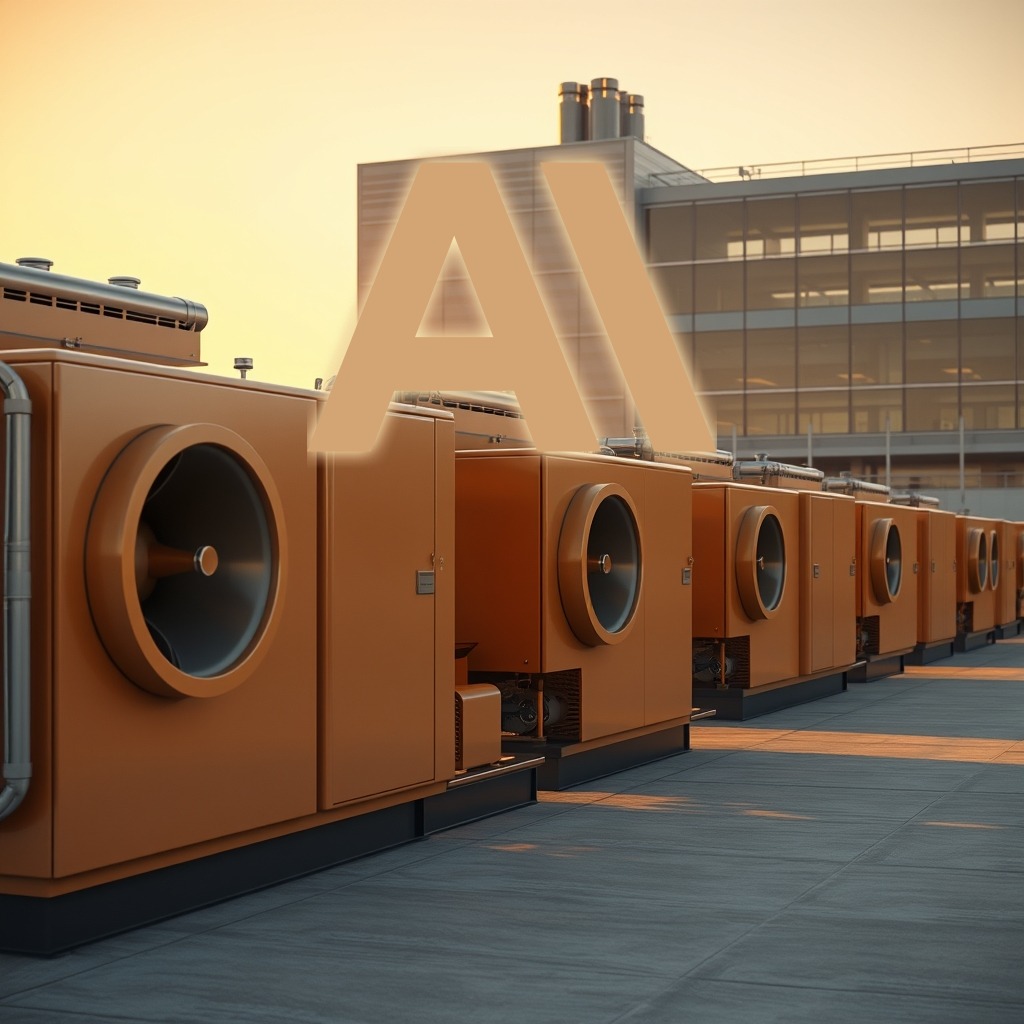 AI-generated
1. Context and Key Points
The energy crisis strangling the development of frontier models is no longer a theoretical warning; it has become a physical and immediate bottleneck. According to recent revelations by industry analysts, Anthropic has closed a colossal transaction with industrial equipment supplier OnePWR. Valued at $3.4 billion, the transaction guarantees the acquisition of commitments for the manufacturing and supply of 1.7 gigawatts of natural gas generators. This figure surpasses any precedent in the artificial intelligence industry and marks a strategic turning point where supercomputing labs choose to bypass traditional utility intermediaries and secure their own power generation.
This deployment of private capital toward fossil fuel assets underscores the magnitude of the structural power shortage in modern data centers. As massive reasoning architectures and autonomous agents like Claude Mythos 5.5 demand unprecedented power densities per rack, operators can no longer depend on the interconnection timelines of the conventional electrical grid, which often extend for years. Anthropic's decision to establish itself as a direct buyer of gas turbines and generators redefines the relationship between technology companies and global energy infrastructure.
For chief technology officers, systems architects, and venture capital investors, this move sends an unmistakable signal: the cost and availability of electrons will determine who survives in the next phase of artificial intelligence scaling. The race for computational supremacy is no longer just a matter of advanced silicon and inference optimization algorithms, but a logistical battle to secure independent megawatts far away from public grid restrictions.
2. Technical Highlights
The scale of 1.7 gigawatts acquired by Anthropic through OnePWR is not a corporate whim, but a direct response to the thermodynamic demands of next-generation GPU clusters. To understand the magnitude of this infrastructure, it is necessary to size the energy consumption of a data center dedicated to training and massive inference in the era of advanced multimodal models and deep reasoning systems. A cluster capable of sustaining the computational load of model families like Claude Mythos 5.5 requires energy densities per square meter that far exceed the capabilities of traditional air cooling and conventional urban substations.
The natural gas generators selected in this transaction offer a critical combination of power density, fast response time, and constant availability against the intermittency of renewable sources. While solar and wind power depend on unpredictable geographic and climatic factors, gas turbine-based generators allow precise base load control and immediate response to demand spikes generated by massive distributed training tasks or simultaneous inference at global scale.
From the perspective of data center engineering, the integration of 1.7GW of direct generation implies the construction of autonomous microgrids or behind-the-meter facilities. This eliminates transmission losses associated with long-distance electricity transport and drastically reduces the risk of blackouts or instabilities in the public grid. However, it also transfers the operational complexity of emissions management, high-pressure turbine maintenance, and fuel supply logistics directly to the artificial intelligence ecosystem. The choice of OnePWR as a strategic partner demonstrates a shift in the industrial supply chain. AI labs are directly competing with the traditional industrial and manufacturing sectors for critical components such as gas turbines, step-up voltage transformers, and high-power switchgear. The delivery lead time for this equipment has become the most restrictive limiting factor for the deployment of new data centers, surpassing even the availability of advanced silicon wafers.
3. Industry Impact
The impact of this $3.4 billion transaction reverberates deeply through the energy market and the competitive artificial intelligence ecosystem. Historically, technology companies limited themselves to signing long-term power purchase agreements (PPAs) with operators of solar, wind, or nuclear farms that were already existing or under development. Anthropic's strategy breaks this mold by directly financing and securing the manufacturing of fossil generation hardware, an approach closer to that of major oil companies or traditional utilities.
This precedent forces direct competitors like OpenAI with its GPT-6.1 Astra ecosystem, Google with Gemini 4 Carbon, and xAI with Grok 4.7 to reassess their own energy provisioning strategies. The physical scarcity of generators and turbines means that equipment availability in the secondary and primary markets is extremely limited. Whoever has not secured generation capacity years in advance faces a logistical wall that will prevent the expansion of their computing power, regardless of the amount of capital available.
| Strategic Dimension | Traditional Approach (PPA / Public Grid) | Anthropic's Direct Approach (OnePWR) |
|---|---|---|
| Supply Security | Low to medium (subject to grid congestion and regulatory delays) | Very high (direct control over generation assets) |
| Deployment Timelines | 4 to 7 years (depending on interconnection permits) | Accelerated via direct equipment acquisition |
| Third-Party Dependency | High (grid and utility operators) | Low (private management of behind-the-meter microgrids) |
| Carbon Footprint | Variable (clean energy certificates and offsets) | Direct (natural gas dependency with mitigation needs) |
Furthermore, this move generates significant regulatory and environmental tensions. Natural gas-powered data centers face growing scrutiny for their greenhouse gas emissions, contrasting with the corporate sustainability goals that many AI labs publicize. The imperative need for computing power is forcing speed and operational continuity to be prioritized over short-term decarbonization commitments.
4. Market Outlook
Energy and financial sector analysts agree that the purchase of 1.7GW of generators marks the beginning of an era of forced convergence between the tech industry and the hydrocarbon sector. Traditional grid infrastructure has collapsed under the weight of accumulated demand from artificial intelligence and the electrification of the automotive fleet, creating a chronic power deficit that software companies can no longer passively tolerate.
From a risk management perspective, securing self-generation capacity mitigates the geopolitical and economic risk of volatility in wholesale electricity markets. However, it introduces a new vector of vulnerability: the natural gas supply chain and regulatory exposure to future carbon taxes or emissions restrictions. The Chief Financial Officers of AI labs must weigh the opportunity cost of lacking power against the reputational and operational cost of operating large-scale fossil fuel infrastructure.
The core recommendation for engineering leaders and data center operators is clear: diversify the energy strategy by incorporating hybrid solutions that combine high-density battery storage, modular nuclear agreements, and flexible backup generation. Relying exclusively on the public grid is no longer a viable option to guarantee the continuity of frontier training runs.
5. Next Steps
In the short term, meaning over the next 12 to 18 months, we will see other major industry players replicate this direct generation equipment purchase strategy to avoid grid interconnection bottlenecks. Competition to secure turbine manufacturers, emergency generators, and high-voltage equipment will intensify dramatically, driving up industrial equipment prices and prolonging delivery lead times for slower buyers.
In the medium term, between 2027 and 2029, pressure on data centers will drive massive and direct investments in Small Modular Reactors (SMRs) and advanced fusion or deep geothermal technologies, as labs seek to decouple themselves from natural gas price volatility and comply with environmental regulations. However, given that advanced nuclear energy still faces lengthy regulatory approval processes, natural gas will remain the foundational transitional pillar to supply AI demand peaks.
In the long term, toward the next decade, data center architecture will experience extreme geographical decentralization. Facilities will be located directly next to gas fields, geothermal fields, or dedicated power plants, prioritizing proximity to energy resources over closeness to urban centers or human consumption hubs.
6. Conclusion and Assessment
Anthropic's acquisition of 1.7GW of gas generators for $3.4 billion through OnePWR is not a financial anecdote, but the reflection of a profound structural transformation. Artificial intelligence has ceased to be a purely digital discipline to become a massive and voracious consumer of heavy physical resources.
For CTOs, infrastructure directors, and strategic planners, the lessons are forceful:
- Total Energy Control: Reliance on the traditional electrical grid represents an existential risk to the scalability of frontier models. It is imperative to integrate energy planning into the early design phases of any advanced computing infrastructure.
- Source Diversification: Although natural gas offers an immediate and reliable solution to overcome the current bottleneck, long-term strategies must incorporate carbon-free sources and advanced storage to mitigate regulatory and cost risks.
- Supply Chain Anticipation: The scarcity of critical industrial equipment such as turbines and transformers demands a multi-year logistical vision, similar to the management of silicon wafers and semiconductor foundry contracts.