Español
 English
 Français
 Português
 Deutsch
 Italiano
Apple Accelerates Siri's Evolution into a More Agentic Assistant
 AI-generated
1. Context and Key Points
In recent months, Apple has launched a series of internal initiatives aimed at transforming Siri from an assistant based on predefined commands into an entity with a higher degree of agency. The company has announced the integration of large language models trained on its own dataset, the expansion of the Neural Engine in M3-series chips, and the incorporation of action planning mechanisms that allow Siri to execute workflows without direct human intervention. This move responds to competitive pressure from Google, Microsoft, and Amazon, which already offer assistants capable of managing complex processes through reasoning based on large AI models.
The change has direct implications for end users, iOS application developers, and Apple's position in the generative AI ecosystem. Product managers, security officers, and system architecture teams must evaluate both the operational benefits and the risks of a more agentic assistant, particularly regarding data privacy and the control of automatic action execution.
2. Notable Technical Aspects
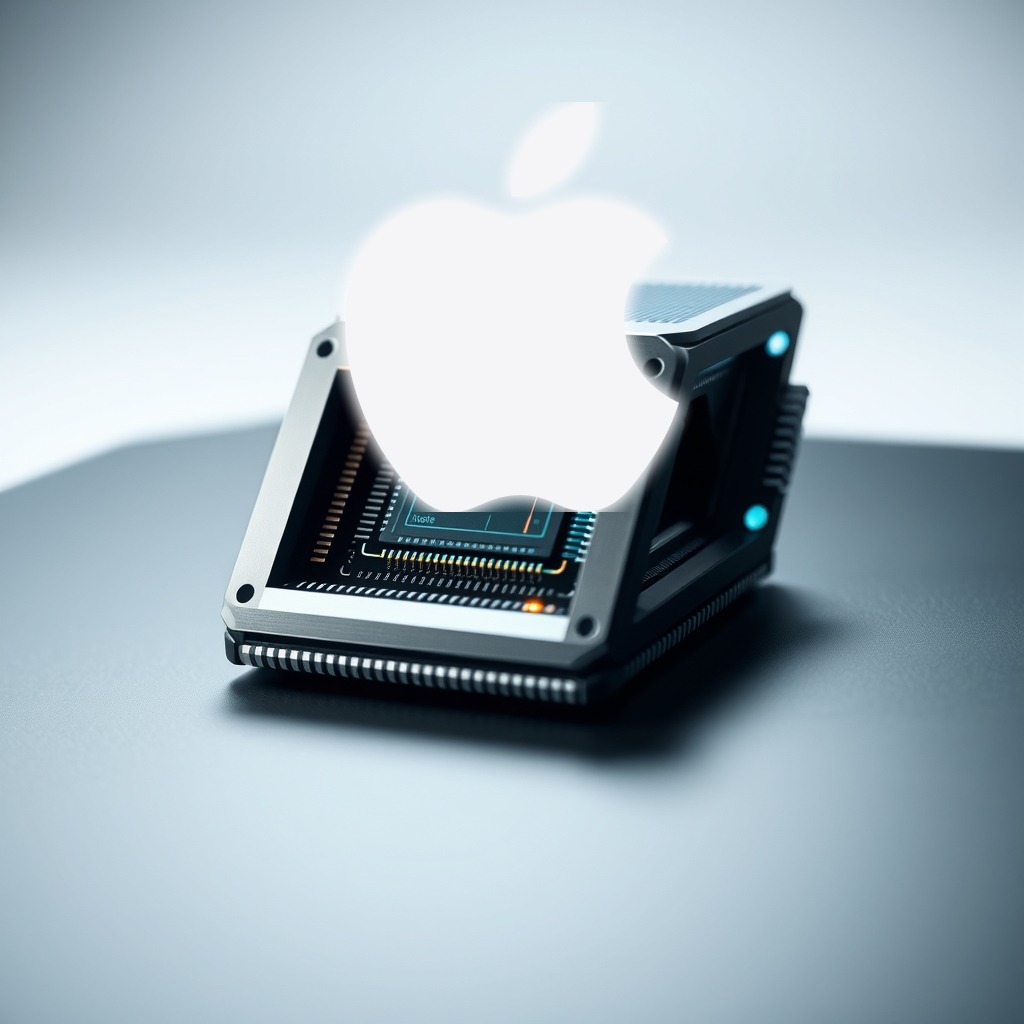
The core of Siri's new architecture is based on a family of large language models (LLMs) developed internally by Apple, designated as “Apple‑LLM‑X”. These models are built on the 2022 Transformer architecture but incorporate two key improvements: a “Goal-Planning Layer” and a “Secure Execution Module”. The planning layer allows the model to generate a sequence of sub-tasks before responding to the user, while the execution module validates each sub-task against privacy and resource usage policies before sending it to the operating system.
In terms of training, Apple has used a hybrid approach that combines massive pre-training with public data and supervised fine-tuning on real Siri interactions, always under the framework of “differential privacy”. The alignment process was carried out using reinforcement learning from human feedback (RLHF) and direct preference optimization (DPO), which reduces the model's tendency to generate unwanted responses or execute actions without the user's explicit consent.
From a hardware perspective, the latest generation of Apple Silicon chips (M3 Pro and M3 Max) features a 32-core Neural Engine with a capacity of 35 TOPS (trillions of operations per second) and 64 GB of unified memory, enabling real-time inference of models with up to 12 B parameters without relying on the cloud. The KV cache architecture has been optimized for contexts of up to 64 k tokens, facilitating prolonged conversations and the management of multiple simultaneous reasoning threads. The data flow follows an “edge-first” architecture. When a user makes a request, the audio is processed locally via the Audio DSP chip and converted into text using a 300 M parameter speech recognition model. The text is then sent to Apple‑LLM‑X, which, after planning, sends instructions to the automation subsystem (Shortcuts) or to third-party applications via the SiriKit API. Each instruction passes through the Secure Execution Module, which verifies permissions, power consumption limits, and data policy compliance. Regarding privacy management, Apple keeps user embeddings on the device and employs “federated learning” techniques to update the model without transferring unencrypted data to servers. Update vectors are aggregated anonymously and encrypted with rotating keys, ensuring that personal information never leaves the device. Finally, integration with iCloud infrastructure allows for the synchronization of conversation states across devices, but always under user control via a “Secure Sync” setting. This hybrid (edge + cloud) architecture reduces perceived latency to less than 200 ms for most queries and allows for the execution of complex actions without compromising the user experience.
3. Industry Impact and Market Repercussions
Siri's advancement toward a more agentic assistant alters the competitive balance in the virtual assistant segment. Google Assistant already offers automated workflows through “Google Actions”, while Amazon Alexa has introduced “Alexa Conversations” with planning capabilities. By combining agency with its privacy-focused approach, Apple creates a differentiated proposition that could attract users and businesses that prioritize data security.
For iOS developers, the expansion of the SiriKit API includes new “intents” that allow for the creation of conditional actions and the manipulation of system resources (such as network settings, calendar management, and home device control) without requiring manual intervention. This opens opportunities for productivity, health, and home automation applications that can offer smoother and more personalized experiences.
In the enterprise sector, Siri's ability to execute business processes (such as report generation, travel bookings, or cloud resource provisioning) via voice commands could reduce operational friction and accelerate the adoption of AI-based solutions. Companies already using Apple's mobile device management (MDM) platform will be able to integrate policies for controlling automated actions, ensuring regulatory compliance. From an investor's perspective, the bet on a more agentic Siri reinforces Apple's narrative as a serious player in generative AI, which could translate into higher valuation of its services and the expansion of its subscription ecosystem (Apple One, iCloud+). However, the risk of regulatory controversies regarding assistant autonomy and potential exposure to automatic execution vulnerabilities requires careful management of communication and governance frameworks. In the hardware market, demand for devices with high-performance Neural Engines will be driven by the need to run local models. Component suppliers (TSMC, Samsung) may experience an increase in the production of chips with higher memory density and greater interconnect bandwidth, which in turn will influence the roadmap of competing processors.
4. Market Perspectives
Industry analysts agree that Siri's transition to a more agentic assistant represents a natural evolution of the “prompt-and-response” interaction model. The ability to plan and execute actions reduces the user's cognitive load and opens the door to use cases that previously required manual intervention or the combination of multiple applications.
From a system architecture perspective, Apple's decision to keep most processing on the device reinforces its competitive advantage in privacy, but also implies challenges in thermal management and power consumption. Hardware engineers will need to optimize load distribution between the CPU, GPU, and Neural Engine to avoid bottlenecks in intensive usage scenarios.
In terms of governance, AI ethics experts warn that an assistant with a higher degree of agency must be subject to human oversight mechanisms and “emergency shutdown” policies. Apple has announced the inclusion of “explicit confirmation” for critical actions (such as fund transfers or network configuration changes), which mitigates the risk of unwanted decisions. Product strategists recommend that development teams prioritize the creation of “workflow templates” that allow users to customize the depth of Siri's agency according to their preferences. This flexibility can be a differentiating factor against competitors offering a more rigid experience. In the security domain, researchers point out that the automatic execution of commands increases the attack surface. Apple has implemented intent-level sandboxing and verifies package integrity before execution, but the security community will continue to monitor potential exploitation vectors, especially in enterprise environments with privileged access policies. Finally, financial analysts suggest that the monetization of Siri's new capabilities could materialize through premium subscriptions offering advanced workflows, integration with third-party services, and access to higher-capacity models. This strategy would align Apple's interests with the “AI as a service” trend dominating the market.
5. Next Steps
Apple plans to launch the first public version of Siri with expanded agency at its spring 2027 event, initially available for devices with M3 Pro chips and later. The beta version is expected to include support for task planning of up to three steps and the ability to invoke third-party APIs via an “Intents Marketplace”.
During the second half of 2027, the company plans to expand the model's capacity to 20 B parameters, leveraging improvements in high-speed memory architecture (HBM3) and weight compression through sparsity techniques. This update will enable longer conversations and the simultaneous management of multiple domains (such as finance and health).
By 2028, Apple aims to integrate Siri's agency into the augmented reality (AR) ecosystem via the Apple Vision Pro headset, allowing the assistant to autonomously control gestures, virtual objects, and physical environments, always under user supervision. On the long-term technological horizon, the long-term vision includes the creation of a “collaborative agents framework” where Siri can coordinate with other AI agents (such as vision and symbolic reasoning models) to solve complex problems in enterprise environments, such as supply chain optimization or security incident management.
6. Conclusion and Assessment
The transformation of Siri into an assistant with a higher degree of agency constitutes a strategic bet that reinforces Apple's position in generative AI and user privacy defense. Technology directors must evaluate the incorporation of new SiriKit intents into their products, establish execution control policies, and plan the migration to devices with next-generation Neural Engines.
In parallel, security teams must implement processes for reviewing automated workflows and ensure that explicit confirmation mechanisms are enabled for critical actions. The combination of these measures will allow organizations to leverage the potential of a more agentic Siri without compromising the integrity of their systems.