Español
 English
 Français
 Português
 Deutsch
 Italiano
Apple Embraces AI-Powered Creativity: The Photo Editing Revolution at WWDC 2026
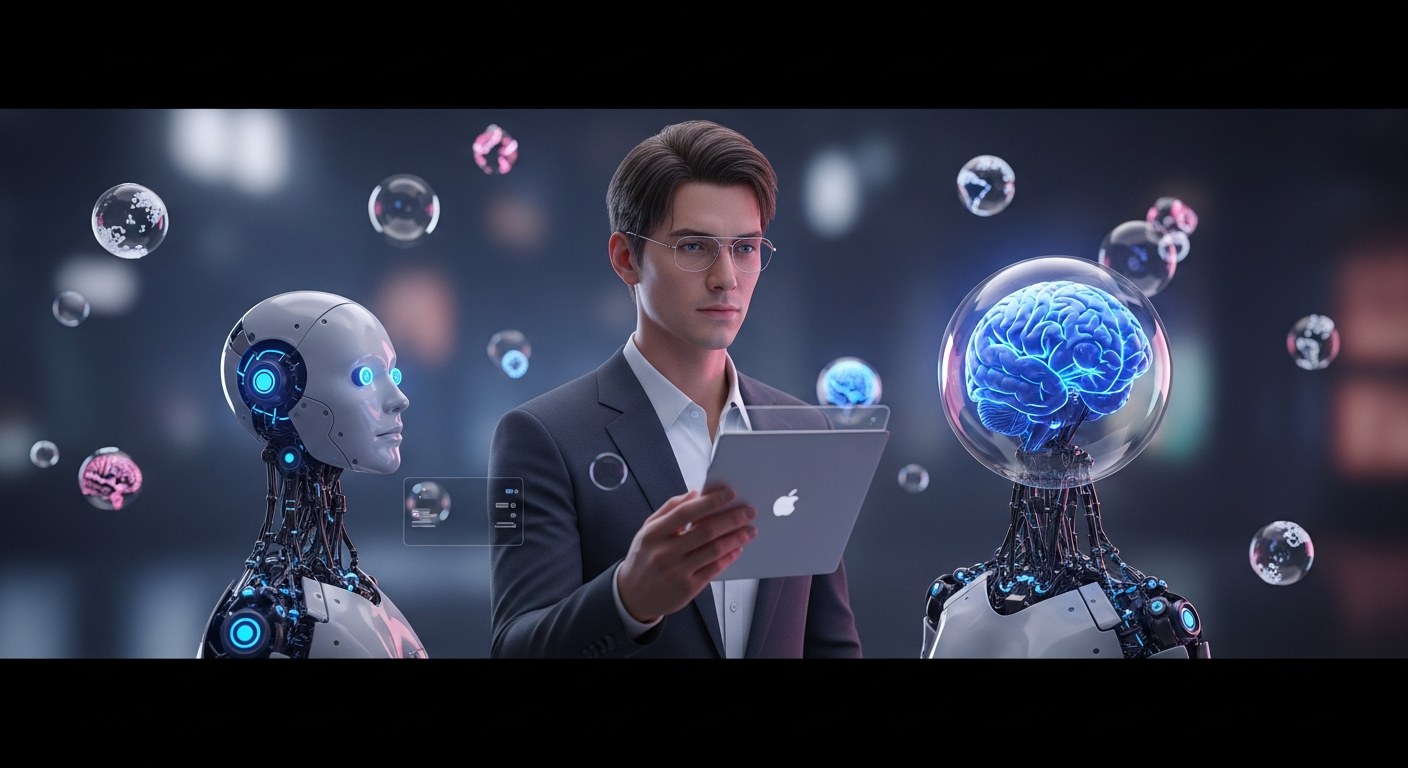 AI-generated
1. Executive Summary
In a move that has captured the attention of many industry observers, Apple, traditionally a defender of authenticity and privacy, unveiled an ambitious suite of artificial intelligence-based photo editing tools at the 2026 Worldwide Developers Conference (WWDC). This announcement represents a significant shift in the company's philosophy, which in the past had expressed reservations about the risks of distorting the perception of reality through generative AI. The new functionalities promise users unprecedented power to manipulate images with astonishing ease, transforming what was once a complex process into a task accessible to everyone.
The most immediate implication of this strategy is the democratization of advanced photo editing, bringing capabilities that previously required professional software and specialized skills directly to consumer devices. However, this advancement is not without significant considerations. By embracing "AI-assisted creativity" in editing, Apple enters a complex ethical terrain where the line between reality and fiction blurs, raising fundamental questions about trust in images and the integrity of visual information in the digital age.
This report breaks down the technical implications of these tools, their disruptive impact on the software and hardware market, and the profound ethical considerations that arise. It is a crucial analysis for photographers, content creators, AI developers, technology companies, and ultimately, for anyone concerned about the future of visual truth and human interaction with technology.

2. Deep Technical Analysis
The AI-powered photo editing tools presented by Apple at WWDC 2026 mark a milestone in the interface between photography and generative artificial intelligence. Among the highlighted functionalities are "Intelligent Contextual Editing," which allows users to fluidly remove or add objects in an image, filling the space coherently with the surrounding environment. Also introduced were "Stylistic Reimagination," which applies complex artistic styles or even recreates entire scenes based on a textual description or a reference image, and "Adaptive Enhancement," which automatically adjusts lighting, color, and composition to achieve aesthetically optimal results, often surpassing the capabilities of a human editor.
At the heart of these capabilities are state-of-the-art generative AI models, including advanced diffusion architectures and highly optimized generative adversarial networks (GANs). These models have been trained on vast datasets of images and text, allowing them to understand visual context, generate coherent pixels, and maintain spatial and semantic consistency even after significant alterations. The sophistication of these algorithms is such that the resulting manipulations are often indistinguishable from an original photograph to the untrained eye, underscoring the power and inherent risk of these tools.
A key advantage for Apple in this race is its deep vertical integration, from hardware to software. The A-series processors in iPhones and iPads, and the M-series chips in Macs, incorporate powerful Neural Engines specifically designed to accelerate AI and machine learning workloads. This allows many of the most intensive editing operations to be performed directly on the device, minimizing latency, enhancing privacy by reducing the need to send data to the cloud, and offering a fluid, near-instant user experience. This edge processing capability distinguishes Apple's offering from many purely cloud-based solutions.
The "reality modification" that these tools enable is profound. It is no longer about subtle retouching, but about the ability to rewrite the visual narrative of an image. A cloudy sky can become a dramatic sunset, a person can be removed from a family photo without a trace, or a non-existent object can be inserted with photographic credibility. This level of manipulation redefines the tacit contract between the photographer and the viewer, where the image is no longer a testament to what was, but a representation of what could have been or what is desired to be.
While similar tools have existed in the professional realm (such as Adobe Photoshop with its "Generative Fill") and on generative AI platforms (like Midjourney or GPT-Image-2), Apple's proposal focuses on accessibility and seamless integration within its ecosystem. Ease of use, optimization for its devices, and the promise of an intuitive user experience are the pillars of its strategy. This not only democratizes advanced editing but also sets a new standard for what users expect from their mobile and desktop devices in terms of creative capabilities.
Apple has emphasized its commitment to privacy, indicating that much of the AI processing is performed on-device. However, the nature of generative AI, which often requires massive foundational models, suggests that some more complex operations might rely on cloud services, albeit with privacy safeguards. The company will need to be transparent about how data is managed and how these models are retrained to ensure that ethical concerns are not compromised by the pursuit of functionality.
Advances in large language models and multimodal models, such as OpenAI's GPT-5.5, Anthropic's Claude 4.8 Opus, Google's Gemini 3.5 Flash, or Meta's Llama, have demonstrated AI's ability to understand and generate complex content. Apple, while using its own proprietary models, benefits from this wave of innovation, applying similar principles of deep learning and contextual understanding to its visual editing tools. Competition in the generative AI space, with players like DeepSeek V4-Pro in China or Mistral Large 3 in Europe, constantly raises the bar for what is technically feasible, pushing Apple to innovate at an accelerated pace.
Despite the sophistication, technical challenges persist. Generating perfect photorealistic content under all lighting and composition conditions remains an active area of research. Furthermore, implementing robust mechanisms to mark or authenticate AI-generated images is crucial to mitigate the risk of misinformation. Apple will have to balance creative freedom with the responsibility of truth, a dilemma that will sharpen as these tools become more powerful and ubiquitous.
3. Industry Impact and Market Implications
Apple's aggressive foray into generative AI photo editing will have a significant impact on multiple segments of the technology and creative industries. Firstly, it exerts immense competitive pressure on established players in image editing software, such as Adobe. While Adobe has pioneered the integration of AI into its products with features like "Generative Fill," Apple's offering, integrated directly into the operating system and hardware, promises a more fluid and accessible experience for the average user. This could erode the user base of entry-level and mid-tier editing software, forcing competitors to innovate even faster or redefine their market niches.
For professional photographers and journalism, the implications are profound and potentially disruptive. The ease with which images can now be manipulated at the pixel level without leaving a visible trace poses an existential challenge to the credibility of photography as a document of reality. Trust in images, already eroded by the Photoshop era, could collapse even further. This will drive the need for new authenticity verification tools and certification protocols for images in sensitive contexts, creating a new sub-market for AI detection and digital forensics.
On the other hand, the democratization of advanced editing opens new avenues for content creators, marketers, and small businesses. The ability to produce high-quality, aesthetically perfect images tailored to specific narratives, without the need for expensive equipment or advanced technical skills, will reduce production costs and accelerate creation cycles. This could lead to an explosion of highly polished visual content, but also to aesthetic homogenization and greater difficulty in distinguishing authentic from synthetic content.
From a hardware perspective, Apple's move reinforces the importance of processors with dedicated AI capabilities. The demand for devices with powerful Neural Engines, like those Apple integrates into its A and M chips, will increase. This not only solidifies Apple's competitive advantage in on-device AI performance but also pushes other chip and device manufacturers (such as Qualcomm, MediaTek, and Samsung) to invest even more in their own neural processing units to keep up with consumer expectations.
The market for ethical AI and synthetic content detection will experience a boom. As the generation of fake images becomes more sophisticated, the need for tools to identify them becomes critical. This will create an "arms race" between AI generators and AI detectors, driving innovation on both fronts. Companies specializing in digital security, media verification, and AI forensics will see a growing demand for their services and technologies.
Finally, Apple's monetization strategies could evolve. While some basic AI features might be integrated for free, more advanced capabilities or access to higher-performance models could be offered through subscriptions (such as Apple One or a new "Apple Creative Pro"). This would not only generate recurring revenue but also incentivize hardware upgrades, as the most demanding features would require the latest and most powerful devices for optimal performance. Apple's move is, ultimately, a strategy to strengthen its ecosystem and its dominant position in the consumer market.
4. Expert Perspectives and Strategic Analysis
Apple's decision to embrace generative AI photo editing at WWDC 2026 has sparked intense debate among analysts and industry experts. The central question is: why now? The general consensus suggests it's a confluence of factors: the maturity of generative AI technology, growing user demand for more accessible and powerful creative tools, and competitive pressure from other tech companies already investing heavily in this space. Apple, known for its cautious approach and its late but polished entry into new markets, has waited until the technology was robust enough and the market receptive enough to make its move.
From an ethical perspective, the AI community and technology philosophers are divided. Some argue that this is a natural progression of human creativity, a new form of artistic expression that frees users from the limitations of physical reality. Others, however, express deep concern about the "cost" of this convenience. The erosion of trust in images, the proliferation of misinformation, and the difficulty of distinguishing real from synthetic are significant risks. "Photography used to be a mirror of reality; now it's a canvas for imagination, and that fundamentally changes our relationship with visual truth," notes a prominent AI ethics expert.
User adoption will be key. While the promise of "perfect photos" is appealing, the question of whether mainstream users will fully embrace "assisted creativity" over authenticity remains open. It is likely there will be segmentation: some users will value perfection and the ability to create idealized images, while others will continue to prioritize capturing genuine moments. Apple's intuitive user interface and its ability to make complex technology accessible will be crucial in driving mass adoption of these tools.
The regulatory landscape is also under scrutiny. As AI-generated images become more indistinguishable from real ones, governments and regulatory bodies are likely to intervene. Discussions already exist about the need to label AI-generated content, especially in news, advertising, and legal contexts. The European Union, with its AI Act, and other countries, could establish frameworks that oblige companies like Apple to implement authentication mechanisms or digital watermarks to indicate image manipulation, which could affect the design and functionality of these tools.
Strategically, this move redefines the Apple brand. For years, Apple has positioned itself as a guardian of privacy and authenticity, a contrast to other tech companies often perceived as more lax with data and truth. By embracing image manipulation, Apple risks diluting this image. However, it also positions itself as a leader in "AI-assisted creativity," a space that promises massive growth. The company seems to be betting that users' desire for creative expression and visual perfection will outweigh ethical concerns, or that it can mitigate these concerns through its focus on on-device privacy.
In the long term, Apple's strategy could be to consolidate its position not only as a hardware and software provider but also as an enabler of "augmented reality" and "mixed reality." AI image editing tools are a fundamental step towards creating digital assets, customizing virtual environments, and generating realistic avatars. As the Apple Vision Pro and future iterations of mixed reality hardware gain traction, these tools will allow users not only to edit photos of their real world but also to build and manipulate the digital worlds they interact with. "Assisted creativity" in photo editing will extend to "assisted creativity" in digital reality.
5. Future Roadmap and Predictions
The introduction of these AI photo editing tools at WWDC 2026 is just the beginning of a much more ambitious roadmap for Apple. In the short term, we can expect a deeper integration of these capabilities across the company's entire software ecosystem. This will include the incorporation of generative editing features into applications such as Pages, Keynote, iMovie, and Final Cut Pro, allowing users to manipulate not only static images but also visual elements within documents, presentations, and videos. The expansion of these features through development APIs will also enable third parties to integrate these powerful capabilities into their own applications.
The evolution of underlying AI models will be continuous. Apple will invest heavily in retraining and improving its generative models, seeking greater photorealism, more nuanced contextual understanding, and faster processing speed. Advances in open-weight models like Llama 4 (with its 10 million token context) or Mistral Large 3, as well as proprietary models from companies like Google (Gemini 3.5 Flash) and Anthropic (Claude 4.8 Opus), will set the pace for what is possible. Apple will seek to surpass these benchmarks, especially in on-device performance, to maintain its competitive advantage and offer a superior user experience.
A key prediction is the intrinsic connection of these tools with Apple's vision for spatial computing and the metaverse. AI image editing capabilities are fundamental for the creation of digital assets, the personalization of virtual environments, and the generation of realistic avatars. As Apple Vision Pro and future iterations of mixed reality hardware gain traction, these tools will allow users not only to edit photos from their real world but also to build and manipulate the digital worlds in which they interact. “Assisted creativity” in photo editing will extend to “assisted creativity” in digital reality.
Finally, we anticipate that Apple will proactively address concerns about authenticity and misinformation. The company is likely to introduce an optional “authenticity layer,” which could include embedded metadata or invisible digital watermarks to indicate whether an image has been generated or significantly modified by AI. This could be part of a broader industry initiative to establish content provenance standards. The ability for users to verify the integrity of an image, or at least be aware of its manipulation, will become a feature as important as the editing tools themselves.
6. Conclusion: Strategic Imperatives
Apple's decision to embrace generative AI photo editing at WWDC 2026 is a watershed moment, not only for the company but for the entire tech industry and society at large. It marks a fundamental shift from a cautious stance towards generative AI to one of bold adoption, prioritizing boundless creativity and ease of use over strict adherence to reality. This move is not merely a software update; it is a redefinition of what it means to capture and share images in the digital age, opening the door to an era of "assisted photographic creativity" accessible to all.
For industry players, the strategic imperative is clear: adapt or fall behind. Editing software developers must innovate at an unprecedented pace, while hardware manufacturers must invest in on-device AI capabilities to compete with Apple's integrated advantage. Beyond technology, there is an urgent call to action for the global community: to develop robust ethical frameworks, AI detection tools, and media literacy programs to equip users with the ability to discern truth in an increasingly malleable visual landscape. Responsibility lies with both technology creators and their consumers.
Apple has opened Pandora's box of large-scale visual manipulation, but it has also unleashed a torrent of new creative possibilities. The future of visual media will be defined by the tension between authenticity and imagination, between truth and assisted creativity. The Cupertino company, with its immense influence, now has the opportunity and responsibility to guide this conversation, setting standards not only for technological innovation but also for the ethical use of AI in shaping our perception of the world.