Español
 English
 Français
 Português
 Deutsch
 Italiano
Apple's New AI-Powered Photo Editing Tools in iOS 27: A Deep Dive into Their Impact and Duality
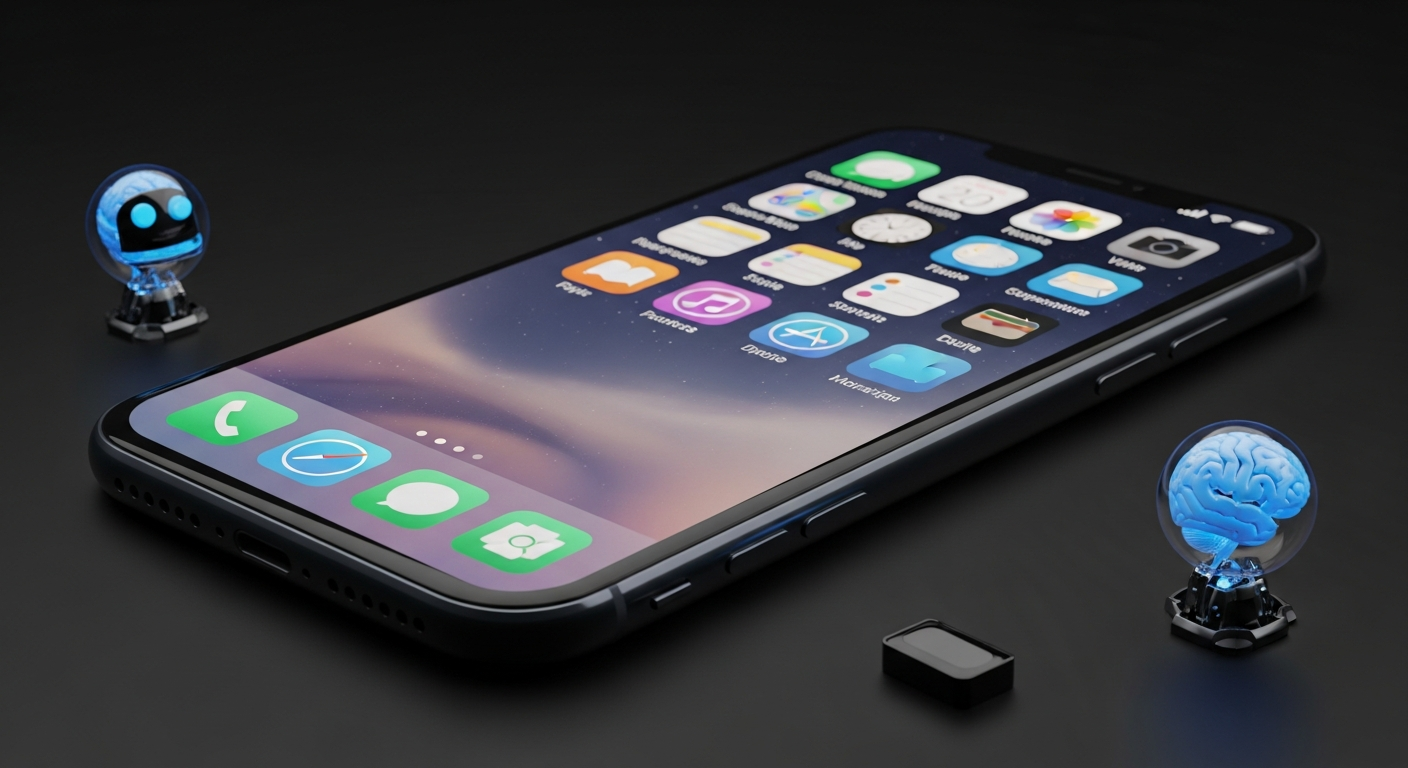 AI-generated
1. Executive Summary
The arrival of iOS 27 marks a milestone in the evolution of mobile photography. Apple has integrated a set of artificial intelligence-based photo editing tools directly into its operating system, transforming the user experience of the most used camera globally.
This investigative report delves into the underlying technology, the industry impact, and the strategic implications of these innovations. We analyze how Apple seeks to differentiate itself in an increasingly saturated AI market with its focus on privacy and on-device processing.
The ability of these tools to "enhance" reality with a simple tap is undeniable, but the ease with which images can be altered raises fundamental questions about trust in visual content and the future of photographic narrative.

2. In-Depth Technical Analysis
The implementation of AI photo editing tools in iOS 27 represents a qualitative leap for Apple, built on years of development of its Neural Engines and an on-device processing philosophy.
Key features introduced in iOS 27 include an equivalent to Google's "Magic Eraser," which allows unwanted objects or people to be removed from an image with remarkable precision. This system uses convolutional neural networks (CNNs) and diffusion models to analyze the image context and coherently fill the empty space.
Comparison with Google Pixel is inevitable. While Google has been committed to generative AI in photography for years, Apple has waited to launch a more polished and, crucially, more integrated suite within its ecosystem.
3. Industry Impact and Market Implications
Apple's foray into AI photo editing through iOS 27 is not just a feature update; it's an earthquake reverberating throughout the tech and creative industries.
The most immediate impact is felt in the smartphone segment. Google and Samsung, which have already been at the forefront of AI in photography, now face direct competition from a player with a massive user base and a reputation for excellence in hardware and software.
For the third-party app ecosystem, the implications are dual. On one hand, Apple's native tools could cannibalize a portion of the photo editing app market. On the other hand, if Apple decides to open its AI APIs to developers, a new wave of innovation could emerge.
4. Expert Perspectives and Strategic Analysis
The arrival of AI tools in iOS 27 has generated a chorus of opinions among industry analysts and experts, ranging from enthusiasm for the democratization of advanced editing to caution regarding its implications.
The technical consensus suggests that Apple has waited for the technology to mature sufficiently to offer a polished and reliable user experience, even if that means not being first to market.
Apple's relationship with other AI giants, such as Google, is also a point of strategic analysis. Although Google evaluates Gemini 3.5 Flash for iOS in the search engine domain and maintains distribution agreements, it is crucial to understand that there are no equity alliances or investments linking both companies in the development of iOS 27's photo editing tools.
5. Future Roadmap and Predictions
The introduction of AI in iOS 27 photo editing is just the first chapter of a much broader narrative for Apple. The future roadmap points towards an even deeper and more sophisticated integration of artificial intelligence across the entire ecosystem.
The evolution of these tools will also extend to multimodality. Imagine a future where we not only edit photos with gestures or taps, but can interact with them using natural language.
6. Conclusion: Strategic Imperatives
Apple's new AI photo editing tools in iOS 27 are a monumental advance in the democratization of digital creativity, putting editing capabilities previously reserved for professionals within reach of billions of users.
Seamless integration, on-device processing, and a focus on privacy are Apple's hallmarks that raise the industry standard. However, they open a Pandora's box of ethical dilemmas, blurring the line between reality and fiction, and demanding a fundamental re-evaluation of what "authenticity" means in the digital age.
The strategic imperatives for the industry are clear. Smartphone manufacturers must accelerate their AI innovation, but with an eye on ethics and transparency. Software developers must seek differentiation through specialization and intelligent integration.