Español
 English
 Français
 Português
 Deutsch
 Italiano
Arm Total Design: The Architecture Unifying Physical Intelligence and Global Robotics
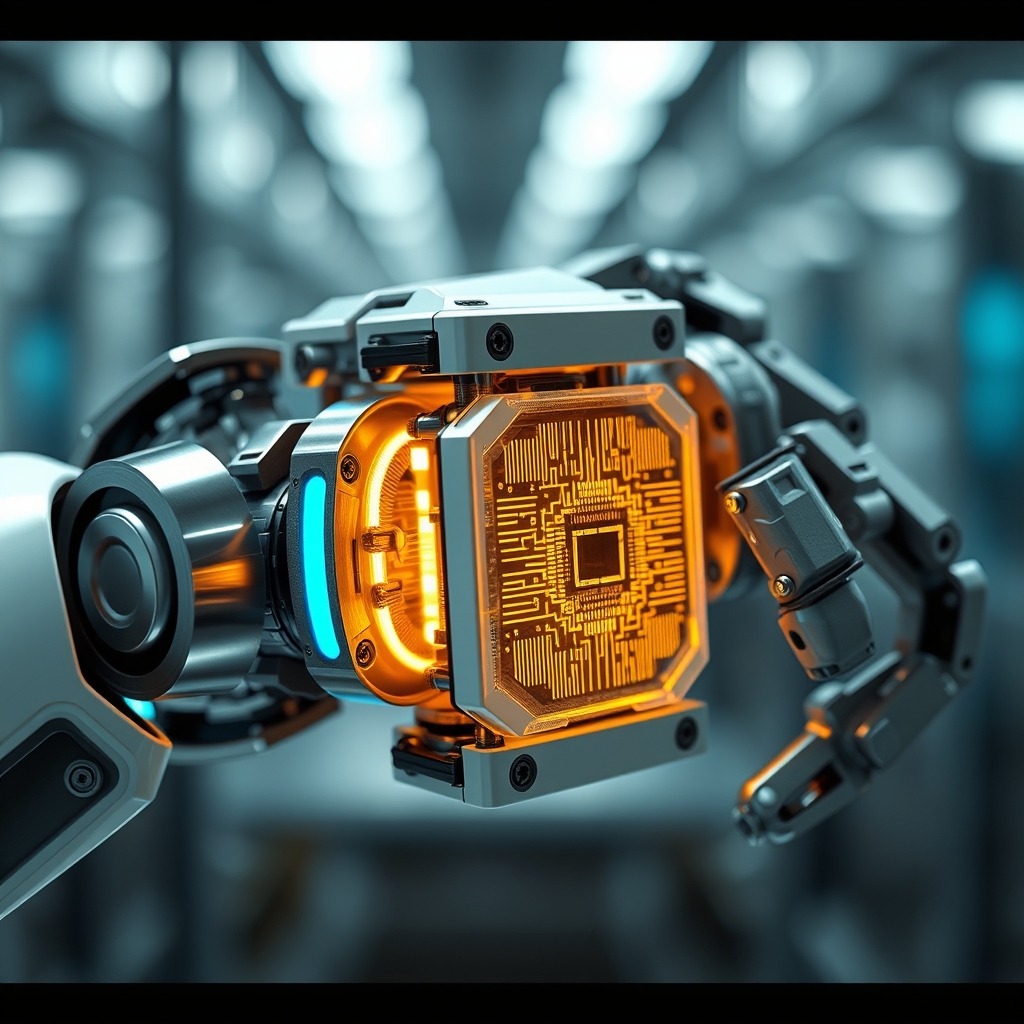 AI-generated
1. Context and Key Points
Industrial computing infrastructure is undergoing a structural shift as Arm introduces its "Total Design for Physical AI" framework, aimed at standardizing robotic and autonomous system development. This initiative directly targets the fragmentation that has long impeded the mass deployment of artificial intelligence in physical sectors such as mining, precision agriculture, advanced manufacturing, and global logistics.
By consolidating hardware, software, and development tools under a unified standard, Arm addresses a market opportunity projected to reach 200 billion dollars annually during the next decade. For industrial organizations, the ability to scale robotic deployments efficiently is now a core priority. Original equipment manufacturers (OEMs) and software developers can leverage this framework to minimize integration overhead and accelerate time-to-market for complex physical solutions.
2. Technical Highlights
The core of "Total Design for Physical AI" relies on an abstraction layer that enables developers to deploy AI models, such as Claude Mythos 5.1 or Llama, directly at the network edge of physical devices. Historically, robotics suffered from acute interoperability bottlenecks, with proprietary architectures restricting code portability and energy efficiency.
Arm mitigates these issues by standardizing hardware interfaces and optimizing processor cores for real-time inference. The incorporation of dedicated AI accelerators within the processor architecture allows computer vision and motion control algorithms to execute with minimal latency, a non-negotiable requirement for dynamic industrial environments.
The architecture leverages the scalability of the Neoverse and Cortex core families, allowing the same software stack to operate across small agricultural sensors and large autonomous transport systems. This versatility enables organizations to retrain AI models in the cloud and deploy them directly onto physical hardware without structural code modifications. Additionally, the framework integrates validation tools to ensure third-party components satisfy functional safety requirements. In domains where AI governs physical actuation, hardware reliability matches model accuracy in importance. Arm establishes standardized communication protocols for sensors, actuators, and processing units, forming a digital backbone for modern robotics.
Integration with large-scale language and vision models, including those running on GPT-6 Astra or Gemini 3.8 Flash infrastructure, is streamlined through optimized libraries for memory and bandwidth management. This equips autonomous systems to interpret complex natural language instructions and adapt their physical behavior in real time.3. Impact on the Sector
Fragmentation has historically represented the primary barrier to scalable robotics. Organizations have traditionally dedicated substantial resources to custom system integration. Arm's standardization strategy transitions the market toward a platform model, where developers focus on application logic rather than hardware compatibility.
Within manufacturing and logistics, this evolution yields measurable reductions in operational expenditure. Fleet updates managed via software over a consistent hardware foundation extend asset longevity and mitigate single-vendor lock-in, fostering competition and peripheral innovation.
In precision agriculture and mining, where cloud connectivity is often intermittent, localized AI execution is vital. Arm's architecture empowers these systems to function autonomously, making critical decisions offline and enhancing operational resilience in extreme conditions.
At the macroeconomic level, this standardization accelerates movement toward Industry 5.0. Lower barriers to entry allow a broader spectrum of organizations to integrate advanced robotics, increasing global productivity. Furthermore, standardization underpins secondary markets for specialized robotic software deployable across any Arm-compatible hardware.4. Market Perspectives
Technical consensus indicates that Arm is positioning itself as the foundational architect of physical AI infrastructure. By defining the reference design, Arm establishes its architecture as the default baseline for silicon vendors entering the robotics market.
Enterprises dependent on proprietary systems should evaluate transitions toward open-standard architectures. Single-vendor dependence introduces strategic risk in a rapidly evolving technological landscape. Adopting standardized frameworks ensures operational agility.
Strategic investments in hardware supporting "Total Design for Physical AI" must prioritize interoperability. Organizations capable of decoupling AI software from specific physical hardware retain a distinct competitive advantage, gaining the flexibility to integrate frontier language and vision models without hardware replacements. Technology leaders must also enforce security by design. Standardization simplifies fleet-wide security patch deployment and firmware updates, resolving a historical vulnerability in traditional robotics. Managing a fleet of robots with the operational simplicity of cloud servers represents the ultimate objective of this framework.
5. Roadmap and Predictions
Commercial robotic devices utilizing "Total Design" certifications are expected to emerge in the near term, demonstrating significant reductions in development cycles. Initial adoption will concentrate in logistics and manufacturing, where return on investment is most immediate.
Over subsequent years, multimodal AI integration into edge hardware will become standard practice. Arm's architecture will serve as the execution substrate, enabling robots to perform advanced reasoning tasks in unstructured environments such as construction and healthcare.
Long-term projections point toward the foundation of an "Internet of Robots," where disparate autonomous systems communicate and collaborate via universal protocols, eliminating lingering operational silos across the industry.
6. Conclusion and Assessment
The adoption of "Total Design for Physical AI" requires a restructuring of data governance and system architecture within the enterprise. CTOs must prioritize modularity and interoperability to avoid vendor lock-in, ensuring that the deployment of inference models at the edge is carried out on standardized hardware that allows for agile updates and efficient lifecycle management. Architectural resilience in the face of evolving AI models is now the fundamental pillar of operational competitiveness.
In terms of economic efficiency, consolidation into a common standard drastically reduces the total cost of ownership (TCO) by optimizing the ratio between performance per watt and the cost of inference per token. The implementation of this architecture allows for native integration of security by design, facilitating regulatory compliance and risk mitigation in critical environments, which is indispensable for the scalability of robotic fleets in complex industrial settings.