Español
 English
 Français
 Português
 Deutsch
 Italiano
California County Deploys Autonomous Firefighting Drones with 500-Gallon Foam Payload to Combat Wildfires
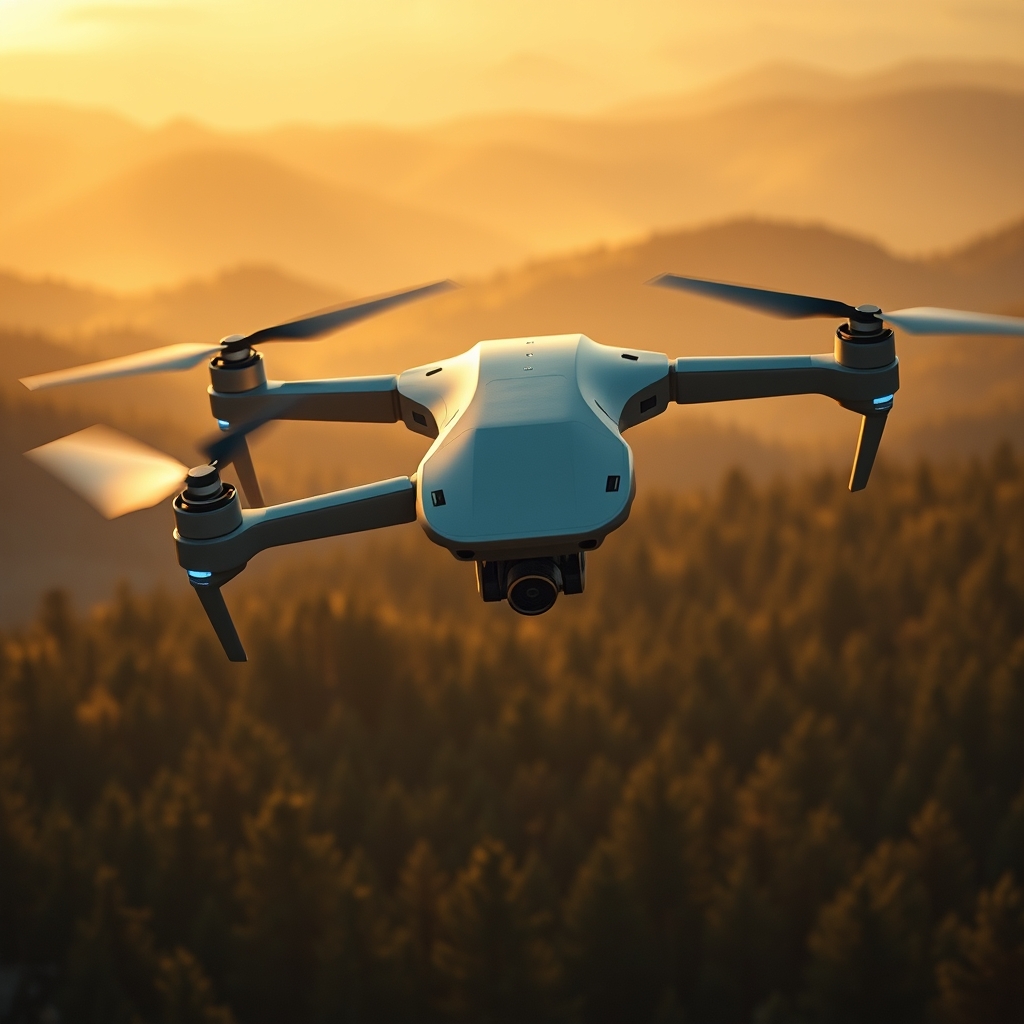 AI-generated
1. Context and Key Points
The convergence between autonomous robotics applied to critical scenarios and natural disaster management has reached a new operational milestone in the state of California. One of the regions most vulnerable to wildfires has begun the operational deployment of large-scale firefighting drones equipped with a payload capacity of up to 500 gallons of retardant foam. This advancement goes beyond traditional technological experimentation to become a front-line solution against the exponential increase in wildland-urban interface fires driven by climate change.
This deployment redefines initial attack and containment protocols in areas with difficult terrestrial access or where the risk to human pilots is unacceptable. By eliminating direct human intervention during the most dangerous phases of firefighting, the platform combines high-precision autonomous navigation with high-power propulsion systems capable of maneuvering under extreme atmospheric conditions. For emergency directors and public administrations, the adoption of these technologies presents both a drastic optimization in the operating cost of traditional air fleets and an unprecedented regulatory challenge in restricted airspace.
The impact of this initiative is not limited to the strictly local sphere. It establishes a regulatory and technological precedent that major fire departments and civil protection agencies globally are closely examining. The transition from aerial observation via lightweight unmanned vehicles to heavy physical intervention represents a paradigm shift in robotic engineering applied to public safety, placing autonomous navigation software and electric and hybrid propulsion systems at the core of the disaster defense strategy.
2. Technical Highlights
From the perspective of aeronautical and embedded systems engineering, the design of a drone capable of carrying and discharging 500 gallons of extinguishing foam poses formidable physical challenges. A gallon of water or retardant foam weighs approximately 3.78 kilograms, meaning the payload far exceeds nineteen hundred pounds, not counting the structural weight of the fuselage itself, the high-lift motors, and the batteries or hybrid fuel systems necessary to guarantee viable operational autonomy.
To manage this inertial mass in flight, the flight control architecture moves away from conventional stabilization algorithms and adopts model-based predictive adaptive control systems. These systems constantly recalculate the aircraft's center of gravity as the foam load is gradually discharged over the fire source. The sudden loss of weight in a matter of seconds generates severe aerodynamic alterations that the control software must compensate for in milliseconds through the independent modulation of rotor vector thrust.
The propulsion of these aircraft requires high-voltage architectures to minimize resistive losses in wiring and maximize power density. While lighter models use standard lithium polymer cells, these heavy-class platforms incorporate hybrid propulsion systems or hydrogen fuel cells combined with high-discharge capacitors, guaranteeing a rapid response time and an autonomy that exceeds the flight times of traditional commercial multirotor drones. The navigation and environmental perception subsystem operates in environments degraded by dense columns of smoke, suspended ash, and extreme thermal turbulence. When traditional optical sensors in the visible spectrum are rendered useless, the platform integrates a heterogeneous sensor suite that includes long-range solid-state LiDAR, millimeter-wave radar for smoke penetration, and high-resolution thermographic cameras. This data is processed locally on board by specialized neural processing units, allowing the drone to plot its own approach and discharge trajectory without relying on satellite or radio communication links that could be interfered with. The foam dispersion mechanism has been optimized using electronically controlled variable pressure nozzles. The system analyzes the fire front temperature, local wind velocity, and terrain topography in real time to adjust the spray pattern, maximizing surface coverage and preventing the premature evaporation of the retardant agent before it reaches the vegetation or threatened structures.
3. Sector Impact
The emergence of heavy-class firefighting drones significantly alters the traditional firefighting aviation market, historically dominated by fixed-wing tanker aircraft and manned helicopters. The cost per flight hour of a heavy helicopter adapted for water drops includes not only the intensive maintenance of the turbine and avionics, but also the inherent risk and the salary and insurance costs of crews operating in California canyons and mountain slopes under conditions of near-zero visibility.
For aerospace and defense technology manufacturers, this niche represents an accelerating expansion market. Companies specialized in terrestrial and aerial mobile robotics find in civil protection an institutional client with recurring budgets and unavoidable operational urgency. The ability to operate these fleets twenty-four hours a day, without the physiological rest restrictions imposed on human pilots, exponentially increases nighttime response capability, a critical period when wildfires typically spread out of control due to decreasing relative humidity.
Property and casualty insurance companies observe this deployment with great technical and financial interest. The potential reduction of catastrophic losses in high-risk residential areas could translate into a revision of premiums and the requirement for better automated mitigation standards in exposed municipalities. The integration of these systems into early warning networks allows containment in the first minutes of ignition, preventing a minor fire cone from evolving into a disaster of regional proportions. At the supply chain level, reliance on critical components for the manufacturing of these high-power systems, such as rare-earth magnets for brushless motors, high-temperature-resistant semiconductors, and industrial-grade LiDAR sensors, places the industry under the lens of geopolitical resilience. Manufacturers seek to diversify their suppliers to ensure production at scale in the face of potential demand that could rapidly spread to other states and countries with similar climatic risks, such as southern Europe and Australia.
4. Market Outlook
Civil defense and industrial automation analysts agree that the shift from passive surveillance to active intervention via heavy aerial robots marks the beginning of a new era in emergency management. Experts point out that the main challenge no longer lies in the vehicles' lift capacity, but in the maturity and robustness of autonomous decision-making algorithms in highly stochastic and changing environments.
From the perspective of operational integration, traditional fire departments must evolve toward hybrid models where human operators act as strategic supervisors of robotic swarms, rather than direct executors of risky maneuvers. This requires a complete redesign of command and control centers, equipping them with immersive user interfaces and real-time geospatial visualization tools that allow the monitoring of multiple missions simultaneously.
Systems engineers recommend that local authorities adopt a gradual approach to implementation, starting with low-population-density test zones to validate fail-safe protocols and aerial emergency corridors. Likewise, the need is highlighted to establish open interoperability standards that allow different agencies to share telemetry data and coordinate drone fleets from different manufacturers during large-scale incidents. Regarding regulations, aviation law experts warn that current Federal Aviation Administration regulations in the states involved must be updated to contemplate autonomous flight operations beyond visual line of sight (BVLOS) with hazardous loads and weights exceeding the historical limitations of commercial unmanned vehicles.
5. Next Steps
The technological evolution of autonomous extinction systems will follow a clear trajectory in the coming years, driven by incremental improvements in energy density and on-board computing power.
- 2027-2028 Horizon: Deployment of fleets coordinated through cooperative swarms, where a mother drone with greater payload capacity acts as a communications repeater and guide for smaller units equipped with thermal sensors specialized in searching for secondary hotspots.
- 2029-2030 Horizon: Widespread adoption of propulsion systems entirely based on green hydrogen, eliminating the carbon footprint of the emergency fleet itself and expanding operational action radii to more than one hundred kilometers from the launch base.
- 2031 Horizon and Beyond: Full integration with Internet of Things (IoT) ground sensor networks and AI-driven local predictive weather models, allowing an autonomous preventive deployment of drones to high ignition probability zones before the first spark is detected.
6. Conclusion and Assessment
The deployment of large-capacity autonomous drones in California does not constitute a simple modernization of firefighting equipment, but a structural transformation in the way contemporary society faces natural disasters exacerbated by the climate crisis. The convergence of heavy robotics, blind navigation in dense smoke environments, and real-time adaptive control demonstrates that technology has reached the level of maturity necessary to protect lives and infrastructure in scenarios of maximum complexity.
For technology directors, systems engineers, and public safety agency heads, the current strategic imperative is to accelerate the adoption of these platforms through rigorous pilot programs and close collaboration with airspace regulators. Investment in fast-charging infrastructure, resilient connectivity, and operator training in robotic supervision will determine which regions successfully mitigate the impact of future wildfires. Delaying this technological transition implies assuming an unsustainable human and economic cost in the face of an increasingly adverse environmental environment.