Español
 English
 Français
 Português
 Deutsch
 Italiano
China challenges US AI dominance: Moonshot and Alibaba launch record-low cost models
 AI-generated
1. Executive Summary
July 20, 2026 will be recorded as the day the artificial intelligence gap between the United States and China narrowed significantly. In a coordinated offensive, Chinese companies Moonshot AI and Alibaba have simultaneously unveiled next-generation language models that, according to their own internal evaluations and preliminary independent benchmarks, directly compete with models from OpenAI (GPT-5.6 Sol) and Anthropic (Claude Fable 5 and Claude Opus 4.8).
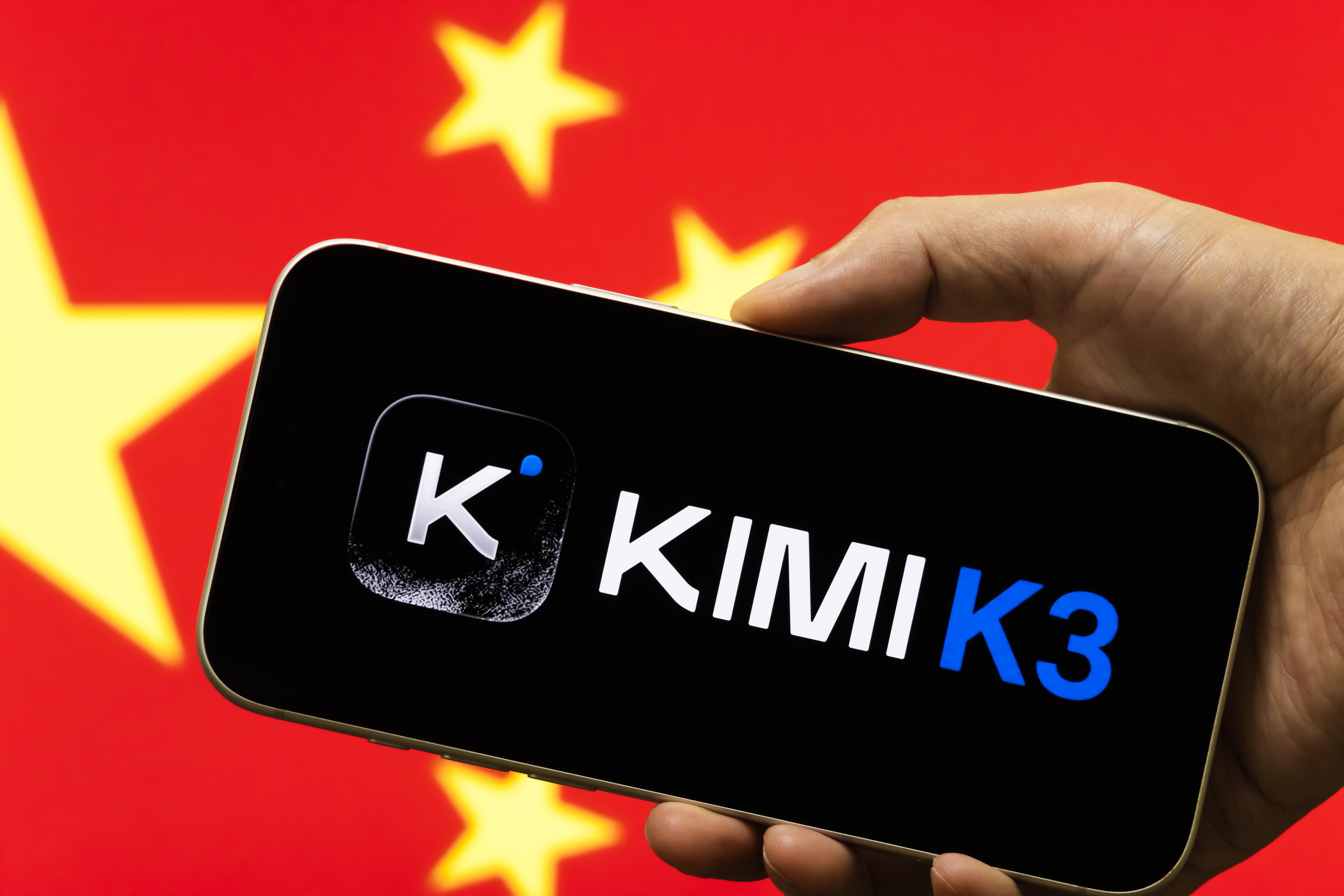
What makes this move seismic is not just the technical parity, but the inference economics. Moonshot has stated that its new model, Kimi K3 offers an output token cost up to 80% lower than GPT-5.6 Sol on complex reasoning and code generation tasks. Meanwhile, Alibaba has launched Qwen3-Coder-Next.7-Max, a multimodal model that, according to the company, surpasses Gemini 3.5 Flash in video processing speed and long-context understanding, with a deployment cost that halves that of Claude Sonnet 5.
This report is aimed at CTOs, AI architects, investors, and technology policy makers. The question is no longer whether China will catch up to the US, but when and how it will reconfigure the global AI supply chain.
2. Deep Technical Analysis
To understand the magnitude of this one-two punch, it is necessary to break down the technical innovations that make it possible. Moonshot AI, known for its focus on ultra-long contexts, has pushed its architecture to the limit with Kimi K3 This model is not a simple incremental update; it represents a paradigm shift in attention efficiency.
The secret to the low cost lies in "Thought-Path Distillation." Instead of training a massive model from scratch, Moonshot has used a multi-stage distillation process where a "teacher" model generates reasoning chains for code and math problems. These chains are used to train a much smaller "student" model that learns not only the correct answer, but the logical path to reach it.
3. Industry Impact and Market Implications
The simultaneous launch of these models is not a coincidence. Industry sources indicate that both Moonshot and Alibaba coordinated their publication dates to maximize impact during the earnings season of major US tech companies.
For companies consuming AI APIs, the message is transformative. Until now, the equation was simple: you paid a premium for the best performance or accepted lower performance for a lower cost. The value proposition of Kimi K3 and Qwen3-Coder-Next.7-Max breaks this dichotomy. They offer top-tier performance at a cost that represents an 80% reduction in inference cost for complex tasks.
4. Expert Perspectives and Strategic Analysis
The technical consensus among industry analysts is that these launches represent a turning point. "What we are seeing is not a sprint, but a race of endurance and efficiency." China has understood that the next frontier is not the largest model, but the cheapest model to operate at scale.
The strategy of Moonshot and Alibaba is particularly astute because it attacks the Achilles' heel of OpenAI and Anthropic: profitability. Despite OpenAI's multi-billion dollar revenues, the inference cost of GPT-5.6 Sol is estimated to remain prohibitive for many high-volume enterprise applications.
5. Future Roadmap and Predictions
Based on launch cycles and public statements from the companies, we can outline a likely roadmap for the next 18 months:
- August - October 2026: OpenAI and Anthropic will respond with price cuts on their GPT-5.6 Sol and Claude Sonnet 5 models.
- November 2026 - February 2027: Alibaba will launch Qwen3-Coder-Next.8, which will integrate an "autonomous code agent" capable of executing and debugging code in a sandbox.
6. Conclusion: Strategic Imperatives
The one-two punch from Moonshot and Alibaba is not an isolated event, but the signal of a new era in artificial intelligence. The US advantage is no longer an unbreachable moat, but a competitive advantage that is rapidly eroding.
The strategic imperatives are immediate. First, diversify the AI model supply chain. Second, invest in internal model evaluation teams. Third, pressure regulators to establish clear and fair rules for global AI competition.