Español
 English
 Français
 Português
 Deutsch
 Italiano
Chinese Automakers' Robotic Bet: Replicating Tesla's Strategy with Qwen 3.8-Max
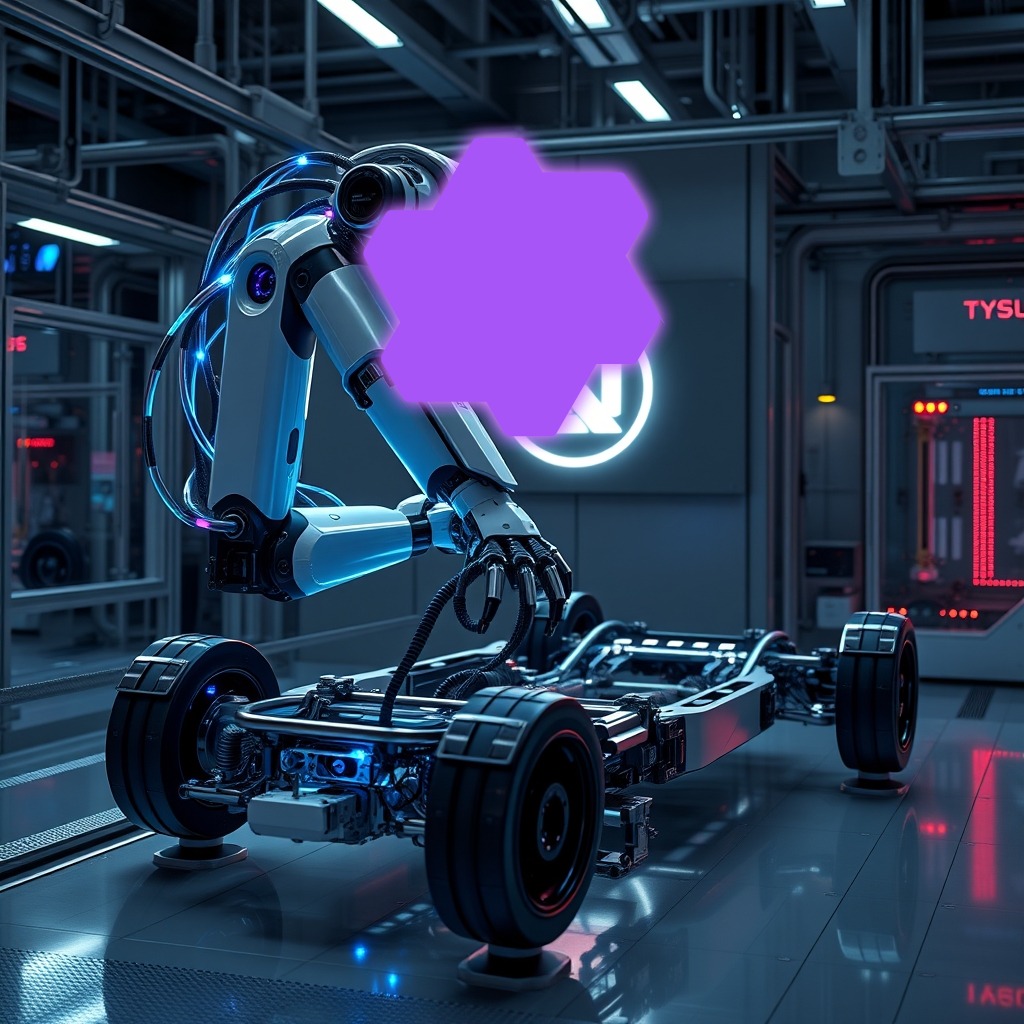 AI-generated
1. Context and Highlights
As of August 2026, the Chinese automotive industry has transitioned from a mere assembler of electric vehicles to the epicenter of industrial-scale humanoid robotics. Following the strategic trajectory established by Tesla, leading manufacturers in China are integrating their mass manufacturing capabilities with the latest advancements in artificial intelligence models, such as Qwen 3.8-Max and DeepSeek-V4-Pro, to develop robots capable of operating in unstructured environments. This shift addresses the critical requirement to automate high-complexity tasks in assembly lines and logistics. The convergence between robotics and automotive engineering allows these manufacturers to drastically reduce long-term operating costs while establishing a new business vertical that promises higher margins than traditional vehicle sales. For industry leaders, this marks the beginning of an era where the vehicle is merely the first product of a broader intelligent hardware platform.
2. In-Depth Technical Analysis
The architecture of the new generation of Chinese humanoid robots is based on unprecedented vertical integration. Unlike the academic prototypes of previous years, these robots are designed under the "design for manufacturing" (DFM) philosophy, utilizing the same powertrain components and actuators found in next-generation electric vehicles. This strategy enables an economy of scale that reduces unit production costs exponentially.
At the core of their intelligence, these robots employ large language models (LLMs) and vision-language models (VLMs) adapted for motor control. The capacity of models like Qwen 3.8-Max to process massive context windows allows robots to interpret complex natural language instructions and translate them into precise kinematic trajectories. This integration is achieved through reinforcement learning architectures that are continuously retrained in digital simulation environments before deployment on physical hardware.
3. Industry Repercussions
The entry of automakers into the humanoid robotics market fundamentally alters competitive dynamics. Companies that traditionally focused on battery efficiency and vehicle autonomy are now competing for talent in robotics, Computer Vision, and control systems. This has led to market consolidation where only entities with access to massive capital and integrated supply chains can maintain a competitive edge. For the industrial ecosystem, this implies that automation will no longer be rigid. Traditional industrial robots, which require closed work cells and complex programming, are being replaced by humanoids that can adapt to different workstations according to production demand. This flexibility is the key to maintaining competitiveness in a global market where labor costs continue to rise. The impact on component suppliers is equally significant, as the demand for high-torque density electric motors, force sensors, and lightweight composite materials has reached new peaks. Automakers are leveraging their purchasing power to pressure suppliers to reduce costs, benefiting both vehicle and robot production. From a macroeconomic perspective, this trend positions China as a leader in the export of robotic labor, potentially reconfiguring global supply chains and reducing dependence on human labor in critical manufacturing sectors.
4. Market Perspectives
Technical consensus indicates that the success of this initiative depends not only on the physical dexterity of the robot but on the ability to integrate these systems into existing workflows without causing disruptions. The current phase involves validation in controlled environments, where the objective is to demonstrate that the total cost of ownership (TCO) of a humanoid robot is lower than that of a human worker on a 24-hour shift. Companies observing this sector are advised not to underestimate the speed of iteration. Unlike vehicle development cycles, which usually span 3 to 5 years, robot software is updated weekly. This agility allows behavioral errors to be corrected in near real-time, a competitive advantage that traditional industrial machinery manufacturers have not yet replicated.
The recommended strategy for industry players is the adoption of open hardware platforms. Much like the Llama 4 ecosystem has democratized access to language models, the standardization of robotic interfaces will allow third parties to develop specific applications for these robots, accelerating mass adoption in sectors such as logistics, construction, and personal care. Finally, safety and ethics in the deployment of these systems remain a point of debate. The industry must establish clear protocols for human-robot interaction, ensuring that efficiency does not compromise workplace safety. Transparency in model retraining and data provenance will be fundamental to gaining the trust of regulators.
| Feature | Traditional Industrial Robot | Next-Gen Humanoid |
|---|---|---|
| Task Flexibility | Low (Rigid programming) | High (Imitation learning) |
| Work Environment | Isolated cells | Environments shared with humans |
| Implementation Cost | Very High | Moderate (Economy of scale) |
| Software Update | Annual/Biannual | Weekly/Continuous |
5. Roadmap and Predictions
By the end of 2026 and early 2027, it is expected that the first automotive-manufactured humanoid robots will begin performing internal logistics tasks in large-scale assembly plants. The initial testing phase will focus on material transport and the assembly of non-critical components, where the risk of error is manageable. By 2028, these robots are expected to perform precision assembly tasks, such as wiring and vehicle interior installation. By this point, integration with models like Qwen 3.8-Max will be sufficiently advanced that robots will be able to perform visual quality diagnostics in real-time, detecting defects that escape the human eye. In the long term, the vision involves the commercialization of these robots for sectors outside of automotive. The ability to adapt software for service, maintenance, and personal assistance tasks will be the next major milestone.
6. Summary & Assessment
The commitment of Chinese manufacturers to humanoid robotics confirms the evolution toward an embodied intelligence industry. For CTOs, the imperative is data governance and architectural resilience; the integration of these systems requires a network infrastructure that supports low-latency local inferences and data management that ensures intellectual property protection during model retraining. Cost optimization must focus on efficiency per token and the reduction of technical debt through modular architectures that allow interoperability between different robotic workflows.
The deployment strategy must prioritize safety-by-design and fault resilience, avoiding vendor lock-in through the adoption of open standards in control interfaces. Economic efficiency will not come solely from hardware, but from the ability to orchestrate fleets of robots through software that allows continuous updates without operational interruptions. Organizations that manage to integrate these systems into a unified data architecture will dominate the next decade of industrial production.