
 Español
 English
 Français
 Português
 Deutsch
 Italiano
Claude: Your Ultimate Personal Assistant Connects to Your Digital Life
The Confluence of Artificial Intelligence and Everyday Life: Claude Redefines Personal Assistance
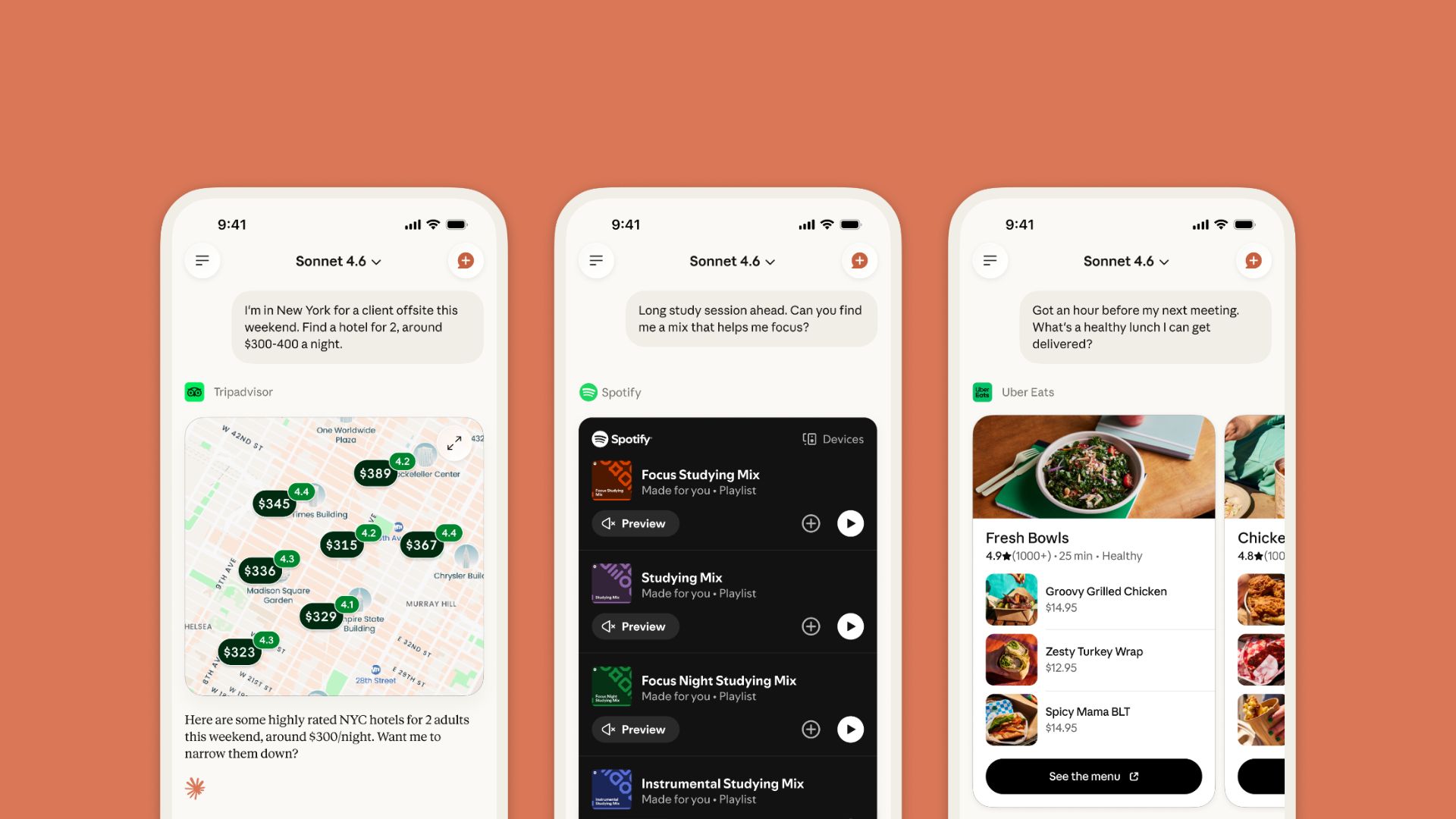
Artificial intelligence (AI) has transcended the boundaries of science fiction to become deeply rooted in our daily lives. However, its true power is unleashed when it integrates seamlessly and meaningfully with the tools we already use. In a strategic move that promises to redefine human-AI interaction, Anthropic has announced a monumental expansion in the capabilities of its advanced language model, Claude. Far from being limited to business environments, Claude now connects directly with a plethora of personal applications, ranging from leisure and entertainment to financial management and household chores. This integration with platforms like Spotify, Uber Eats, TurboTax, Audible, AllTrails, and TripAdvisor is not just an improvement; it's a qualitative leap towards creating a truly omniscient and proactive personal assistant.
From the Office to the Home: Claude's Strategic Expansion
Traditionally, AI integrations in the professional sphere have dominated headlines. Anthropic had already laid the groundwork with connections to productivity tools like Microsoft applications, optimizing workflows and information management in work environments. However, the recent wave of connectors marks a paradigm shift, focusing on the user's personal sphere. This evolution is crucial because it democratizes access to advanced AI, taking it beyond meetings and reports to embed it in the most mundane and personal activities.
An Ecosystem of Applications at Claude's Fingertips
The list of applications now accessible through Claude is diverse and revealing, signaling a clear ambition: to become the central hub of the user's digital life. Among the most notable integrations are:
- Spotify and Audible: For music or audiobook recommendations based on mood, preferences, or current user activity.
- Uber and Uber Eats: To coordinate rides or order food, simplifying daily logistics.
- AllTrails and TripAdvisor: To plan outdoor adventures or trips, offering suggestions for routes, accommodations, and activities.
- Instacart: To manage shopping lists and place grocery orders, optimizing household tasks.
- TurboTax: To assist with tax preparation, an area that has historically generated complexity and stress.
- And many others, ranging from health and wellness to learning and personal development.
The mechanism is intuitive: once an application is connected, Claude has the ability to suggest and use relevant tools directly within the conversation. Imagine asking Claude for a recommendation for a scenic hike near your location, and the AI proactively offering detailed AllTrails routes, complete with information on difficulty and duration. Or, after a long day, expressing your desire for a specific dinner, and Claude presenting Uber Eats options based on your preferences and nearby restaurants. This contextualization and proactivity are the true differentiators.
The Promise of a Transformed User Experience
The integration of these personal applications with Claude is not merely a technical feature; it is a promise of a deeply enhanced and personalized user experience. The benefits are multifaceted and touch fundamental aspects of efficiency and quality of life.
Unprecedented Convenience and Efficiency
The fragmentation of our digital lives into countless applications is a reality. Claude, by acting as a central orchestrator, reduces the need to switch between different platforms. The ability to perform multiple tasks—from planning a trip to ordering a song—from a single conversational interface saves time and minimizes digital friction. This translates into operational efficiency that frees up valuable minutes in the daily routine.
Personalization and Contextual Relevance
The true magic of this expansion lies in Claude's ability to offer recommendations and assistance that are intrinsically relevant to the user's context. By accessing data from applications like Spotify, it can understand your musical tastes; with AllTrails, it can infer your interests in outdoor activities. This deep understanding allows Claude to anticipate needs and offer solutions that feel genuinely personalized, transforming the interaction from a simple query to true coactive assistance.
Reduction of Cognitive Load
Constant decision-making and information management can be exhausting. Claude, by taking charge of searching, filtering, and presenting relevant options from its connected applications, lightens this cognitive load. The user can delegate tasks and trust that the AI will present the best options, allowing them to focus on what truly matters.
Challenges and Ethical Considerations: Privacy at the Core
While the benefits are undeniable, such deep integration with the user's personal life raises important questions and challenges, especially concerning privacy and data security. Anthropic, like other AI leaders, has the responsibility to address these concerns with the utmost transparency and rigor.
Data Management and User Consent
Connecting sensitive applications like TurboTax or even ordering platforms implies access to personal and financial information. It is essential that users have granular control over what data is shared, with whom, and for what purpose. Consent mechanisms must be clear, explicit, and easily revocable. User trust is the most valuable asset in this new paradigm of connected AI.
Security and Protection Against Vulnerabilities
Interconnecting systems always introduces new attack vectors. Anthropic must continuously invest in robust security protocols to protect user data against unauthorized access, security breaches, and misuse. The resilience of Claude's ecosystem will be as strong as its weakest link.
The Balance Between Assistance and Autonomy
While AI assistance is invaluable, it is crucial to maintain a balance to avoid excessive dependence. Claude should be a tool that empowers the user, not one that replaces them in critical decision-making. AI should offer options and recommendations, but the final decision should always rest with the human, especially in sensitive areas such as finance or health.
The Competitive Landscape: Claude Versus ChatGPT and the Future
It is important to note that the idea of connecting applications to language models is not exclusive to Anthropic. Platforms like OpenAI's ChatGPT already offer similar connectors for some of these applications, such as Spotify. This underscores a clear trend in the AI industry: the race to integrate AI into the very fabric of our digital lives. Anthropic's bet is not only to match but to surpass the existing offering, differentiating itself through the quality of its language models, its focus on safety (Constitutional AI), and the depth of its integrations.
Claude's ability to proactively suggest relevant applications in the context of a conversation is a key differentiator that seeks to offer a more fluid and less intrusive experience. This predictive functionality, fueled by advanced contextual understanding, is where the true potential of intelligent assistance lies.
Conclusion: A More Connected and Assisted Future
Anthropic's decision to connect Claude directly to personal applications like Spotify, Uber Eats, and TurboTax represents a significant milestone in the evolution of artificial intelligence. It not only expands Claude's utility beyond the professional realm but also sets a new standard for what we expect from a personal AI assistant.
We are on the verge of an era where AI will not only answer our questions but anticipate our needs, manage our tasks, and assist us in every facet of our digital lives. The challenges regarding privacy and security are real and require constant attention, but the promise of a more connected, efficient, and personalized life through AI is undeniably seductive. Claude is not just a language model; it is a bold step towards a future where technology merges invisibly and beneficially with our existence, transforming the way we live, work, and interact with the digital world.