
 Español
 English
 Français
 Português
 Deutsch
 Italiano
Deconstructing nanobot: A Deep Dive into Lightweight AI Agents
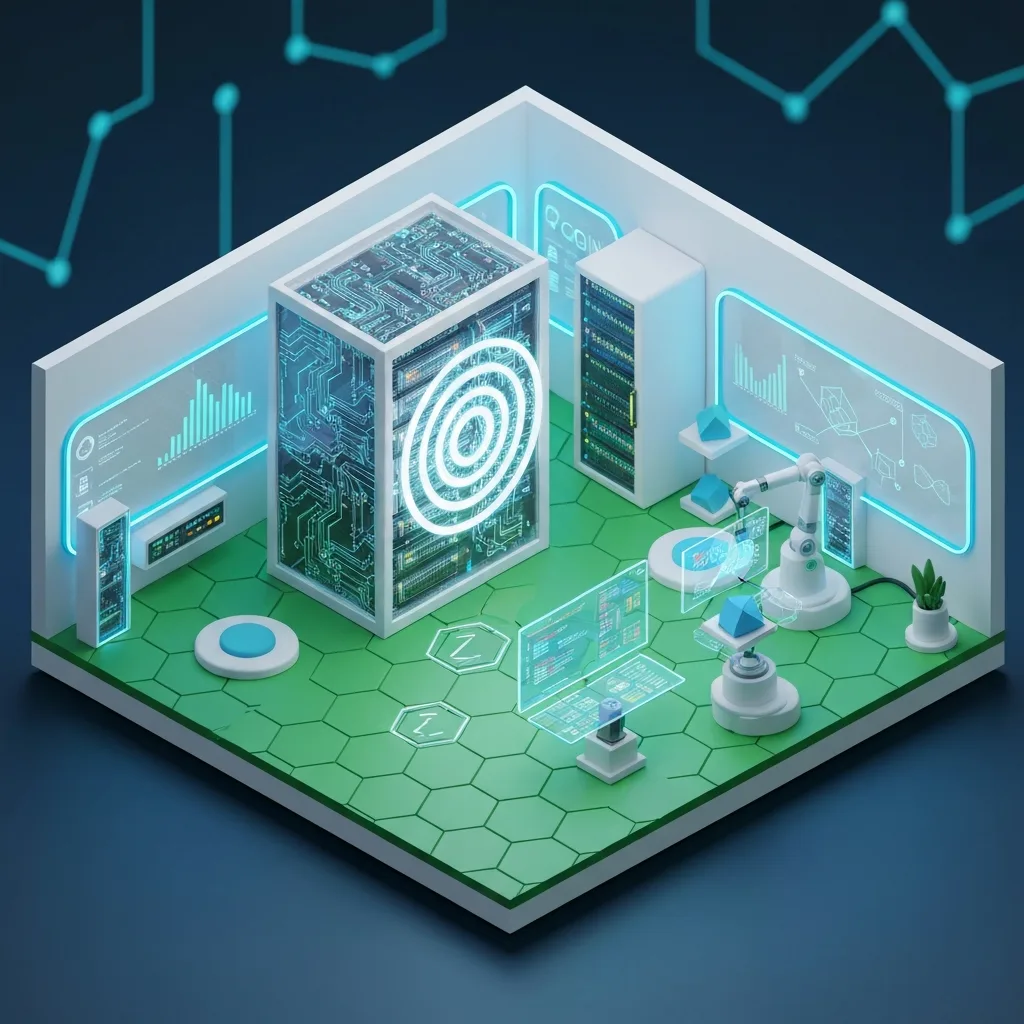
Here at IAExpertos, we're always keen to explore innovative approaches to artificial intelligence, particularly those that prioritize efficiency and accessibility. That's why we're excited to delve into nanobot, an ultra-lightweight personal AI agent framework developed by HKUDS. This framework manages to pack a comprehensive suite of agent capabilities into a remarkably compact codebase of approximately 4,000 lines of Python.
Instead of simply using nanobot as a pre-packaged solution, this exploration takes a more hands-on approach. The goal is to deconstruct and rebuild its core subsystems from the ground up. This means manually recreating the agent loop, tool execution mechanisms, memory persistence features, skill loading procedures, session management, subagent spawning capabilities, and even its cron scheduling functionality. By meticulously reconstructing each component, a deeper understanding of its operational principles emerges.
The process involves integrating a Large Language Model (LLM) to power the agent's reasoning and decision-making. For this purpose, OpenAI's gpt-4o-mini model is used as the LLM provider. Secure API key management is crucial, and the tutorial emphasizes entering the API key directly through the terminal to avoid exposing it within the code or notebook output.
The development process is incremental, starting with a basic tool-calling loop and gradually evolving into a sophisticated multi-step research pipeline. This pipeline demonstrates the agent's ability to interact with its environment by reading and writing files, storing information in long-term memory, and delegating tasks to concurrent background workers. This highlights the framework's capacity for complex, autonomous operation.
Ultimately, the aim of this deep dive is not just to learn how to *use* nanobot, but to understand how to *extend* it. By understanding the underlying architecture, developers can create custom tools, integrate new skills, and even design their own agent architectures tailored to specific needs. This level of customization unlocks a wide range of potential applications for nanobot, making it a valuable tool for researchers, developers, and anyone interested in building their own AI agents.
By dissecting and reconstructing nanobot, the tutorial provides a comprehensive understanding of the key components and design principles behind modern AI agents. This knowledge empowers developers to not only utilize existing frameworks more effectively but also to create their own unique and powerful AI solutions.