Español
 English
 Français
 Português
 Deutsch
 Italiano
Disney's AI Revolution: Animators Still in the Driver's Seat
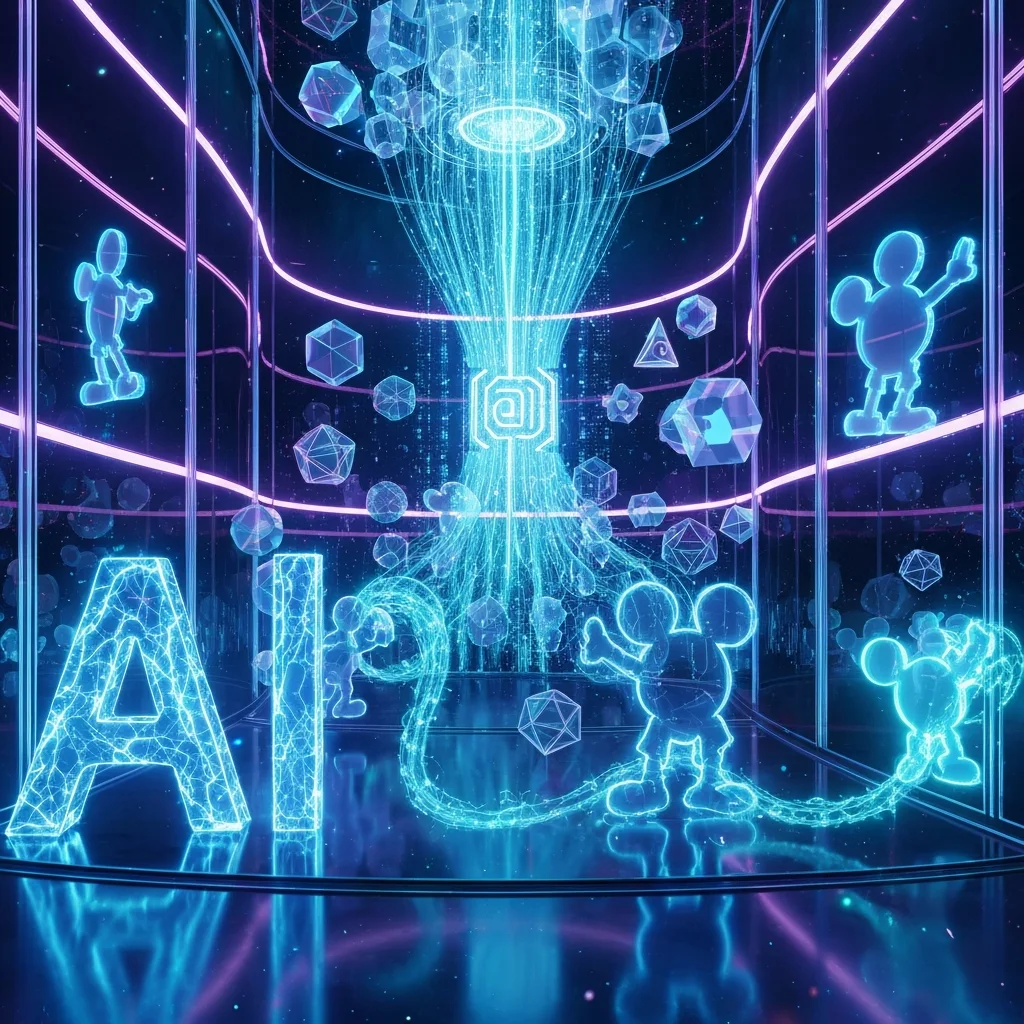 AI-generated
The world of animation is undergoing a dramatic transformation, and Disney, a pioneer in the field, is at the forefront of this revolution. My recent visit to Disney Studios offered a fascinating glimpse into how they are strategically integrating artificial intelligence to enhance, not replace, the artistry that defines their iconic films.
Instead of succumbing to fears of AI taking over creative roles, Disney Imagineers have taken a proactive approach. They meticulously evaluated numerous AI companies before selecting a partner whose technology empowers animators, ensuring they remain firmly in control of the creative process. The goal isn't to automate creativity, but rather to provide artists with powerful new tools to realize their visions more efficiently.
One of the most impressive applications of AI I witnessed was the ability to generate an astounding number of poses, reportedly around 300,000, almost instantaneously. This capability drastically reduces the time spent on tedious tasks like exploring subtle variations in character movement, allowing animators to focus on the nuances of performance and storytelling. Imagine the possibilities: animators can now rapidly iterate through a vast array of poses, selecting the perfect ones to convey emotion and action with unparalleled precision. This technology significantly accelerates the animation pipeline, potentially shortening production cycles and freeing up animators to tackle more complex creative challenges.
Disney's approach highlights a crucial distinction in the AI debate: augmentation versus replacement. They are not seeking to replace the human element, the artistic intuition, and the storytelling expertise that are essential to creating memorable characters and compelling narratives. Instead, they are leveraging AI to augment the capabilities of their animators, providing them with tools that amplify their creativity and streamline their workflows. This strategy ensures that the heart and soul of Disney animation remain firmly rooted in human artistry.
The implications of this approach extend far beyond Disney. As AI technology continues to evolve, other animation studios and creative industries will likely adopt similar strategies, integrating AI tools to enhance productivity and empower artists. The key takeaway is that AI should be viewed as a partner, not a replacement, for human creativity. By embracing AI in a thoughtful and strategic manner, companies can unlock new levels of artistic expression and innovation, while ensuring that human talent remains at the center of the creative process. The future of animation is not about AI taking over, but about AI and artists working together to create even more magical and captivating experiences for audiences worldwide.