Español
 English
 Français
 Português
 Deutsch
 Italiano
The Great Stall: How Azure Dependency Brought Down ChatGPT, Claude, and Grok in the Simultaneous Outage of September 3rd
 AI-generated
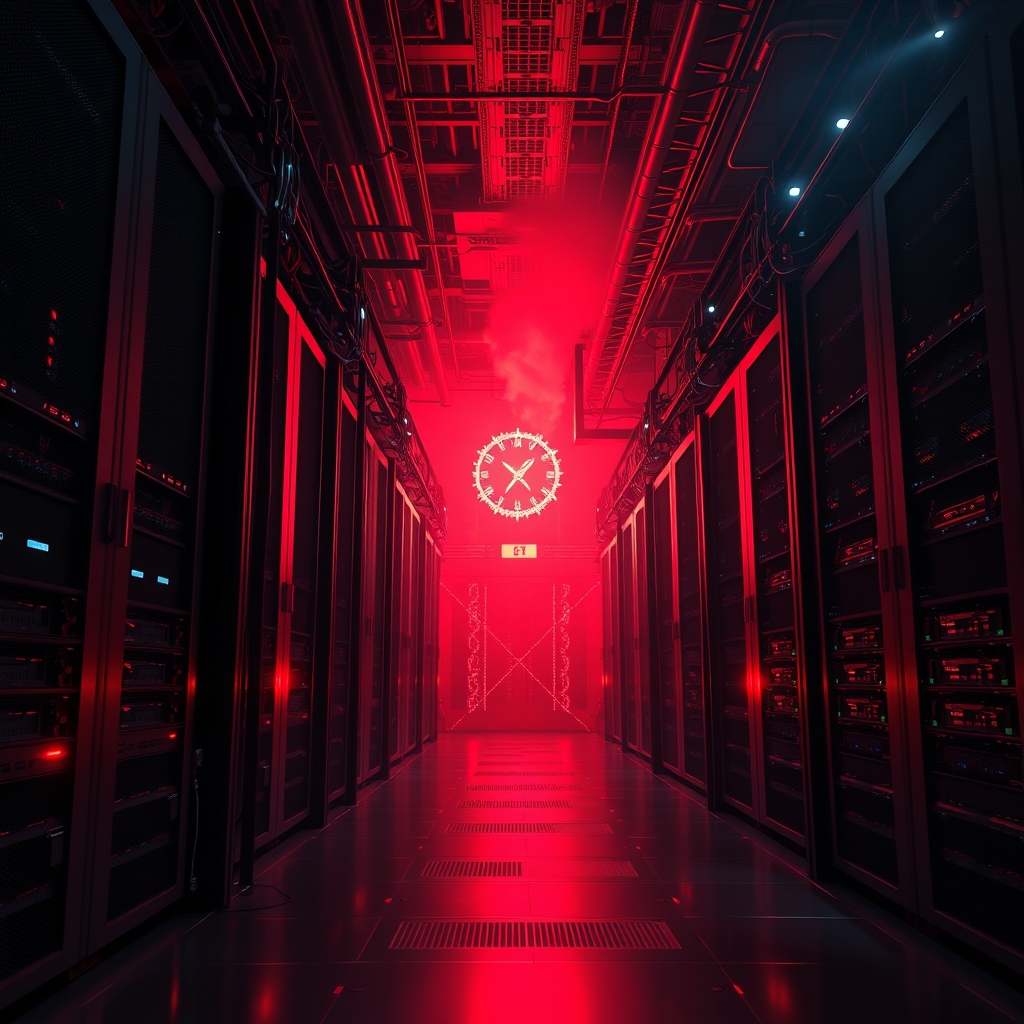
The morning of Thursday, September 3, 2026, was etched into technology history not for an advancement, but for an operational catastrophe of unprecedented proportions. What began as a series of intermittent errors in the early hours of the day quickly turned into a global blackout of generative artificial intelligence. Unlike the isolated outages that have affected individual services in the past, this event marked the first time that the three frontier AI giants, OpenAI, Anthropic, and xAI, suffered a near-simultaneous and total disruption.
The first warning signs appeared on the status dashboards of OpenAI and Anthropic around 08:30 UTC. Users of ChatGPT began receiving "Error 503: Service Unavailable" messages, while developers relying on the Codex API watched their integration pipelines fail massively. Almost in parallel, Claude.ai and Anthropic's API began to saturate, showing extreme latencies before collapsing completely. By 09:15 UTC, the incident had expanded to Grok from xAI, completing the triangle of the outage.
According to preliminary reports from Gizmodo and 9to5Google, the nature of the failure was neither a cyberattack nor a code error in the models, but a fault in the underlying infrastructure layer. Developers reported widespread HTTP 500 and 503 errors, accompanied by massive saturation messages indicating that the systems could not process even the most basic requests. The incident's timeline was brutal in its speed: in less than two hours, the operational capacity of the AI industry was reduced to zero. It wasn't until 16:16 UTC, after nearly eight hours of digital darkness, that the status dashboards of all three companies confirmed the full restoration of services. This stall not only interrupted conversations but also halted autonomous workflows operating 24/7, leaving a trail of uncertainty and panic across the tech sector.
2. The Root in Microsoft Azure: When the Shared Backbone Collapses
The question that dominated social media and technical forums during the crisis hours was: how is it possible that three rival companies, with distinct architectures and separate engineering teams, fail at the same time? The answer, subsequently confirmed by internal sources cited by Forbes, points directly to Microsoft Azure. The identified root cause was a technical disruption in Azure's shared core infrastructure, specifically in the networking and load-balancing layers.
This finding reveals an uncomfortable but fundamental truth: the "diversification" of AI providers is, to a large extent, an illusion if all those providers depend on the same infrastructure hyperscaler. Both OpenAI and Anthropic, and to a lesser extent xAI, have built their ecosystems on top of Azure. Although each company has its own language models and its own user interfaces, the compute layer, storage, and, crucially, the network connectivity that allows these requests to reach users, resides in Microsoft's cloud.
When Azure's load balancing experienced a cascading failure, the effect was immediate and devastating. Requests sent to OpenAI's and Anthropic's endpoints could not be correctly routed to the GPU clusters where the models reside. This caused massive congestion at the entry points, resulting in the observed saturation errors. 9to5Google highlighted that the interconnection between Azure services and AI endpoints was so deep that a failure in Microsoft's backbone network acted like a master switch, effectively turning off cloud-based artificial intelligence for millions of users. This incident exposed the fragility of an architecture where competition in the language model does not translate into independence in the physical infrastructure.
3. The Impact on Developers and the Agentic Economy
The impact of this blackout transcended the mere inconvenience of not being able to chat with a bot; it struck directly at the core of the new digital economy: the agentic economy. For millions of developers, tools like Claude Code, Codex, and the interfaces of Claude Mythos 5.1 and Claude Fable 5.1 are not luxuries but essential production tools.
Continuous Integration and Continuous Delivery (CI/CD) pipelines that rely on AI agents to generate code, review pull requests, and automate testing were brought to a standstill. In top-tier technology companies, this meant the immediate halt of critical deployments. BleepingComputer reported cases of financial and logistics companies whose automation operations, based on autonomous agents using Claude Opus 5 for real-time decision-making, were forced to revert to manual processes, generating significant economic losses due to inefficiency and delays.
The case of Claude Code was particularly painful. This programming agent, designed to work autonomously on complex repositories, was left "hanging" in the middle of critical tasks. Developers found themselves with interrupted sessions, lost contexts, and the need to restart processes that had consumed hours of compute. The reliance on real-time connectivity for the inference of these agents demonstrated that the "agentic economy" is extremely fragile in the face of a lack of infrastructure resilience. The inability of Grok to process requests also affected sectors that used its real-time data analysis capabilities, leaving an operational vacuum that could not be filled by local alternatives due to a lack of preparedness.
4. The Fallacy of Cloud Diversification
This incident has put an end to a theoretical debate that had been brewing in the industry for years: the belief that contracting multiple AI providers (OpenAI, Anthropic, xAI) guarantees business continuity. The reality is that model diversification does not equal infrastructure diversification. By relying on Azure as the primary compute and network provider, the frontier AI industry has become a monocultural system disguised as a pluralistic one.
The systemic risk is now evident. If all major AI players depend on two or three hyperscalers (mainly Microsoft Azure and, to a lesser extent, AWS or Google Cloud), a failure in any of these pillars has the potential to halt the digital world. Forbes points out that this event has exposed a concentration of risk that analysts had warned about but that companies had ignored in favor of the convenience and seamless integration that Azure offers.
True "multi-cloud," where data and inference are genuinely distributed among independent providers, is a rarity in the frontier AI sector. Most companies have opted for the easy path: integrating with the OpenAI or Anthropic API, knowing that both reside on the same cloud. This shared dependency creates a single point of failure (SPOF) on a global scale. The lesson is clear: resilience is not achieved by switching the language model, but by diversifying the infrastructure layer that supports it. As long as the industry does not separate model logic from cloud physics, it will remain vulnerable to this type of catastrophe.
5. The Rise of Sovereign Inference and Local Deployment
In the hours following the restoration of services, the discourse in the tech community changed drastically. Skepticism toward the centralized cloud gave way to an unprecedented push toward sovereign inference and local deployment. The September 3rd incident has acted as a catalyst for the adoption of local models and edge computing architectures.
Companies that previously viewed the deployment of models like DeepSeek or Muse on their own servers as an unnecessary investment now consider it a mandatory insurance policy. The ability to run inference locally, without relying on cloud connectivity, has become a business continuity requirement. Gizmodo reports an immediate increase in searches for guides on implementing open-source models in on-premise environments.
Furthermore, the concept of "AI sovereignty" has taken on a new practical dimension. It is no longer just about complying with data regulations, but about ensuring that critical computing capacity is not subject to the failures of an external provider. Companies are reevaluating their strategies to include local inference nodes that can take over the workload in the event of a cloud disruption. This implies a significant investment in local GPU hardware and in optimizing models to run efficiently outside the cloud, marking the beginning of a hybrid era where the cloud is used for scalability, but local resources are used for resilience.
6. Lessons for the Future: Toward a Resilient AI Architecture
The September 3, 2026 blackout was not just a technical failure; it was a strategic warning. For CIOs, software architects, and developers, the lessons are clear and urgent. The first is the need to audit infrastructure dependencies. It is not enough to know which AI model is being used; it is crucial to know where it runs and what network components support it.
The second lesson is the implementation of true "failover" architectures. This implies not only having multiple AI providers but also having multiple cloud infrastructure providers, or better yet, a combination of cloud and on-premise resources. Systems must be designed to degrade gracefully: if the ChatGPT or Claude API fails, the system must be able to redirect the load to a local model or an alternative provider without interrupting the end-user service.
Finally, the industry must move toward a resilient AI architecture that prioritizes autonomy. This includes the development of agents that can operate offline or with intermittent connectivity, and the adoption of interoperability standards that allow switching infrastructure providers with minimal friction. The myth of redundancy in cloud AI is dead. In its place, the era of active resilience is born, where the ability to survive a core infrastructure outage is not an option but a fundamental requirement for operating in the 21st century. September 3rd was not the end of AI, but the birth of its operational maturity.
📌 Verified Sources and Press References
- Forbes Tech: “Simultaneous AI Outages Hit Major Platforms During Azure Infrastructure Disruption”.
- Gizmodo & 9to5Google: “ChatGPT, Claude and Grok Suffer Concurrent Outage Linked to Cloud Dependencies”.
- BleepingComputer: “Microsoft Azure Networking Anomaly Triggers Ripple Effect Across AI Ecosystem”.
- Official Incident Logs: OpenAI Status Dashboard & Anthropic System Metrics (Fully resolved by 16:16 UTC on September 3, 2026).