
 Español
 English
 Français
 Português
 Deutsch
 Italiano
Fidji Simo's Transition from OpenAI's AGI Leadership: An In-Depth Analysis of Its Strategic and Technical Implications
1. Executive Summary
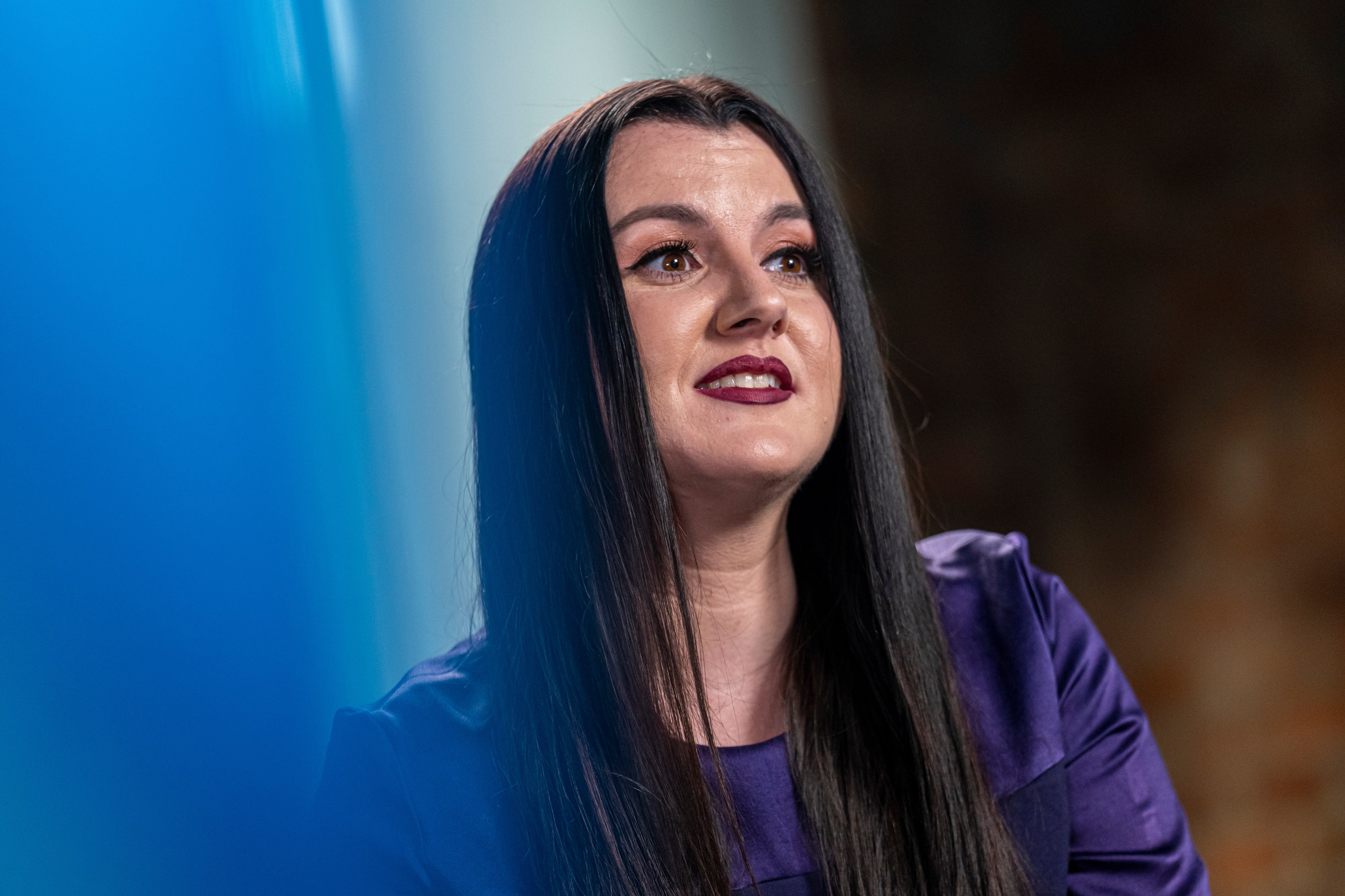
On July 12, 2026, the global tech community was surprised by the news that Fidji Simo, the central figure leading OpenAI's ambitious Artificial General Intelligence (AGI) efforts, would be stepping down from her full-time position to assume a part-time advisory role. The reason, according to Simo, is a neuroimmune condition requiring her attention. This announcement comes months after Simo took an initial medical leave in April, shortly after having taken on the crucial responsibility of leading the company's AGI division.
The departure of a leader of this magnitude in an area as strategic as AGI is not a trivial event. For OpenAI, the pursuit of AGI is its foundational mission, and the direction of this effort is vital for its future trajectory. The news raises immediate questions about leadership continuity, the stability of key projects, and the company's perception in a market where trust and speed of innovation are paramount. This report will examine the implications of this change, from the technical impact on the development of models like GPT-5.5 to the strategic repercussions for OpenAI and the global AI ecosystem.
This analysis is aimed at investors, developers, business leaders, and any stakeholder interested in the future of artificial intelligence. Simo's departure is not just a personnel story; it is a catalyst for re-evaluating the resilience of leadership structures in cutting-edge companies and the sustainability of the race for AGI, an endeavor that demands unwavering dedication and vision.

2. Deep Technical Analysis
The position of AGI leader at OpenAI is not merely administrative; it is a role that demands deep technical understanding, strategic vision, and the ability to orchestrate elite research teams. AGI, by definition, represents an AI system with the ability to understand, learn, and apply intelligence to a wide range of tasks at a human-comparable or superior level. The path to AGI is intrinsically complex, fraught with challenges in areas such as model scalability, value alignment, interpretability, and computational efficiency.
Under Simo's leadership, OpenAI was expected to consolidate and accelerate its efforts in integrating advanced multimodal capabilities, improving system robustness and safety, and exploring model architectures beyond current transformers. The company has been at the forefront with models like GPT-5.6 Sol, which in July 2026 represents one of the pinnacles of generative AI, but the gap to true AGI remains vast. Simo's technical direction would have been crucial in defining the next iterations, possibly exploring new forms of knowledge representation or more sophisticated reasoning mechanisms than current ones.
Simo's transition to an advisory role, while keeping her expertise within OpenAI's orbit, inevitably introduces a discontinuity in daily direction. AGI requires constant oversight and agile decision-making, especially in a field where advancements are exponential. The absence of a full-time leader could slow down the consolidation of research strategies, project prioritization, and the resolution of technical bottlenecks. This is particularly critical in the current phase, where optimizing training costs and improving the energy efficiency of massive models are persistent challenges.
The development of AGI not only involves creating larger and more powerful models but also implementing robust safety and alignment mechanisms. Human oversight in the training and retraining process of these embeddings is fundamental. An AGI leader must balance the ambition of capability with the imperative of safety. Simo's departure could trigger an internal re-evaluation of how these balances are managed, and who will assume responsibility for guiding the ethics and technical governance of AGI in her absence.

Furthermore, competition in the AGI space is fierce. While OpenAI advances with GPT-5.6 Sol, Google with Gemini 3.5 Flash, Anthropic with Claude 4.8 Opus, Meta with MuseSpark (and its open-source Llama 4), and xAI with Grok 4.5, all are investing massively in the next generation of AI. Simo's technical direction was key to maintaining OpenAI's competitive edge. The search for a successor or the redistribution of responsibilities could divert resources and attention from pure research, at least temporarily. OpenAI's ability to integrate new capabilities, such as Llama 4 Scout's 10 million token contextual understanding or DeepSeek-V4-Pro's coding capabilities, will depend on cohesive technical direction.
OpenAI's research community is world-class, and the resilience of its teams is high. However, the vision and leadership of a "chief architect" are irreplaceable in the design and conceptualization phase of such complex systems. The transition could lead to greater decentralization of technical decision-making or the emergence of a leadership committee, which could have its own advantages and disadvantages in terms of agility and strategic coherence.
3. Industry Impact and Market Implications
The news of Fidji Simo's departure from her full-time leadership role in OpenAI's AGI resonates deeply throughout the tech industry, sending waves of uncertainty and speculation. OpenAI, with its GPT-5.6 Sol model at the forefront, is perceived as a beacon in the race for AGI, and any change in its top management, especially in such a critical area, is scrutinized by competitors, investors, and partners.
Firstly, market perception is crucial. Leadership stability in a company operating at the frontier of innovation is a key factor for investor confidence. Although the reason for Simo's departure is personal and health-related, the absence of a dedicated full-time AGI leader could be interpreted as a sign of potential slowdown or strategic reorientation. This could influence OpenAI's valuation and the confidence of its main partners, such as Microsoft, whose AI strategy is intrinsically linked to OpenAI's progress.

The competition never sleeps. Giants like Google, with its Gemini 3.5 Flash, and Anthropic, with Claude 4.8 Opus, are aggressively investing to close the gap and, in some cases, surpass OpenAI in specific capabilities. Meta, with its MuseSpark ecosystem and the open-source Llama 4 model, is democratizing access to advanced AI, while xAI with Grok 4.5 seeks to innovate in the conversational AI space. In China, models like Qwen 3.7-Max and GLM-5.2.2.2 demonstrate significant progress. Any indication of instability at OpenAI could be seen as an opportunity for these competitors to gain ground, attracting talent and capital.
Furthermore, the race for AGI is not just a matter of technological development, but also of talent. The best AI researchers and developers are a scarce and highly demanded resource. The departure of a charismatic and technically competent leader like Simo could, in the worst-case scenario, generate uncertainty among research teams, leading to a potential brain drain to other companies with a clearer and more stable leadership vision in the short term. Maintaining team morale and cohesion will be a strategic imperative for OpenAI.
The implications also extend to AI governance and regulation. AGI is a subject of intense global debate, with concerns about safety, ethics, and control. OpenAI's voice in these discussions is influential. A change in AGI leadership could affect the company's stance in international forums and its collaboration with governments and non-governmental organizations to establish regulatory frameworks. Consistency in the AGI vision is fundamental to building public trust and avoiding an adverse reaction.
Finally, Simo's transition could accelerate the diversification of OpenAI's strategy. While AGI remains the ultimate goal, the company might place greater emphasis on monetizing its current models (GPT-5.6 Sol) and expanding its enterprise applications in the short to medium term, while AGI leadership is restructured. This could mean a more pragmatic approach to delivering immediate value, which, while beneficial for revenue, could be perceived as a slight deviation from its original mission of pure AGI.
| Company | Main Model (Proprietary) | Key Focus | Potential Impact of OpenAI's Transition |
|---|---|---|---|
| OpenAI | GPT-5.6 Sol | AGI leadership, generative AI | Uncertainty in AGI direction, possible slowdown |
| Gemini 3.5 Flash | Multimodality, ecosystem integration | Opportunity to gain ground in AGI and applications | |
| Anthropic | Claude 4.8 Opus | Safety, alignment, conversational AI | Reinforcement of its safe and responsible AI narrative |
| Meta | MuseSpark (Llama 4 Open-Weight) | Open-source AI, fundamental research | Increased adoption of Llama 4, talent attraction |
| xAI | Grok 4.5 | AI for truth, real-time reasoning | Potentially capitalize on any perceived weakness at OpenAI |
| DeepMind (Google) | (Integrated into Gemini) | Fundamental research, AGI | Indirect beneficiary of any pause at OpenAI |
| China (Qwen, GLM, DeepSeek) | Qwen 3.7-Max, GLM-5.2.2.2, DeepSeek-V4-Pro | Scalability, specific applications, technological sovereignty | Acceleration of their own AGI efforts with less direct competition |
4. Expert Perspectives and Strategic Analysis
The AI expert community and industry analysts have reacted to the news with a mix of understanding for Fidji Simo's personal situation and concern for the strategic implications for OpenAI. The technical consensus suggests that AGI is an endeavor that requires not only massive resources and exceptional talent but also a singular vision and unwavering leadership to navigate its technical and ethical complexities.
Industry analysts point out that AGI is not a project that can be led by a committee without a central figure driving the vision. The ability to make difficult decisions, prioritize research avenues, and inspire high-performing teams is fundamental. Simo's transition, though understandable, creates a leadership vacuum that OpenAI will need to fill with urgency and wisdom. The choice of her successor, or the restructuring of AGI leadership, will be one of the most critical decisions the company makes in the coming months.
From a strategic perspective, the situation underscores the inherent fragility of relying on key individuals in projects of high complexity and risk. Companies pursuing AGI must build resilient leadership structures that can withstand personnel turnover, even at the highest levels. This involves developing a pipeline of leaders, fostering interdepartmental collaboration, and ensuring that the AGI vision is deeply embedded in the organization's culture, beyond any single individual.
The importance of alignment and safety in AGI is a recurring theme among experts. The departure of a leader who was at the forefront of these efforts could, temporarily, upset the balance between accelerating development and caution in implementation. It is imperative that OpenAI reiterates its commitment to safe and aligned AGI, and that the new leadership, or the transition team, demonstrates a deep understanding and unwavering commitment to these principles. Public and regulatory trust in AGI largely depends on the perception that leading companies are prioritizing safety.
In the context of the AI "arms race," OpenAI's situation could be seen as an opportunity for its competitors. However, some experts argue that the nature of AGI is so fundamental that one company's advancements ultimately benefit the entire industry through research and the development of new techniques. Collaboration, even among competitors, in areas such as AGI safety and governance, could be more important than pure competition in capability development. Nevertheless, the pressure to be the first to achieve significant milestones remains a driving force.
The strategic recommendation for OpenAI is twofold: first, ensure a smooth and transparent leadership transition, clearly communicating the new structure and vision for AGI. Second, strengthen the resilience of its research and development teams, empowering project leaders and fostering a culture of distributed innovation. AGI is a marathon, not a sprint, and the ability to stay the course long-term, even in the face of unexpected challenges, will be the true measure of success.
5. Future Roadmap and Predictions
OpenAI's future roadmap in its pursuit of AGI, following Fidji Simo's transition, presents a mix of continuity and potential strategic adjustments. The first and most immediate prediction is the active search for a new leader for the AGI division. This process will be exhaustive, seeking someone with a unique combination of technical vision, experience in managing large research teams, and a deep commitment to OpenAI's mission. It is likely that the company will consider both internal and external talents, with an announcement expected in the next three to six months.
In the short term (next 6-12 months), OpenAI is likely to focus on consolidating the advancements achieved with GPT-5.6 Sol and preparing for the next generation of models. This could involve greater investment in training infrastructure, optimization of learning algorithms, and expansion of multimodal capabilities. Simo's guidance, though now part-time, could continue to influence strategy through her advisory role, ensuring some continuity in the long-term vision. However, the speed of execution might be slightly affected until the new leadership is fully established.
In the medium term (1-3 years), OpenAI's trajectory towards AGI will largely depend on the new leadership's ability to infuse new energy and direction. The company is expected to continue exploring model architectures beyond transformers, possibly investigating hybrid approaches that combine deep learning with symbolic reasoning methods. Safety and alignment will remain fundamental pillars, with an increasing emphasis on model interpretability and bias mitigation. Collaboration with Microsoft could intensify to secure the computational resources needed to train AGI-scale models.
In the long term (3-5 years and beyond), OpenAI's vision for AGI will remain, but the way it materializes could evolve. The company might adopt a more modular approach to AGI, developing specialized components that are then integrated into a broader system. AGI governance, both internal and external, will become an even greater area of focus, with OpenAI likely leading discussions on ethical standards and global regulatory frameworks. Simo's transition, while a challenge, could ultimately catalyze a re-evaluation and strengthening of OpenAI's organizational structure, making it more resilient for the monumental task of building AGI.
6. Conclusion: Strategic Imperatives
Fidji Simo's departure from her full-time leadership role in OpenAI's AGI is a significant event that underscores the high-stakes, high-reward nature of the race for Artificial General Intelligence. While the reason is personal and understandable, the strategic implications for OpenAI and the broader industry are profound. The company now faces the imperative of ensuring a smooth leadership transition and maintaining momentum in its foundational mission, all while navigating an increasingly complex competitive and regulatory landscape.
The strategic imperatives for OpenAI are clear: first, the selection of a successor for AGI leadership must be an absolute priority, seeking an individual who not only possesses deep technical expertise but also the vision and ability to inspire the world's most advanced research teams. Second, transparent and proactive communication will be key to maintaining the trust of investors, partners, and the global AI community. Third, OpenAI must strengthen the resilience of its teams and processes, ensuring that the AGI vision is embedded in the organization's culture and does not overly depend on a single individual. Finally, the company must reaffirm its unwavering commitment to AGI safety, ethics, and alignment, leading by example at a time of increasing public scrutiny.
Ultimately, OpenAI's ability to overcome this challenge and maintain its leadership in the race for AGI will be a test of its maturity as an organization. AGI is the Holy Grail of AI, and the path to it is fraught with unexpected obstacles. Fidji Simo's transition is one such obstacle, but also an opportunity for OpenAI to demonstrate its adaptability and unwavering commitment to one of the most ambitious technological missions of our time. The world watches closely how the company will address this new chapter.