Español
 English
 Français
 Português
 Deutsch
 Italiano
Gemini Robotics 2.0: A Technical and Strategic Assessment of Google's Bid for Robotic Dexterity and Safety
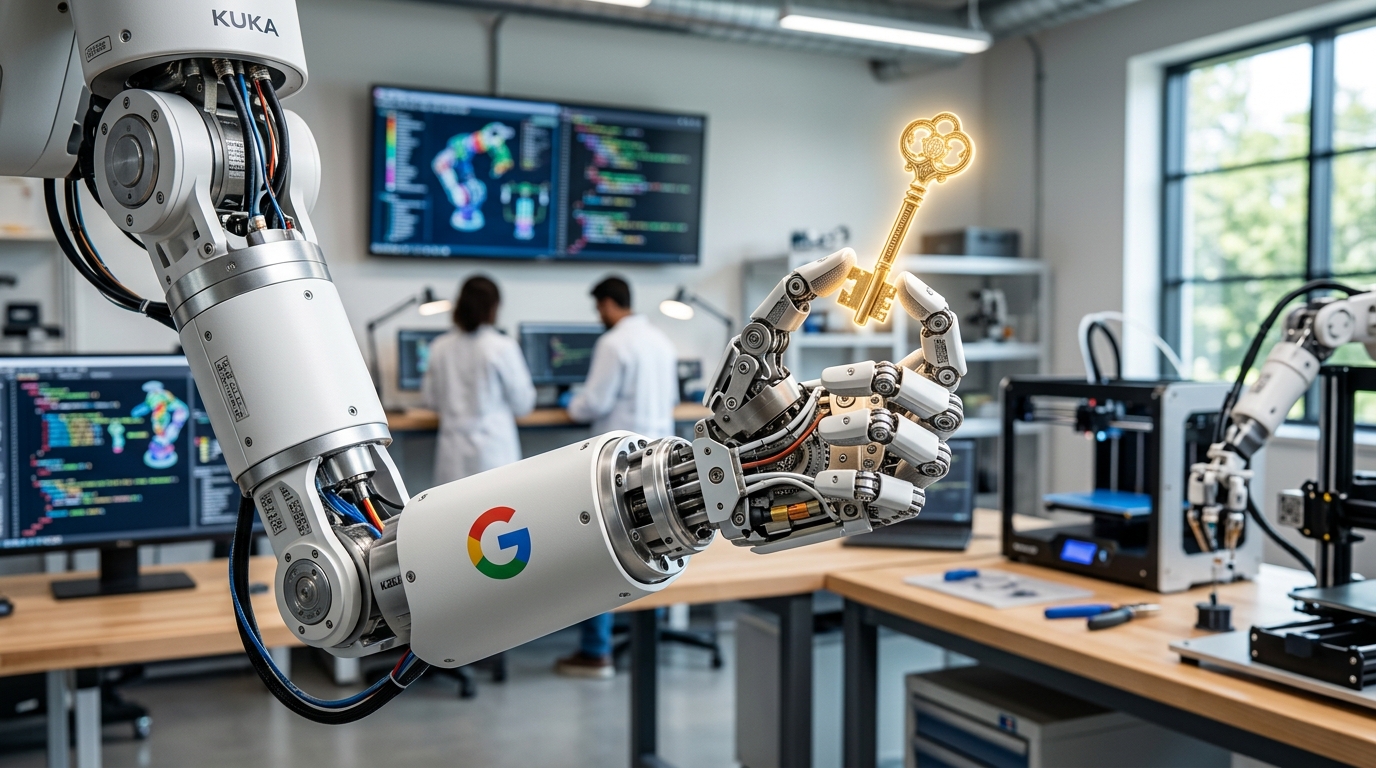 AI-generated
1. Executive Summary
On July 31, 2026, Google revealed Gemini Robotics 2.0, the most significant evolution of its AI platform applied to robotics. This is not an incremental update; it represents a qualitative leap in two of the sector's most persistent challenges: fine physical dexterity and operational safety in unstructured environments. The new model promises to close the gap between advanced perception and precise physical action, a problem that has kept commercial robotics in a state of perpetual development for decades.
The relevance of this launch transcends the technical sphere. In a market where industrial automation has stagnated in repetitive and highly controlled tasks, Gemini Robotics 2.0 emerges as a critical enabler for expansion into sectors such as dynamic logistics, healthcare assistance, and domestic service. For CTOs, innovation directors, and automation strategists, this technology is not an academic curiosity; it is a clear signal that the next decade will see a fundamental reconfiguration of the physical workforce, where collaborative robots (cobots) will assume roles that require adaptability and real-time judgment. Those who should pay immediate attention are medium and high-complexity manufacturing companies, last-mile logistics operators, and robotics-as-a-service (RaaS) providers. The promise of enhanced dexterity not only reduces integration costs but also opens the door to processes that were previously economically unviable to automate. Safety, for its part, addresses the main regulatory and social acceptance obstacle that has held back the implementation of autonomous mobile robots in spaces shared with humans.

2. Deep Technical Analysis
Gemini Robotics 2.0 is based on a unified model architecture that integrates vision, language, and action (VLA) with a new fine motor control layer. Unlike previous generations that relied on separate modules for perception and planning, this system uses a foundation model that simultaneously processes high-frequency sensory data and abstract linguistic commands to generate movement trajectories directly. This fusion eliminates the latency bottlenecks that plagued traditional systems, enabling an almost reflexive response to unforeseen changes in the environment.
The key advancement lies in the so-called "tactile dexterity module." Google has integrated advanced processing of signals from force and pressure sensors in the robot's grippers. This allows the system not only to "see" an object but to "feel" it during manipulation. The ability to adjust the grip in milliseconds based on the slippage or deformation of the object is a technical milestone. Internal tests, according to leaked information, demonstrate substantial improvement in tasks such as assembling small components, handling fragile materials, and inserting connectors, activities that have historically been the Achilles' heel of automation. On the safety front, Gemini Robotics 2.0 introduces a dual "safety brain." The first component is a common-sense reasoning system trained on large volumes of human physical interaction data. This system constantly evaluates the context of the scene to predict human trajectories and anticipate potential collisions before they occur. The second component is a set of low-latency hardware and software "guardrails" that can override the main model's decisions in microseconds if a critical anomaly is detected. This redundancy is crucial for obtaining functional safety certifications (such as ISO 13849 or IEC 61508) in industrial environments.
Computational efficiency has also been a central focus. Gemini Robotics 2.0 uses a "mixture of experts" (MoE) technique that activates only the neural subnetworks necessary for the current task. For a simple pick-and-place task, the model uses a minimal fraction of its total parameters, drastically reducing energy consumption and enabling deployment on robots with mid-range embedded hardware. This contrasts with the previous generation, which required an external computing station to operate at full capacity, limiting its applicability in mobile environments. Integration with the Gemini 3.6 Flash ecosystem is another strategic pillar. Robots running Gemini Robotics 2.0 can delegate complex reasoning and long-term planning tasks to the cloud model, while the local model handles real-time motor execution. This hybrid architecture allows the robot not only to execute commands but to understand the "why" of a task, adapting its approach if conditions change. For example, if asked to "organize the packages by delivery priority," the robot can consult the cloud to obtain the priority list and then use its local dexterity to handle the packages safely and efficiently.
Finally, the learning-by-demonstration system has been revolutionized. Instead of requiring hundreds of hours of teleoperation to teach a task, Gemini Robotics 2.0 can learn from YouTube videos or synthetically generated simulations. The model extracts the intention of the action and transfers it to its own control scheme, a process known as "third-party imitation learning." This reduces implementation time from weeks to hours, a factor that could democratize advanced robotics for small and medium-sized enterprises.3. Industry Impact and Market Repercussions
The announcement of Gemini Robotics 2.0 comes at a time of consolidation in the robotics market. Industry analysts point out that the industry has been waiting for an "iPhone moment" that unifies hardware and software capabilities into an easy-to-use platform. Google, with its strength in AI and its foray into robotic hardware through its robotics division, is positioned to capitalize on this demand.
In the logistics sector, the ability to manipulate non-uniform objects (such as clothing bags, mixed-size boxes, or fresh produce) is a game changer. Distribution centers that currently rely on machine vision systems and specialized robotic arms for each type of product could unify their operations with a single platform. This not only reduces capital costs but also simplifies maintenance and staff training. Companies like Amazon or Alibaba, which have invested billions in robotics, will likely see Gemini Robotics 2.0 as a direct competitor to their internal solutions, which could accelerate innovation across the entire ecosystem. Enhanced safety has profound regulatory implications. Currently, most industrial robots operate in safety cages or fenced areas. The new safety certification of Gemini Robotics 2.0, if validated in real-world environments, could allow robots to operate without physical barriers, directly alongside human workers. This would reduce installation costs and increase the flexibility of production lines. However, it also raises questions about legal liability in the event of an accident. Who is responsible if an autonomous robot with learning capabilities causes harm? This legal vacuum will be a key battleground in the coming years. The impact on the labor market is a delicate but inevitable topic. While automation has historically eliminated repetitive jobs, the dexterity of Gemini Robotics 2.0 threatens roles that require fine manual skills, such as electronics assembly or food preparation. However, labor economists suggest that the net effect could be positive if managed correctly. The technology could free human workers from ergonomically hazardous tasks and allow them to focus on supervision, maintenance, and process improvement. The key will be in the speed of adoption and workforce retraining policies. From a competitive perspective, Google is not alone in this race. OpenAI with GPT-5.6 and its investment in Figure AI, as well as Tesla's efforts with Optimus, are direct competitors. However, Google's advantage lies in its comprehensive ecosystem: from hardware (TPUs) to software (Gemini), through distribution via Google Cloud. This vertical integration could offer a more seamless user experience and a lower total cost of ownership, a decisive factor for companies looking to scale quickly.
4. Expert Perspectives and Strategic Analysis
The technical consensus among robotics engineers is that Gemini Robotics 2.0 represents a genuine advance, not a marketing gimmick. The integration of touch with vision is a problem the academic community has tackled for years, and seeing it solved at commercial scale is a testament to the power of foundation models. However, analysts warn that the dexterity demonstrated in controlled laboratory environments often does not translate perfectly into the chaos of the real world. Robustness against variable lighting conditions, reflective surfaces, or electromagnetic noise will be the true test of fire.
A recurring concern among systems integrators is cloud dependency. While the hybrid architecture is elegant, it poses a latency and availability risk. In a remote factory with intermittent connectivity, a robot that relies on the cloud for high-level planning could become inoperable. Google will need to offer a robust edge computing deployment solution that allows the model to operate autonomously for extended periods. Google's response to this criticism will be crucial for adoption in conservative industrial sectors. From a strategic standpoint, companies are advised not to wait for the technology to fully mature. The opportunity cost of falling behind on the learning curve of intelligent robotics is too high. Organizations should begin with low-risk pilot projects, such as automating picking tasks in warehouses or quality inspection on production lines. These projects will allow internal teams to become familiar with the platform's capabilities and limitations, generating in-house knowledge that will be invaluable when the technology becomes cheaper and more widespread. Another strategic aspect is managing organizational change. The introduction of robots with advanced dexterity is not just an IT project; it is a cultural transformation. Workers will need training to supervise and collaborate with robots, and managers will need new metrics to evaluate performance. Companies that address these human aspects from the outset will have a significant competitive advantage over those that focus solely on technology. Transparent communication about automation goals is essential to mitigate the fear of job displacement. Finally, financial analysts suggest that Google's announcement could trigger a wave of investment in robotics startups specializing in vertical applications built on the Gemini platform. Just as the Android ecosystem created a massive mobile app market, Gemini Robotics 2.0 could create a market for industry-specific "robotic skills." Entrepreneurs who identify underserved niches (such as textile manipulation or e-waste recycling) could build billion-dollar businesses on this technological foundation.
5. Future Roadmap and Predictions
The next 12 to 18 months will be critical for validating the promises of Gemini Robotics 2.0. Google is expected to launch an early access program for selected partners in the fourth quarter of 2026, with widespread commercial deployment anticipated by mid-2027. Initial implementations will focus on controlled environments such as e-commerce warehouses and automotive assembly plants, where the return on investment is clearest and regulatory risks are lower.
By late 2027, we anticipate the emergence of the first generalist service robots using Gemini Robotics 2.0 in hospitals and hotels. The ability to navigate crowded hallways, handle trays and medical equipment, and respond to voice commands in real time will be a key differentiator. However, home adoption will remain limited due to hardware costs and the need for a more predictable environment. The true home revolution will arrive with the next generation of hardware, possibly in 2028, when actuators and sensors become significantly cheaper. On the 2028-2029 horizon, the convergence of Gemini Robotics 2.0 with other Google technologies, such as advanced natural language processing and semantic search, could give rise to robots that not only execute tasks but also understand their cultural and social context. A robot could learn to prepare a specific meal for a family, adjusting recipes according to dietary preferences and shopping habits, all learned from past interactions. This deep personalization will be the next major competitive battleground. A more speculative but plausible prediction is the emergence of a decentralized "skills marketplace." Just as developers create apps for iOS, robotics engineers could create and sell "skill packs" for Gemini Robotics 2.0. A gardening specialist could create a shrub-pruning module, while a chef could develop an artistic plating module. Google could take a commission on these transactions, creating a new revenue stream and an ecosystem of perpetual innovation that would be extremely difficult for competitors to replicate.
6. Conclusion: Strategic Imperatives
Gemini Robotics 2.0 is not just another update in the AI race; it is an inflection point that redefines what is possible in physical automation. The combination of advanced tactile dexterity and a dual-layer safety approach directly addresses the two most critical barriers to mass robot adoption. Companies that act decisively now, establishing early partnerships and developing internal use cases, will be best positioned to reap the benefits of unprecedented productivity over the next decade.
The immediate imperative is education and experimentation. Technology leaders must dedicate resources to understanding the platform's real capabilities, beyond polished demonstration videos. This involves investing in proof-of-concept tests in their own facilities, with their own data and processes. The second priority is talent management. They will need engineers who understand both robotics and generative AI, a hybrid profile that is currently scarce in the market. Companies that invest in training their existing workforce will have an immediate competitive advantage. Ultimately, the arrival of Gemini Robotics 2.0 is a call to action for companies to reconsider their long-term automation strategies. The question is no longer "whether" intelligent robots will become an integral part of the workforce, but "when" and "how" they will be integrated. The decisions made over the next 24 months will determine who leads the next era of industry and who is left behind. The window of opportunity for gaining a sustainable competitive advantage is open, but it will not remain so forever.