
 Español
 English
 Français
 Português
 Deutsch
 Italiano
GM's AI Achieves 50,000x Real-Time Driving Simulation
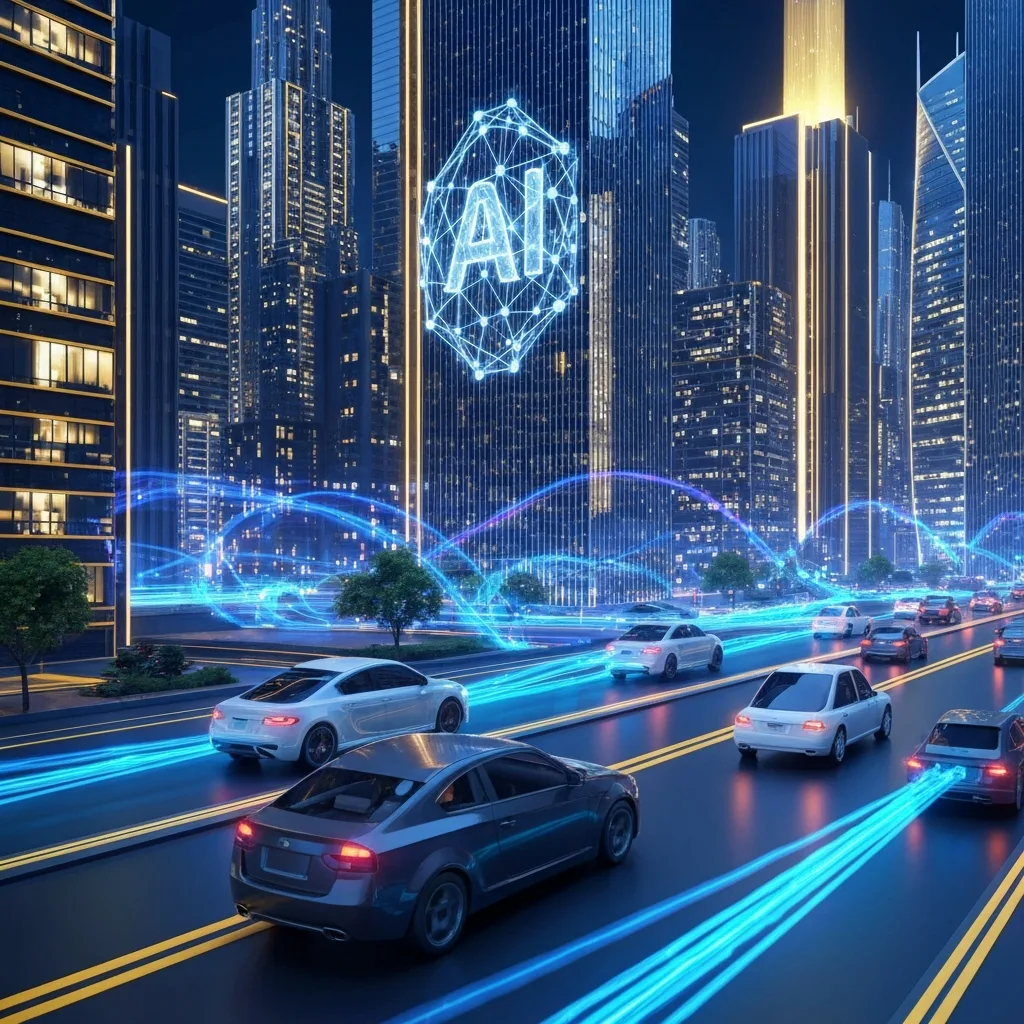
General Motors (GM) is pushing the boundaries of autonomous driving technology with groundbreaking advancements in AI training. In a sponsored article on their new Engineering Blog, GM reveals how they're leveraging high-speed simulations to conquer the immense challenges of creating truly self-driving vehicles.
The core of GM's approach lies in addressing the 'long tail' of autonomous driving – those rare, unpredictable, and often ambiguous events that demand instantaneous and accurate decision-making. These edge cases, though infrequent, are critical in determining the overall safety and reliability of an autonomous system. GM recognizes that mastering these scenarios is essential for achieving full autonomy and deploying self-driving technology at scale.
To tackle this challenge, GM has developed an AI training system capable of running simulations at a staggering 50,000 times real-time. This allows their AI models to experience a vast number of driving scenarios, including the aforementioned 'long tail' events, in a fraction of the time it would take in the real world. By accelerating the learning process, GM can rapidly iterate on its AI algorithms, improving their ability to navigate complex and unpredictable situations.
The sheer scale of this simulation capability is remarkable. It allows GM to expose its AI to a wider range of conditions, including various weather patterns, traffic densities, and unexpected obstacles. This comprehensive training regime is crucial for building robust and reliable autonomous systems that can handle the complexities of real-world driving.
While the article focuses on the research and emerging technologies aimed at achieving full general autonomy, it also touches upon GM's current strategy for handling the majority of everyday autonomous driving situations. This approach, described as a 'Compound AI' system, tackles the 99% of common driving scenarios, paving the way for eyes-off highway driving and other advanced autonomous features.
GM's commitment to addressing the 'long tail' through accelerated AI training demonstrates a rigorous and thorough approach to autonomous driving development. By focusing on the most challenging aspects of self-driving technology, GM is striving to create systems that are not only capable of handling everyday driving but also prepared for the unexpected events that can arise on the road. This dedication to safety and reliability is paramount as the company moves closer to realizing the vision of fully autonomous vehicles. This news signals a significant leap forward in the field, highlighting the potential of large-scale simulation to accelerate the development and deployment of safe and reliable self-driving technology.