Español
 English
 Français
 Português
 Deutsch
 Italiano
Gravis Robotics raises 200 million from SoftBank to turn excavators into autonomous machines: the largest Series A in construction robotics.
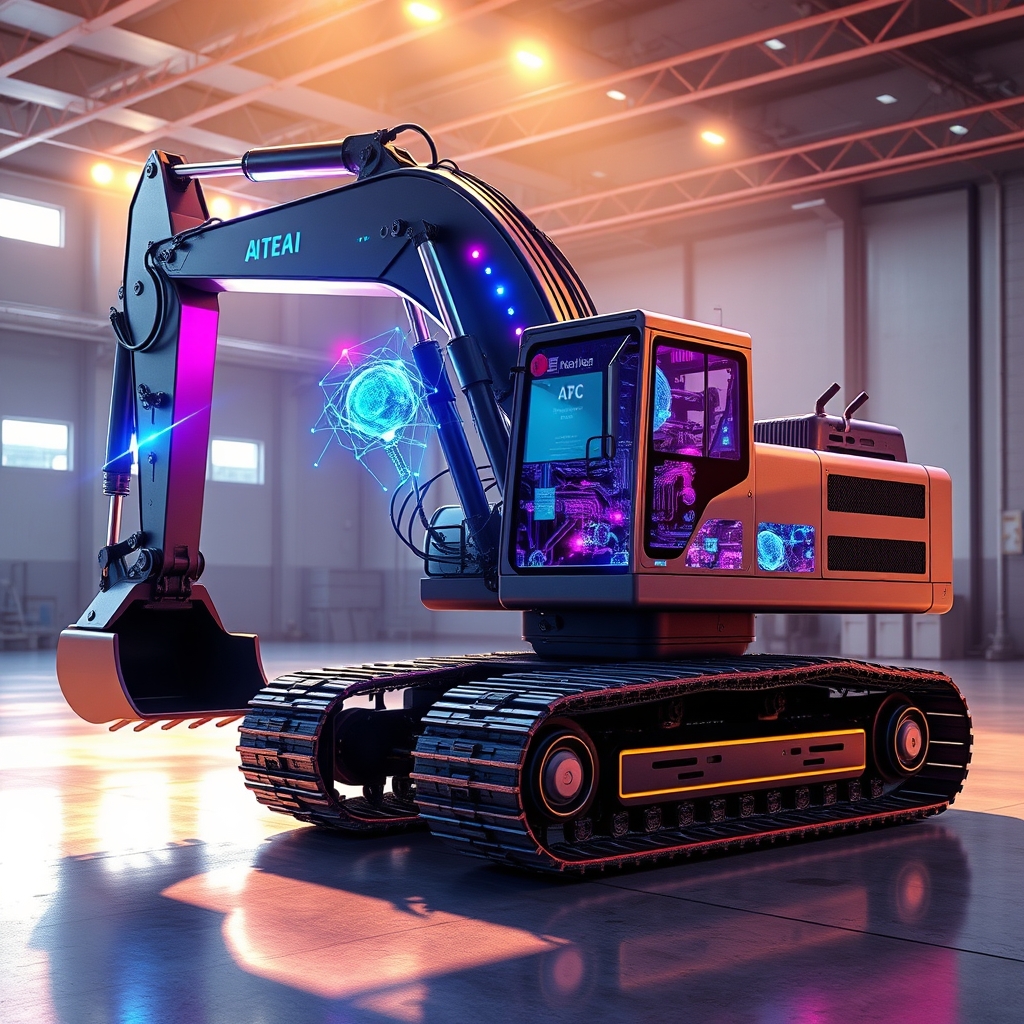 AI-generated
1. Executive Summary
On August 17, 2026, Gravis Robotics AG announced the closing of a $200 million Series A funding round led entirely by SoftBank Group Corp. This milestone not only represents the largest capital injection ever recorded in an early-stage round for a construction robotics startup, but also validates a technological paradigm shift: autonomy is not arriving at construction sites through new, extremely expensive machines, but rather through the digital transformation of the existing excavator fleet.
The transaction has profound strategic relevance. SoftBank, known for its massive bets on artificial intelligence and robotics (from Boston Dynamics to Arm Holdings), is signaling that the heavy construction market, historically lagging in technology adoption, has become a critical battleground for AI applied to the physical world. For operations, fleet, and technology executives in the infrastructure, mining, and construction sectors, this news is not merely a financial headline: it is confirmation that autonomous retrofitting is a viable, scalable, and fundable alternative to asset renewal.
Those who should pay immediate attention are the chief operating officers of large construction firms, heavy machinery fleet managers, CTOs of critical infrastructure companies, and venture capital investors specializing in deep tech. Gravis's decision not to manufacture new hardware, but rather to "software-define" conventional excavators, drastically reduces entry barriers and accelerates return on investment, an argument that has convinced one of the most demanding investors on the planet.
2. Deep Technical Analysis
Gravis Robotics is not an excavator manufacturer. It is a software and perception systems company founded in 2022 as a spin-off from the Swiss Federal Institute of Technology Zurich (ETH Zurich), one of the world's cradles of advanced robotics. Its value proposition centers on a retrofit kit that integrates LiDAR sensors, high-dynamic-range cameras, edge computing units, and a proprietary operating system that converts a standard hydraulic excavator into a semi-autonomous or fully autonomous machine.
The technical core lies in its ability to model the environment in real time. Unlike autonomous vehicles on roads, an excavator operates in unstructured environments, with dust, extreme vibrations, changing slopes, and heterogeneous materials. Gravis has developed perception algorithms that fuse data from multiple sensors to generate a "digital twin" of the terrain in motion. This model allows the machine to distinguish between solid rock, loose soil, or wet clay, adjusting hydraulic force and boom trajectory in milliseconds. The control architecture is hierarchical and redundant. At the lowest level, a closed-loop controller manages the hydraulic actuators with latency lower than that required by a human operator. At the higher level, a task planning system interprets supervisor commands (for example, "excavate a 3-meter-deep trench along this line") and decomposes them into optimized movement sequences. This modular approach allows the machine to operate in teleoperated mode (with a remote human), in semi-autonomous mode (the human supervises and corrects), or in fully autonomous mode (the system executes complete excavation and loading cycles). One of the most significant technical advances is the automatic calibration system. Traditionally, equipping an excavator with sensors required days of installation and configuration by specialized engineers. Gravis has reduced this process to hours, thanks to self-calibration algorithms that learn the specific kinematics of each excavator model (whether Caterpillar, Komatsu, Volvo, or Hitachi) without the need for detailed manuals. This is made possible through the use of deep learning models trained with synthetic and real data, which generalize the geometry of the articulated arm. Energy and compute management is another pillar. Autonomous excavators require high-performance processing under adverse environmental conditions (extreme temperatures, humidity, dust). Gravis has designed its computing units to consume less than 200 watts, allowing them to be powered by the machine's standard electrical system without the need for auxiliary generators. This energy efficiency design is crucial for commercial viability, as it eliminates the need to modify the vehicle's electrical infrastructure.
In terms of connectivity, the system is designed to operate in "edge-first" mode. Although it can connect to a centralized fleet via 5G or satellite networks for supervision and map updates, all critical safety and control logic runs locally. This architecture ensures that a loss of connectivity does not halt operations, a non-negotiable requirement in remote mining or underground construction environments where signal is intermittent.
Finally, the most disruptive aspect is the continuous update model. As a software-defined system, Gravis can deploy improvements to perception algorithms or route planning remotely, without physical intervention on the machine. This turns the excavator into an asset that improves over time, a concept radically different from traditional machinery, which depreciates from day one with no possibility of functional improvement.3. Industry Impact and Market Outlook
SoftBank's $200 million injection is not a simple financial bet; it is a catalyst that reshapes the competitive landscape of autonomous construction. The global excavator market is enormous: it is estimated that there are millions of operational units worldwide, with an average lifespan of 10 to 15 years. Gravis's retrofit approach directly targets this existing installed base, offering a modernization path that avoids the prohibitive cost of replacing entire fleets.
For contractors and construction companies, the economic impact is immediate and measurable. Autonomous operation allows extending working hours to 24/7, eliminating the limitations of human fatigue and night shifts. In large-scale projects, such as tunnel, road, or dam construction, this capability can reduce execution timelines by 20-30%, a brutal competitive advantage in public and private tenders. Furthermore, the system's millimeter-level precision reduces over-excavation and material waste, directly impacting profit margins. The mining sector is likely the biggest short-term beneficiary. Open-pit mines are highly controlled environments, with fixed routes and delimited work zones, making them the perfect scenario for full autonomy. Gravis has already demonstrated in pilot tests that its systems can operate in copper and lithium mines, where safety is an absolute priority. Eliminating human operators from high-risk zones (unstable slopes, areas with toxic gases) not only saves lives but also reduces insurance costs and unplanned downtime.
However, the impact is not limited to heavy construction. Gravis's success is pressuring original equipment manufacturers (OEMs) such as Caterpillar, Komatsu, and Volvo CE to accelerate their own autonomy strategies. These giants have invested billions in developing their own solutions, but Gravis's approach forces them to rethink their business model: if a startup can turn a 10-year-old excavator into an autonomous machine, the sales argument for a new "smart" machine weakens. This could lead to strategic alliances or acquisitions within the next 18 months. From a labor market perspective, excavator automation generates a complex debate. While it is true that demand for machinery operators will decrease, a new category of "autonomous fleet supervisors" and "robotic systems technicians" will be created. Gravis has stated that its goal is not to eliminate jobs, but to reassign human talent toward higher value-added tasks, such as site planning, predictive maintenance, and data management. Nevertheless, unions and operator associations are already pushing for regulatory frameworks that protect the labor transition. SoftBank's interest also sends a clear signal to capital markets. The $200 million Series A round sets a new valuation standard for industrial robotics startups. This will make it easier for other companies in the sector (such as Built Robotics, Teleo, or SafeAI) to access funding on more favorable terms, accelerating innovation across the entire ecosystem. Competition will intensify, but the potential market is large enough: it is estimated that the autonomous construction market will reach tens of billions of dollars in the coming decade.
4. Expert Perspectives and Strategic Analysis
The consensus among industry analysts is that Gravis's operation represents a turning point in the adoption of AI in the construction sector. Historically, this sector has been one of the least digitized in the global economy, with productivity stagnant over recent decades. The arrival of smart capital and technology proven in real-world environments could unlock an unprecedented wave of modernization.
From a technical perspective, experts highlight that Gravis's competitive advantage lies not only in its algorithms, but in its ability to integrate with legacy hydraulic systems. Hydraulics are the "nervous system" of an excavator, and controlling them with precision requires deep knowledge of fluid dynamics and actuator mechanics. Gravis has managed to abstract this complexity through a software layer that communicates with the machine via standardized interfaces (CAN bus and proprietary protocols), allowing it to remain agnostic regarding the manufacturer.
Another strategic point of view focuses on data management. Each autonomous Gravis excavator generates terabytes of daily operational data: positions, forces, temperatures, vibrations, fuel consumption. This data, aggregated and analyzed at the fleet level, enables optimization not only of each machine's individual operation, but of the complete project planning. For example, machine learning algorithms can predict bucket tooth wear with 90% accuracy, scheduling maintenance just before a breakdown occurs, thereby avoiding costly downtime.
However, not everything is bright. Some analysts warn about the risks of dependence on a single investor. SoftBank has been criticized in the past for its strategic volatility and for withdrawing funding during crises (as happened with WeWork). While the $200 million round provides a multi-year runway, Gravis will need to diversify its investor base in future rounds to ensure its strategic independence. The company must also demonstrate that it can scale its technology beyond pilots, with massive deployments across multiple continents and under diverse regulatory conditions. The strategic recommendation for industry players is clear: do not wait. Construction and mining companies that adopt this technology within the next 12-24 months will gain a significant competitive advantage in terms of cost, safety, and execution speed. Those that remain on the sidelines, waiting for the technology to mature further, risk being left behind in a market that is moving rapidly toward autonomy. The key is to launch low-risk pilot projects (for example, a single excavator on a controlled site) to evaluate the real return on investment and build internal confidence in the technology. Finally, it is crucial that chief technology officers and innovation directors establish strategic partnerships with technology providers like Gravis, but also invest in training their own personnel. The transition to autonomy is not just a hardware change; it is a cultural shift that requires new skills in data management, cybersecurity, and remote supervision. Companies that manage this transition proactively will be the ones leading the next era of construction.
5. Future Roadmap and Predictions
The next 24 months will be critical for Gravis Robotics and for the sector as a whole. Based on the company's trajectory and typical technology deployment timelines, we can outline a likely roadmap:
Phase 1 (2026-2027): Commercial expansion and certifications. Gravis will use SoftBank's funds to scale its production capacity for retrofit kits and to expand its sales and integration team. The company is projected to announce framework agreements with major contractors in North America, Europe, and Australia, as well as in emerging markets such as Chile and Peru (copper mining). We will also see a significant effort in obtaining safety certifications (ISO 13849, ISO 10218) and in developing interoperability protocols with existing fleet management systems.
Phase 2 (2027-2028): Consolidation and competition. As Gravis demonstrates its effectiveness on large-scale projects, traditional OEMs will be forced to respond. We are likely to see acquisitions or strategic alliances: Caterpillar or Komatsu could attempt to buy Gravis or one of its closest competitors. Alternatively, they could launch their own retrofit solutions, although their corporate culture and business model (based on selling new machines) will make an agile response difficult. This phase will also see the entry of established technology players seeking to apply their models to the heavy machinery domain.
Phase 3 (2028-2030): Full autonomy and new business models. By the end of the decade, Level 4 autonomy (operation without human supervision in controlled environments) will be the norm in mines and large infrastructure projects. Gravis and its competitors will offer "robotics as a service" (RaaS) models, where contractors pay per hour of autonomous operation instead of purchasing the system. This will democratize access to the technology, allowing even small and medium-sized construction companies to benefit from autonomy without making large capital investments. Integration with complete site digital twins (not just the machine) will enable global project optimization, where excavators, haul trucks, and cranes will operate in synchronized choreography.
6. Conclusion: Strategic Imperatives
SoftBank's $200 million round for Gravis Robotics is much more than financial news: it is the definitive certification that autonomy in heavy construction has ceased to be a futuristic promise and has become a tangible commercial reality. The retrofit approach, which allows modernizing the existing fleet without the need to replace it, is the key that unlocks a massive market and offers immediate, measurable return on investment. For a CTO, the cost-benefit analysis is clear: the reduction of operating hours, fuel consumption optimization, and breakdown prevention through predictive maintenance offer an ROI that justifies early adoption.
For industry leaders, the strategic imperative is twofold. First, it is urgent to evaluate the viability of autonomy in their own operations, identifying the highest-return use cases (mining, large-scale earthmoving, demolition) and launching controlled pilot projects. Second, it is essential to prepare the organization for change: investing in training, redefining job roles, and establishing a data-driven decision-making culture. Gravis's technology is the vehicle, but the company's digital transformation is the destination. The system's modular architecture allows gradual integration with existing fleet management systems, minimizing operational disruption and facilitating interoperability with other equipment.
The window of opportunity is finite. Early adopters will gain sustainable competitive advantages in cost, safety, and speed. Laggards will face increasing pressure to catch up, with the added cost of doing so in a market where standards will already be defined by the pioneers. SoftBank's decision is a call to action for the entire industry: the era of the autonomous excavator has begun, and those who do not get on board will be left behind in the sector.