
 Español
 English
 Français
 Português
 Deutsch
 Italiano
Honda Scraps US-Made EVs Amidst Heavy Financial Losses
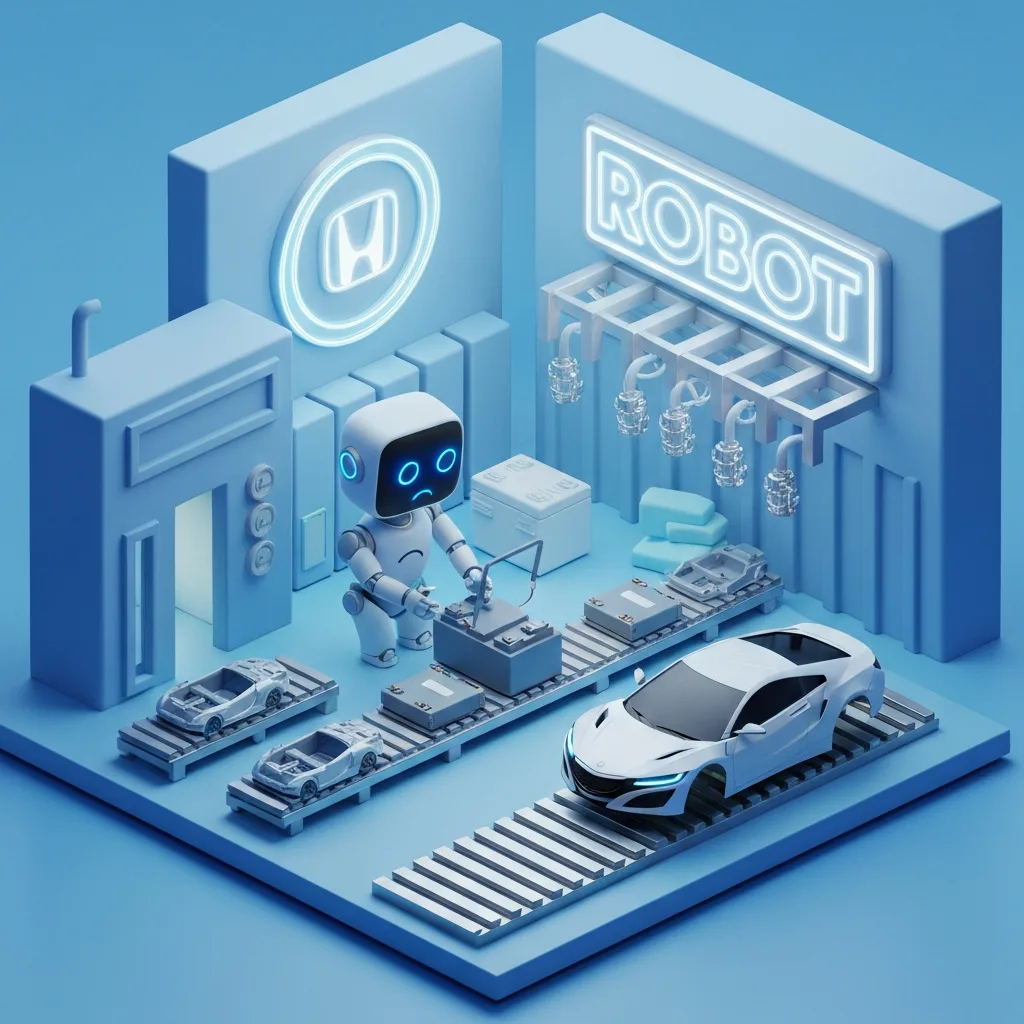 AI-generated
Honda has announced it is halting production plans for three electric vehicles slated to be built in its US-based facilities, a significant shift in strategy driven by substantial financial losses. The automaker projects losses between $5.1 billion and $7 billion for the current financial year, forcing a reevaluation of its ambitious EV production roadmap.
Last year, Honda showcased the transformation of its Anna Engine Plant and Marysville Auto Plant in Ohio. The upgrades included a large-scale die-casting operation for EV battery packs at the Anna plant, alongside existing engine production lines. The Marysville plant boasted a new, robot-filled section prepared to integrate three new electric vehicles – Honda and Acura models – into the existing production flow of vehicles like Accords and Integras. However, these plans have now been shelved.
The canceled EVs include the Honda 0 SUV, the Honda 0 sedan, and the electric Acura RSX. These models were unveiled at the Consumer Electronics Show (CES) last year in what Honda described as a near-production state, signaling the company's commitment to expanding its electric vehicle offerings. The decision to discontinue these models before they even reached the market represents a major setback for Honda's EV strategy in North America.
Honda cited several factors contributing to this difficult decision. The ongoing trade war and its associated economic disruptions played a significant role. While the specific details of how the trade war impacted these particular models were not disclosed, it's likely that increased costs of materials, tariffs, and logistical challenges all contributed to the financial strain.
The cancellation of these US-made EVs raises questions about Honda's future EV strategy in the region. While the company has not explicitly stated a complete abandonment of its EV goals, this move suggests a more cautious and potentially delayed approach. It remains to be seen how Honda will adapt its plans and whether it will pursue alternative manufacturing locations or partnerships to achieve its long-term electrification objectives.
The news also impacts the Ohio manufacturing facilities that were specifically upgraded to accommodate EV production. The fate of the new equipment and the workforce trained for EV assembly remains uncertain. Honda will likely need to re-evaluate the purpose and utilization of these facilities in light of the canceled EV programs. This situation highlights the challenges and volatility inherent in the rapidly evolving electric vehicle market, where even established automakers face significant financial and logistical hurdles.