Español
 English
 Français
 Português
 Deutsch
 Italiano
Japan's Answer to its Labor Shortage: An AI Model for 10 Million Robots
 AI-generated
1. Executive Summary
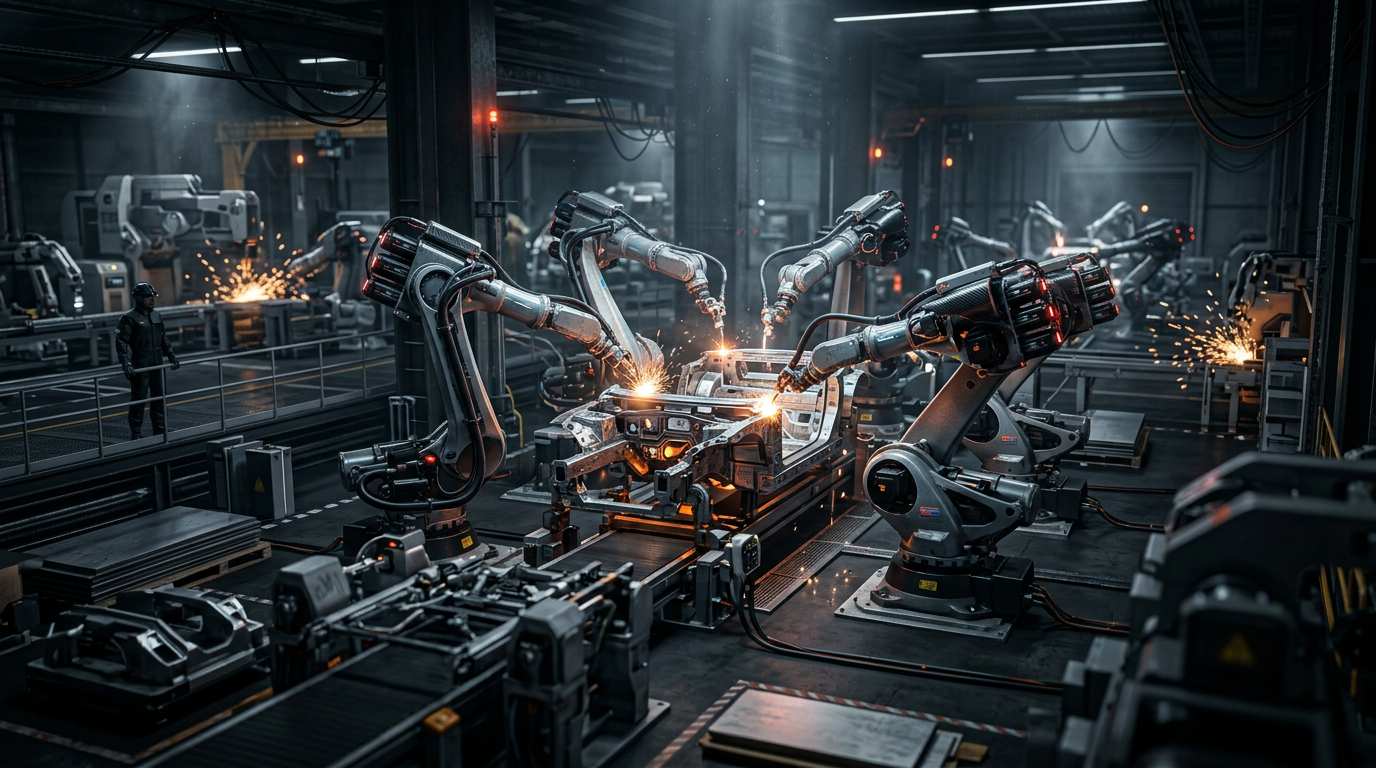
In a move that redefines national strategy in the face of a persistent demographic crisis, the Japanese government has officially confirmed its plan to deploy 10 million AI-powered robots across 18 industrial sectors by 2040. This initiative, which has evolved from mere speculation into state policy, boasts public financial backing of up to one trillion yen (approximately 6.1 billion US dollars) over the next five years. The scale of this project is unprecedented, positioning Japan at the forefront of mass-scale automation and offering a radical solution to its pressing labor shortage.
This IAExpertos.net report delves into the details of this strategy, analyzing not only the technical and economic viability of such a deployment but also the profound implications for Japanese society and the global technological landscape. From the necessary AI infrastructure, which will rely on cutting-edge models like GPT-5.5, Claude 4.8 Opus, and Llama 4, to ethical challenges and workforce retraining, we will examine how Japan plans to execute this bold vision. The initiative seeks not only to maintain economic competitiveness but also to redefine the relationship between humans and machines in the near future.
The relevance of this announcement transcends Japanese borders. It represents a critical case study for other nations facing similar demographic challenges or seeking to boost their productivity through advanced automation. Investors, tech leaders, policymakers, and the global workforce must pay attention, as Japan's success or stumbles in this endeavor will set precedents and offer invaluable lessons on the large-scale integration of robotics and AI into daily life and the economy.
2. Deep Technical Analysis
The ambition to deploy 10 million AI robots by 2040 demands a technological infrastructure and AI maturity that, while already considerable in 2026, will require exponential evolution. The core of this strategy lies in the ability of these robots to be truly "intelligent," implying a critical reliance on large language models (LLMs) and advanced vision models, as well as state-of-the-art robotic control systems. Models such as OpenAI's GPT-5.5, Anthropic's Claude 4.8 Opus, Google's Gemini 3.5 Flash Omni, and Meta's Llama 4 will be fundamental in endowing these robots with capabilities for contextual understanding, reasoning, planning, and natural communication.
The implementation of AI in 10 million units will not be limited to the mere automation of repetitive tasks. These robots are expected to incorporate advanced perception capabilities (computer vision, signal processing), dexterous manipulation, autonomous navigation in complex environments, and, crucially, continuous learning. This means that the embeddings of their AI models must be capable of retraining and adapting to new situations and data in real-time, possibly using federated learning architectures or edge AI models like Gemma 4 to process data locally and reduce latency.
From a hardware perspective, the manufacturing and maintenance of 10 million robotic units represent a monumental challenge. Standardization of components, a robust supply chain, and massive production capacity will be required. Advances in lightweight materials, high-energy-density batteries, and precision actuators will be key. Furthermore, connectivity will be vital; 5G and 6G infrastructure will be essential for seamless communication between robots, centralized control systems, and cloud AI platforms, enabling fleet orchestration and efficient model updates.
The diversity of the 18 target industries implies that there will be no single robotic solution. From humanoid robots for elder care and home assistance, to collaborative robotic arms in factories, autonomous drones for agriculture and logistics, and driverless delivery vehicles, the range of forms and functions will be immense. Each application will require specialization in robot design and in its underlying AI architecture. For example, in manufacturing environments, precision and speed will be paramount, while in the service sector, natural interaction and adaptability will be crucial.
A critical technical aspect will be cybersecurity. A network of 10 million connected devices represents a massive attack surface. The implementation of robust security protocols, end-to-end encryption, multi-factor authentication, and AI-based intrusion detection systems will be indispensable to protect this critical infrastructure from malicious attacks or systemic failures. Network resilience and disaster recovery capabilities will also be fundamental design considerations.
Finally, interoperability will be a determining factor. For these robots to function cohesively across diverse environments and with different legacy systems, open standards and robust integration platforms will be needed. Collaboration between hardware manufacturers, AI software developers, and service providers will be essential to create a unified ecosystem that enables the efficient deployment and management of this vast robotic fleet. The ability of AI models to interact with diverse APIs and process multimodal data will be a key differentiator.
3. Industry Impact and Market Implications
Japan's plan to deploy 10 million AI robots will have a seismic impact on multiple industries, both nationally and globally. Firstly, the Japanese manufacturing industry, already a leader in robotics, will experience an unprecedented transformation. Advanced automation will not only address labor shortages but also boost productivity, reduce production costs, and enable greater customization and flexibility on assembly lines. This could revitalize sectors that have struggled to compete with cheaper labor markets, consolidating Japan's position as a high-tech industrial powerhouse.
The health and elder care sector, particularly affected by Japan's demographics, will be one of the biggest beneficiaries. Assistant robots for mobility, medication administration, patient monitoring, and social companionship could alleviate the burden on human staff, improving the quality of life for the elderly and allowing healthcare professionals to focus on more complex and empathetic tasks. This will create a massive new market for service robotics and AI applied to healthcare, with implications for the development of ethical and safety standards.
Logistics, agriculture, and the service sector will also see profound restructuring. Autonomous drones for infrastructure inspection and crop spraying, driverless delivery vehicles, cleaning robots, and store assistants are just a few examples. This will not only optimize operations and reduce operating costs but could also open new business avenues and services that are currently unfeasible due to human labor limitations. The energy efficiency of these systems will be a critical factor, driving innovation in batteries and renewable energy sources.
At the global market level, demand for robotic components, AI software, advanced sensors, and integration services will skyrocket. Japanese companies like Fanuc, Yaskawa, and SoftBank Robotics, along with global tech giants like NVIDIA, Google (with Gemini), Meta (with Llama), and OpenAI (with the GPT family), will benefit enormously. This will foster a technological arms race, where other nations will seek to emulate or surpass the Japanese strategy, driving investment in R&D in robotics and AI worldwide.
However, significant challenges will also arise. Labor disruption will be inevitable. Although the main objective is to cover labor shortages, the automation of 10 million jobs will require massive retraining and education programs for the existing workforce. The creation of new roles in robot design, maintenance, supervision, and programming will be crucial. Furthermore, initial investment and infrastructure costs will be substantial, and long-term profitability will depend on the efficiency and adaptability of these robotic systems.
Finally, Japan's strategy could establish a new paradigm for economic competitiveness. By solving its demographic problem through technology, Japan could maintain its industrial leadership and social well-being, offering a model for other aging economies to follow. This could also influence immigration policies and the global perception of automation's role in society, marking a milestone in the evolution of the 21st-century economy.
4. Expert Perspectives and Strategic Analysis
The community of analysts and technology experts has received Japan's announcement with a mix of awe and caution. The scale of the project is, without a doubt, ambitious. “It's a bold statement of intent that underscores the seriousness with which Japan is addressing its demographic challenge,” notes a robotics analyst from a global consulting firm. “However, the execution of a deployment of 10 million units across 18 industries by 2040 presents unprecedented logistical, technical, and social obstacles. The key will lie in the modularity of AI systems and the ability of robots to learn and adapt in unstructured environments, something that models like Qwen 3.7-Max or Grok 4.3 are beginning to address successfully, but which still requires considerable maturity for mass production.”
From a strategic perspective, the investment of one trillion yen over five years is a clear sign of the government's commitment. “This level of public funding is a massive catalyst for innovation,” comments an economist specializing in technology. “It will not only finance research and development but also incentivize private investment and the creation of a startup ecosystem in robotics and AI. It's a long-term bet on technological sovereignty and economic resilience.” The strategy is also perceived as a response to growing technological competition from China and the United States, seeking to secure Japan's position as a leader in advanced automation.
A recurring point of debate among experts is the impact on employment. While the Japanese government frames this as a solution to labor shortages, the transition will not be painless. “The 'replacement' narrative must be carefully managed,” warns a labor sociologist. “It is more accurate to speak of 'augmentation' and 'redefinition' of roles. The workforce will need massive retraining in skills related to the supervision, maintenance, and interaction with robots. Education and vocational training programs will be as critical as the technology itself.” The experience of other countries with automation suggests that the creation of new jobs often does not directly offset the loss of old ones in the short term, requiring robust social support policies.
The ethics and social acceptance of robots on this scale are also fundamental strategic considerations. “The integration of robots into elder care or customer service roles raises questions about human interaction, privacy, and autonomy,” notes an AI ethics expert. “Japan, with its culture of robotics acceptance, has an advantage, but even there, the scale of 10 million units will require continuous public dialogue and the development of clear regulatory frameworks to ensure responsible and ethical deployment. Transparency in AI operation, especially in proprietary models like GLM-5.2, will be vital for building trust.”
In summary, the Japanese strategy is a large-scale experiment with the potential to rewrite the rules of the economy and society. Experts agree that success will depend not only on technological prowess but also on meticulous social and economic planning, sustained investment in human capital, and careful management of public expectations. It is a call to action for collaboration between government, industry, and academia, not only in Japan but globally, to address the challenges and opportunities presented by this new era of intelligent robotics.
5. Future Roadmap and Predictions
The roadmap for the deployment of 10 million robots in Japan by 2040 will unfold in well-defined phases, starting with infrastructure consolidation and standardization. By the end of 2028, the initial investment of one trillion yen is expected to have catalyzed the creation of several centers of excellence in robotics and AI, focused on researching next-generation AI models (such as future iterations of GPT-5.5, Gemini 3.5 Flash, or Llama, or specialized models like DeepSeek-V4-Pro for robotic coding tasks) and on developing modular hardware platforms. The first large-scale deployments will concentrate on high-need sectors and controlled environments, such as smart factories and automated warehouses, where efficiency and safety can be maximized.
Between 2029 and 2034, the strategy will expand to more complex sectors such as healthcare, agriculture, and logistics. We will see a proliferation of service robots in hospitals and nursing homes, as well as drones and autonomous vehicles in rural and urban areas. During this period, interoperability and the ability of robots to interact with humans more naturally will be crucial. Advances in soft robotics and multimodal AI will enable robots to perform more delicate tasks and adapt to dynamic environments. Workforce training in new skills related to robotics and AI will intensify, with national retraining and certification programs.
For the 2035-2040 period, the goal will be massive integration and advanced autonomy. Robots will have become an omnipresent part of daily life and the Japanese economy. AI is expected to have evolved to the point of enabling more sophisticated decision-making, autonomous problem-solving, and fluid, contextual human-robot interaction. 6G connectivity infrastructure will be fundamental to support device density and data volume. Regulatory and ethical frameworks will have matured to address issues of responsibility, privacy, and long-term social impact. The goal of 10 million units will not only be achieved but their performance will be optimized and their capabilities expanded to new areas.
Long-term predictions suggest that Japan's success in this endeavor could set a new global standard for national-level automation. We could see a “robotization” of other aging economies, with Japan exporting not only its technology but also its strategic model. However, challenges will persist, including energy management for such a large fleet, the constant evolution of cyber threats, and the need to maintain public acceptance as robots take on increasingly complex roles. Japan's ability to innovate and adapt to these challenges will determine the true legacy of this bold vision.
6. Conclusion: Strategic Imperatives
Japan's strategy to deploy 10 million AI-powered robots by 2040 is not merely a technological plan; it is a national strategic imperative to secure its economic and social future. Facing one of the world's most acute demographic crises, the nation has opted for a bold, high-tech solution, investing significantly in robotics and artificial intelligence as pillars of its resilience. The success of this initiative will depend on impeccable execution, encompassing everything from innovation in AI hardware and software (leveraging cutting-edge models like GPT-5.5, Claude 4.8 Opus, and Llama 4) to the creation of robust infrastructure and the preparation of its workforce and society.
The strategic imperatives for Japan are clear: first, maintain sustained investment in R&D to ensure technological leadership in robotics and AI, fostering collaboration between the public and private sectors. Second, develop massive and effective retraining and education programs for the workforce, transforming the threat of automation into an opportunity for the creation of new jobs and skills. Third, establish robust regulatory and ethical frameworks to guide the responsible deployment of AI and robotics, ensuring safety, privacy, and social acceptance. Finally, Japan must position itself as an exporter of this model, sharing its learnings and technologies with other nations facing similar challenges, consolidating its global influence in the era of intelligent automation.
This ambitious plan will not only transform Japan but will also serve as a living laboratory for the rest of the world. The lessons learned, both successes and challenges, will be invaluable for humanity as a whole as we navigate the era of large-scale artificial intelligence and robotics. The call to action for global leaders is to observe, learn, and prepare for a future where the interaction between humans and 10 million robots, or more, will be the new normal.