Español
 English
 Français
 Português
 Deutsch
 Italiano
AI-Assisted Reasoning in Medicine
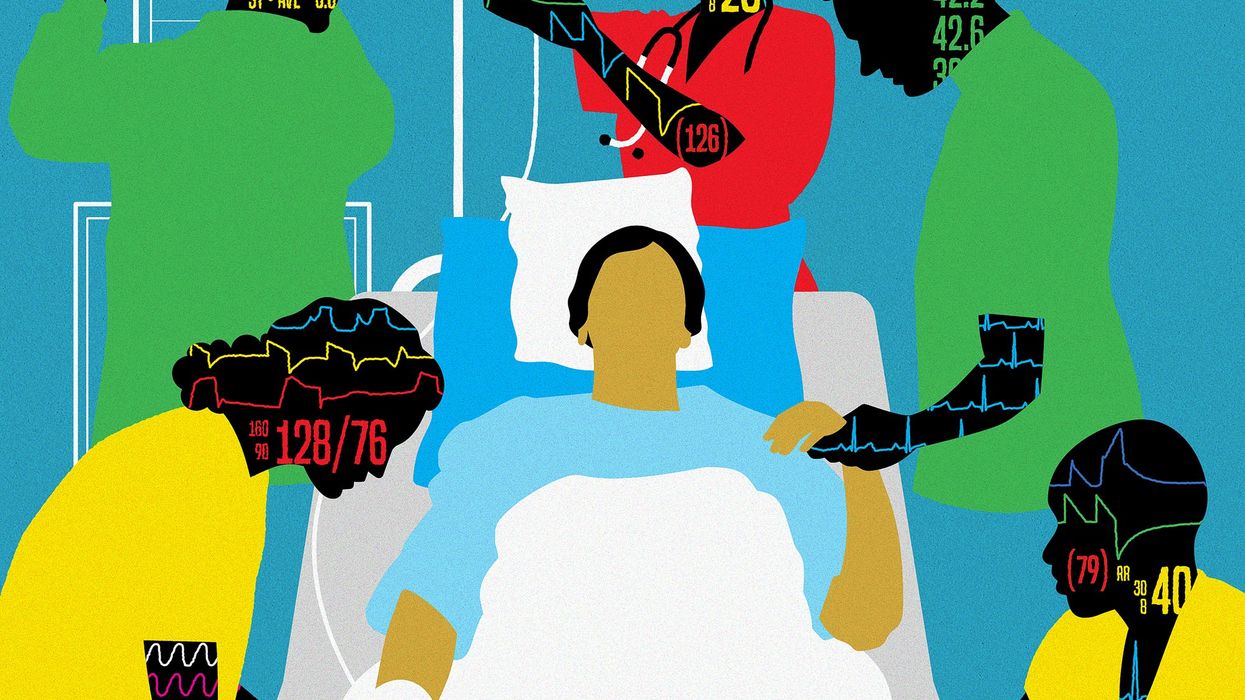 AI-generated
1. The Legacy of Expert Systems
Since the advent of the first expert systems developed in the latter half of the 20th century, a primary objective of medical informatics has been to assist healthcare professionals in clinical reasoning. This process encompasses the collection and interpretation of medical information, the formulation of diagnostic hypotheses, the evaluation of probabilities, and the selection of therapeutic strategies under conditions of uncertainty.
For decades, Clinical Decision Support Systems (CDSS) primarily relied on explicit rules defined by experts: relationships between symptoms and diseases, clinical protocols, drug interactions, or diagnostic thresholds. While valuable in specific contexts, these systems often exhibited significant limitations in flexibility, contextualization, and adaptability.
The emergence of Large Language Models (LLMs) has transformed this landscape. Due to their capacity to process vast volumes of biomedical information and generate contextualized responses, these models are beginning to demonstrate significant capabilities in clinical reasoning tasks, differential diagnosis, and medical information synthesis.
2. A Turning Point in AI's Clinical Evaluation
A study published in May 2026 in the scientific journal Science generated significant impact within the medical and technological communities. The research evaluated the performance of the OpenAI o1-preview reasoning model in clinical reasoning tasks using real-world cases from hospital emergency departments.
The results indicated that the model achieved superior performance compared to participating groups of physicians in specific tasks related to differential diagnosis and clinical decision-making. The study particularly highlighted the system's ability to synthesize complex information, correlate clinical histories, and generate plausible diagnostic hypotheses in highly complex scenarios.
Nevertheless, the authors themselves emphasized that these results must be interpreted within the experimental context of the study. Outperforming physicians in specific benchmarks does not imply replacing the comprehensive practice of medicine or fully replicating human clinical judgment in real-world settings.
3. What “Clinical Reasoning” Truly Means
Human clinical reasoning is a considerably more complex process than the mere identification of statistical patterns. It encompasses multiple simultaneous dimensions:
- Information gathering through anamnesis, physical examination, and supplementary tests.
- Progressive generation and elimination of diagnostic hypotheses.
- Contextual interpretation based on prior clinical experience.
- Consideration of the patient's psychological, social, and cultural factors.
- Ethical evaluation and decision-making under uncertainty.
- Empathetic communication and interpersonal understanding.
While current models demonstrate surprising capabilities in analytical and synthesis tasks, they still lack lived experience, genuine emotional understanding, and moral responsibility, fundamental elements in real medical practice.
4. Current Strengths of AI Models in Medicine
Generative AI systems offer objective advantages in specific clinical and scientific domains:
Massive Information Processing
LLMs can synthesize vast quantities of biomedical literature, clinical guidelines, and technical documentation in extremely short periods.
Rapid Generation of Differential Diagnoses
In structured contexts, models can rapidly and consistently propose multiple diagnostic hypotheses, helping to broaden the spectrum of clinical possibilities considered.
Identification of Complex Patterns
AI can detect statistical correlations and clinical associations that are challenging to identify manually in large volumes of data.
Documentary and Administrative Assistance
One of the most promising current applications is the partial automation of administrative tasks: report writing, summarizing clinical histories, medical documentation, or support in healthcare coding.
Accelerated Access to Medical Knowledge
Models enable rapid consultation and synthesis of medical information previously learned during their training, facilitating access to specialized knowledge.
5. Significant Limitations and Persistent Risks
Despite their advancements, current models exhibit significant limitations that prevent them from being considered autonomous substitutes for physicians.
Hallucinations and Factual Errors
LLMs can generate incorrect information presented with apparent confidence, including: erroneous diagnoses, non-existent bibliographic references, incorrect clinical recommendations, or imprecise medical interpretations. This phenomenon remains one of the primary obstacles to their safe clinical adoption.
Lack of Explainability
Many models operate as partially opaque systems. In numerous instances, it is challenging to determine precisely how they arrive at a particular clinical conclusion, which complicates their auditing and validation.
Biases in Training Data
Models can reproduce or amplify existing biases in the medical data used during training, particularly concerning underrepresented populations, socioeconomic differences, ethnic variations, or healthcare access inequalities.
Absence of True Human Understanding
Models do not comprehend suffering, anxiety, or the emotional dynamics of patients. Nor can they replace physical examination or the contextual judgment developed through real clinical experience.
Ethical and Legal Responsibility
The integration of AI into medicine raises complex issues: accountability for diagnostic errors, regulatory validation, decision traceability, privacy of clinical data, and mandatory human oversight.
6. The Realistic Role of AI in Medicine
The currently predominant view among researchers, hospitals, and regulatory bodies is not the complete replacement of the physician, but rather a model of human-machine collaboration. In this approach, AI acts as a tool to support clinical reasoning, a documentary assistance system, an aid for differential diagnosis, an accelerator for information analysis, and a mechanism to assist in repetitive or high-administrative-load tasks.
The final clinical judgment, contextual interpretation, and ethical responsibility continue to rest with human professionals.
7. Technological Competition and Sector Evolution
Beyond OpenAI, other companies are developing advanced models with potential applications in medicine: Anthropic has developed recent models from the Claude family with significant improvements in reasoning and safety. Google continues to expand the medical and multimodal capabilities of Gemini. Various biomedical and hospital companies are training specialized models in radiology, genomics, drug discovery, and clinical analysis.
However, the performance of these systems continues to vary considerably depending on the type of clinical task, data quality, evaluation method, and degree of human supervision.
8. Regulation and Clinical Validation
One of the most significant challenges for the coming years will be establishing robust mechanisms for clinical validation and regulation. The safe adoption of medical AI will require controlled prospective studies, multicenter validation, independent audits, continuous monitoring, methodological transparency, and specific regulatory frameworks.
Health agencies are still defining how to adequately evaluate systems capable of dynamically modifying their behavior and generating probabilistic responses.
9. Conclusion
Artificial intelligence is beginning to demonstrate relevant capabilities in clinical reasoning tasks and advanced medical analysis. Recent studies suggest that certain models can achieve, and even surpass in specific contexts, human performance in particular structured diagnostic tests. However, these advancements do not equate to a replacement of human medical practice. Medicine remains a profoundly contextual, ethical, and interpersonal discipline, where clinical judgment, communication, and empathy play an essential role.
The most plausible medium-term scenario is not medicine exclusively driven by AI, but rather a close collaboration between healthcare professionals and intelligent systems capable of expanding access to knowledge, improving efficiency, and strengthening the analytical capacity of clinical teams.