Español
 English
 Français
 Português
 Deutsch
 Italiano
Microsoft Launches Surface RTX Spark Dev Box to Run Large AI Models with No Cloud Costs
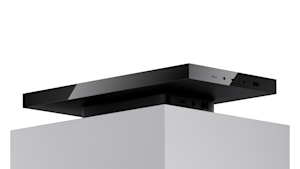 AI-generated
1. Executive Summary
In a move that could fundamentally redefine the economics of artificial intelligence development, Microsoft has unveiled the Surface RTX Spark Dev Box. Announced at the Microsoft Build 2026 conference, this compact desktop device is designed with a singular and bold purpose: to enable developers to run large-scale AI models directly on their workstations, eliminating the dependence and rising costs associated with cloud computing. This initiative represents a direct challenge to the pay-per-token pricing model that has dominated the AI industry since the launch of ChatGPT three and a half years ago.
At the heart of this proposal is the new Nvidia Blackwell architecture GPU, complemented by an impressive configuration of 128 gigabytes of unified memory. This combination not only promises a performance of one petaflop of AI compute but, in practical terms, empowers developers to load, run, and interact with AI models exceeding 120 billion parameters without needing to make a single cloud API call. Microsoft's vision is clear: to offer a fixed-cost alternative to the unpredictable and scalable cloud GPU expenses, addressing a growing concern in boardrooms of companies of all sizes.
The relevance of this launch is multifaceted. For developers, it means greater autonomy, faster iteration cycles, and the freedom to experiment without the constant oversight of a token counter. For businesses, it represents an opportunity to internalize AI development, improving data security and sovereignty, while managing budgets more predictably. This announcement not only impacts the developer community and hardware providers but also compels cloud computing giants to re-evaluate their pricing strategies and service offerings, marking a turning point in the economic trajectory of artificial intelligence.
2. In-Depth Technical Analysis
The Surface RTX Spark Dev Box is not simply another desktop computer; it is an AI workstation designed with a specific architecture to address the computational and economic challenges of large language models (LLMs) and other intensive AI workloads. Its compact design belies the raw power it houses, positioning it as a fundamental tool for the next generation of AI development.
At the core of this device is an Nvidia Blackwell architecture GPU, an implementation of Nvidia's cutting-edge Blackwell architecture. Blackwell, the successor to Hopper, is designed to deliver exponential improvements in AI performance, both in training and inference. Blackwell's Tensor Cores are optimized for dense and sparse matrix operations, crucial for deep neural networks. The inclusion of this state-of-the-art architecture in a "Dev Box" format underscores Microsoft's and Nvidia's commitment to bringing AI supercomputing capability to the individual developer's desk. One petaflop of AI compute, the figure cited by Nvidia, is an astonishing amount of power, equivalent to one quadrillion floating-point operations per second, enabling it to handle the complexity and size of today's and the near future's most advanced AI models.
The most prominent and differentiating technical feature of the Surface RTX Spark Dev Box is its configuration of 128 gigabytes of unified memory. Pavan Davuluri, Corporate Vice President of Windows and Devices at Microsoft, emphasized the critical importance of this capacity. In the context of LLMs, model size is only part of the equation; the ability to handle an extensive context is equally vital for model effectiveness. Davuluri noted that for a 100,000-token context, the key-value cache (KV cache), which stores intermediate representations of processed tokens, can consume between 40 and 50 gigabytes of memory. Without sufficient memory, even a large model cannot process long inputs or maintain a coherent and deep conversation.
Unified memory is a key factor here. Unlike traditional architectures where the CPU and GPU have their own separate memory banks, unified memory allows both components to dynamically access the same memory pool. This eliminates the need for costly data transfers between system memory and GPU memory, reducing latency and improving overall efficiency, especially for AI workloads that require frequent and fast access to large datasets and model parameters. The 128 GB not only allows loading models with over 120 billion parameters but also ensures that these models can operate with the necessary context depth to be truly "effective," as highlighted by Davuluri.
From a software perspective, although not explicitly detailed, Microsoft is expected to provide an optimized development environment. This would include adapted Windows versions, high-performance Nvidia drivers, and seamless integration with popular AI frameworks like PyTorch and TensorFlow, likely via WSL (Windows Subsystem for Linux) or native development environments. The promise to "load, run, and interact" with AI models at this scale implies that the software stack will be designed to maximize hardware performance and simplify the developer's workflow, minimizing the friction often encountered when setting up complex AI environments.
Compared to cloud solutions, where developers rent GPU instances like Nvidia A100 or H100, the Surface RTX Spark Dev Box offers a fixed-cost paradigm. While cloud instances can be scalable and accessible on demand, their costs quickly accumulate with usage, especially for intensive tasks like LLM training or inference. The Dev Box, in contrast, represents an initial investment that eliminates variable operational costs, providing a predictable and controlled environment for continuous experimentation and development. This is a significant value proposition for teams seeking budgetary stability and more granular control over their AI infrastructure.
| Feature | Specification | AI Relevance |
|---|---|---|
| Processor | Nvidia Blackwell architecture GPU | Next-generation Tensor Cores for accelerated inference and training, optimized for AI workloads. |
| Unified Memory | 128 GB | Critical capacity for loading models over 120 billion parameters and handling extensive contexts (up to 100,000 tokens), avoiding data bottlenecks. |
| AI Compute Power | 1 Petaflop | Exceptional performance for running and experimenting with large-scale AI models, enabling rapid iterations. |
| Model Capacity | Over 120 billion parameters | Enables local development and interaction with advanced LLMs and multimodal models, without cloud dependency. |
| Context Management | Support for 100,000 tokens | The key-value cache can consume 40-50 GB, justifying the need for 128 GB of memory for effective and contextual AI. |
| Form Factor | Compact (Dev Box) | Desktop design optimized for the personal development environment, facilitating deployment on any workstation. |
| Availability | Late 2026 (USA) | Strategic launch to capitalize on the growing demand for local and sovereign AI. |
| Economic Model | Fixed cost (hardware) | Direct alternative to the cloud pay-as-you-go model, eliminating variable costs and offering budgetary predictability. |
3. Industry Impact and Market Implications
The launch of Microsoft's Surface RTX Spark Dev Box is not just a technological novelty; it is a strategic move with profound implications for the AI economy and the industry's competitive landscape. This device arrives at a time when cloud AI costs have become a high-level concern for businesses, large and small, struggling with cloud GPU bills that scale unpredictably with every fine-tuning, every inference call, and every agentic workflow.
The most direct implication is the disruption of the cloud AI economic model. For years, access to the computational power needed for advanced AI has been almost exclusively in the hands of cloud providers, who offer high-performance GPUs under a pay-as-you-go model. Microsoft's Dev Box proposes a fundamental shift from an operational expenditure (OpEx) model to a capital expenditure (CapEx) model for AI development. This could be a significant relief for companies seeking budgetary stability and wishing to avoid the "cloud bill surprise" at the end of the month. The ability to run 120 billion-parameter models locally means that a substantial part of the AI development cycle can be carried out without incurring variable costs per token or per GPU hour.
This move also has the potential to democratize large model development. Until now, experimentation with cutting-edge LLMs was largely restricted to organizations with substantial cloud budgets. By offering a fixed-cost hardware solution, Microsoft opens the door for smaller development teams, startups, and even individual researchers to explore and build upon large-scale AI models without the financial barrier to entry. This could foster an explosion of innovation in the AI space, as more minds will have access to the tools needed to push the boundaries of what's possible.
Another crucial impact is on data sovereignty and privacy. For highly regulated industries such as finance, healthcare, or government, the need to keep sensitive data on-premises is paramount. Running AI models locally on the Dev Box means that data never has to leave the company's controlled environment, mitigating security risks and complying with strict privacy regulations. This could accelerate AI adoption in sectors that have been cautious due to concerns about data residency and processing in the cloud.
For cloud providers themselves, including Azure (Microsoft's own cloud division), AWS, and Google Cloud, this launch poses a strategic dilemma. While Microsoft is offering an alternative to its own cloud service, it is also recognizing a market need. This could lead to increased competition in the AI space, with cloud providers potentially introducing more flexible pricing models, dedicated on-premises hardware offerings (like AWS Outposts or Azure Stack), or even cloud-based "Dev Box" services with more predictable costs. Microsoft's strategy could be a form of "land and expand," attracting developers with local solutions and then scaling them to Azure for massive workloads or specialized services.
Finally, the Surface RTX Spark Dev Box will boost the AI hardware market. The adoption of Nvidia's Blackwell architecture in such a consumer/developer product further validates Nvidia's position as a leader in AI hardware. Other hardware manufacturers and system providers are likely to follow suit, developing their own AI workstations optimized for large models, which could lead to a new wave of innovation in desktop and edge hardware. This could also accelerate the trend towards hybrid AI architectures, where workloads are intelligently distributed between the cloud and local devices according to cost, latency, and privacy requirements.
4. Expert Perspectives and Strategic Analysis
From the perspective of industry analysts, Microsoft's Surface RTX Spark Dev Box is a bold and calculated move that addresses one of the most significant frictions in the current AI ecosystem: cost. Most analysts agree that this move is not a renunciation of the cloud by Microsoft, but a strategic expansion of its offering to capture a segment of the AI market ripe for disruption.
Microsoft's strategy is, in a way, a dual strategy. On the one hand, Azure remains a fundamental pillar of its AI business, offering massive scalability and managed services. On the other hand, the Dev Box recognizes that not all AI workloads, especially in the development and experimentation phases, benefit from a purely cloud-based model. By offering a powerful local solution, Microsoft positions itself to serve developers and businesses that prioritize cost control, data privacy, and low latency. "Microsoft's ability to offer solutions both in the cloud and at the edge or on the desktop allows them to be agnostic to customer preference, ensuring they capture AI demand on all fronts," industry analysts note.
Nvidia's role in this equation is equally crucial. The Blackwell architecture is the pinnacle of GPU technology for AI, and its integration into a Microsoft product underscores the close collaboration between the two companies. For Nvidia, the Dev Box represents a new avenue to monetize its cutting-edge technology beyond hyperscale data centers. It is a validation that the demand for high-performance AI computing is extending beyond large cloud players and towards individual developers and smaller businesses. The availability of a petaflop of AI compute in a desktop form factor is a testament to the rapid advancement in the miniaturization and efficiency of AI processing power.
A key question that arises is how the Dev Box compares to existing high-end workstations that use multiple consumer GPUs. The fundamental difference lies in the 128 GB unified memory and the Blackwell architecture. While workstations with multiple GPUs can offer comparable raw computing power, they often face memory limitations per GPU and the complexity of managing communication between them. The Dev Box's unified memory, coupled with Blackwell's optimization for LLMs, provides a more cohesive and efficient solution for handling large models and extensive contexts, which are the main bottlenecks in current AI development.
The target audience for the Surface RTX Spark Dev Box is not all AI users, but specifically those involved in the development, prototyping, fine-tuning, and inference of large models where cloud costs are an impediment. It is not designed to replace large-scale training of foundational models from scratch, which will remain a cloud domain, but to empower the experimentation and application phase. The absence of pricing information is, however, a critical factor. The success of the Dev Box will largely depend on Microsoft achieving a price point that is attractive enough to justify the initial investment and outweigh the variable cloud costs in the long term. If the initial cost is prohibitive, it could undermine the "no cloud costs" value proposition.
5. Future Roadmap and Predictions
The launch of the Surface RTX Spark Dev Box is just the beginning of what is shaping up to be a significant trend in the AI landscape. Looking ahead, we can anticipate several lines of development and evolution that will shape the impact of this Microsoft initiative.
Firstly, it is highly probable that we will see a rapid evolution of "Dev Boxes". The first iteration with 128 GB of unified memory and a petaflop of compute is impressive, but the demand for AI will only grow. We can predict future versions with even greater memory capacities (256 GB, 512 GB, or even more), as well as multi-GPU or multi-chip configurations to further scale computing power. As AI models become larger and more complex, the need for more powerful and efficient local hardware will intensify. Microsoft and Nvidia, along with other hardware players, are likely already planning these future iterations to stay ahead of developers' needs.
Secondly, the software ecosystem around the Dev Box will be crucial. Microsoft will invest significantly in optimizing Windows, its development tools (such as Visual Studio Code and WSL), and its AI frameworks for this hardware. This will include driver improvements, Blackwell-optimized software libraries, and tools that simplify the local deployment and management of AI models. Developer experience will be key for mass adoption, and Microsoft has a long history of creating robust development environments. Furthermore, integration with Azure AI services, such as Azure AI Studio, could enable hybrid workflows where development and experimentation are performed locally, while large-scale deployment or access to massive datasets are managed in the cloud.
Thirdly, this move by Microsoft could catalyze a response from the competition. Other tech giants like Apple, Google, Dell, and HP might be prompted to develop their own optimized "AI workstations" or "Dev Boxes". Apple, with its M-series chips and unified memory architecture, already has a solid foundation to compete in this space, albeit perhaps with a different focus on model optimization. Google, with its TPU expertise, could explore more powerful edge hardware solutions. This competition would benefit developers by offering a wider range of options and potentially reducing costs.
Finally, the long-term impact on cloud pricing is a key prediction. If the Surface RTX Spark Dev Box gains traction, it could exert considerable pressure on cloud providers to revise their GPU pricing models. We could see the introduction of more predictable subscription plans, more aggressive volume discounts, or even on-premise hardware offerings that directly compete with Microsoft's value proposition. This shift towards fixed costs for AI development could be a catalyst for a broader restructuring of the AI economy, making the technology more accessible and sustainable for a wider range of users.
6. Conclusion: Strategic Imperatives
Microsoft's launch of the Surface RTX Spark Dev Box is much more than the introduction of a new hardware product; it is a bold strategic statement that recognizes and addresses one of the biggest barriers to the proliferation of advanced AI: its operational costs. By offering a high-performance AI compute solution in a desktop format with a fixed cost model, Microsoft is directly challenging the pay-as-you-go paradigm that has dominated the cloud AI industry.
The strategic imperative for Microsoft is clear: to capture a growing share of the AI development market, empowering developers with the tools needed to innovate without the financial constraints of variable cloud costs. This move not only positions Microsoft as a leader in AI hardware but also reinforces its commitment to the developer community, offering them autonomy, privacy, and predictability. For businesses, the Dev Box represents an opportunity to internalize AI development, protect sensitive data, and manage budgets more effectively, transforming AI from an unpredictable operational expense into a controlled capital investment.
Looking ahead, developers and businesses must carefully evaluate this new offering. The promise of running 120 billion-parameter models with 128 GB of unified memory and a petaflop of AI compute on the desktop is a compelling value proposition. Cloud providers, for their part, face the need to adapt, whether through more competitive pricing models, hybrid offerings, or edge hardware solutions. The Surface RTX Spark Dev Box is not just a product; it is a catalyst that could accelerate the democratization of AI, redefine its economy, and lay the groundwork for an era where the power of artificial intelligence is more distributed and accessible than ever before.