Español
 English
 Français
 Português
 Deutsch
 Italiano
Moore Threads' Upcoming "Lushan" Gaming GPU Could Feature a Record-Breaking 64 GB of VRAM
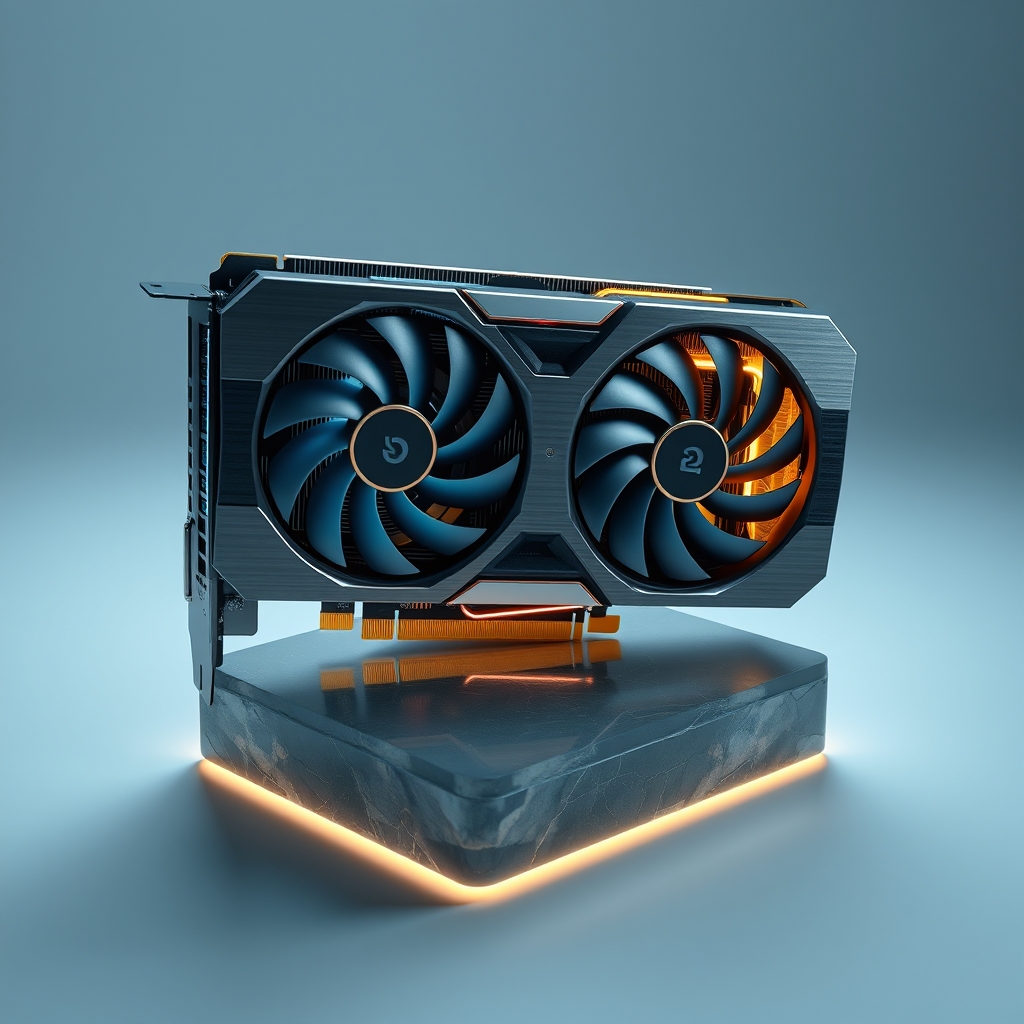 AI-generated
1. Context and Key Points
The landscape of graphic accelerators and visual processing units is at a geopolitical and technological crossroads of historic proportions. Recent leaks and industry analyses indicate that Moore Threads, one of the most closely watched semiconductor manufacturers in the Asian tech ecosystem, is preparing to launch its upcoming Lushan-series GPU equipped with a memory configuration unprecedented in the mass consumer segment: up to 64 GB of VRAM. This move does not represent a mere exercise in brute force technical specifications, but a structural shift in how graphical hardware is conceived in the face of the growing demands of local artificial intelligence and complex rendering.
For the global industry, this development raises critical questions about high-density memory supply chains, energy efficiency in proprietary architectures, and the democratization of high-intensity computing outside the traditional Western silicon duopoly. Analysts and chief technology officers are closely observing how a manufacturer subject to international restrictions manages to scale its advanced packaging capacity to compete in niches where memory volume is the primary operational bottleneck.
Understanding the implications of the Lushan platform requires examining both the physical constraints of current silicon and the dynamics of the advanced silicon market. This report breaks down the projected architecture, the commercial repercussions for the data center and workstation sectors, and the strategic horizon opening up for systems engineers in the coming quarters.
2. Technical Highlights
Designing a GPU aimed at incorporating 64 GB of VRAM into a next-generation architecture requires solving complex challenges in signal integrity, thermal dissipation, and memory addressing. Traditionally reserved for high-end professional workstations and costly data center accelerators, a memory buffer of this magnitude in a consumer form factor requires a complete rethinking of the memory controller and the data bus interface.
Moore Threads' Lushan architecture succeeds previous iterations focused on the maturity of the MUSA instruction set and compatibility with standard graphics APIs. While earlier designs dealt with optimizing parallel execution and power consumption under DirectX and Vulkan loads, the leap toward Lushan focuses on optimizing bandwidth and local storage capacity to avoid costly accesses to system storage via the PCIe interface.
From the perspective of integrated circuitry, using 64 GB involves adopting higher memory chip densities or double-sided configurations on the printed circuit board, depending on available packaging technology. In modern architectures, the bottleneck no longer resides solely in the calculation capacity of shading cores or dedicated tensor accelerators, but in the speed at which data is fed to those execution engines. Last-level cache management and the memory hierarchy within the Lushan silicon determine whether that immense amount of memory will operate with the low latency demanded by real-time rendering engines and local inference environments.
The integration of high-speed memory stacks or the arrangement of multiple synchronous memory channels demands microscopic tolerances in the processor substrate. Limitations imposed by access to cutting-edge lithography equipment force engineers to maximize efficiency through architectural optimizations at the microcode and logic design level, compensating for potential disadvantages in the physical node with smart circuitry solutions.
Another fundamental aspect of technical analysis lies in energy consumption. Doubling or quadrupling standard VRAM capacity on a graphics card increases the baseline electrical consumption of the memory subsystem. The design of advanced voltage regulators and dynamic management of idle power states are non-negotiable elements to prevent thermal dissipation from compromising silicon stability under sustained heavy workloads.
Likewise, the compiler and graphics driver stack must evolve in parallel to efficiently manage such extensive memory address spaces. Professional applications and local language or computer vision models operating directly on the hardware require optimized buffer allocation to avoid fragmentation and maximize performance per watt consumed.
3. Impact on the Sector
The potential announcement of a GPU with 64 GB of VRAM by an alternative player disrupts the traditional competitive dynamics of the graphics card market. For years, market segmentation has been rigidly defined by legacy manufacturers who deliberately limit memory capacity in consumer lineups to protect their high-margin professional and data center product lines.
The emergence of high-memory capacity hardware outside usual Western channels democratizes access to decentralized artificial intelligence development. Engineers, researchers, and small businesses operating on tight budgets find in these solutions a way to run large language models and complex simulations locally, reducing dependence on cloud-based infrastructures and the associated costs per token or processing hour.
For the software ecosystem, this hardware forces developers of graphics engines and machine learning frameworks to optimize their algorithms to take advantage of massive memory configurations in heterogeneous environments. Compatibility with Moore Threads' proprietary programming libraries, such as MUSA, remains the main challenge for mass adoption outside its domestic market, but the attractive ratio between memory capacity and price exerts constant pressure on open industry standards.
Global supply chains are also experiencing tensions and adaptations in the face of these moves. The acquisition of high-density memory chips and access to advanced packaging capabilities place Moore Threads in a complex negotiating position, where local supply chain resilience plays a role as decisive as integrated circuit design innovation.
| Technical Feature | Current Consumer Standard | Lushan Architecture Projection |
|---|---|---|
| Maximum VRAM Capacity | 16 GB, 24 GB | Up to 64 GB |
| Main Memory Interface | 256-bit to 384-bit Bus | Optimized for high density |
| Primary Application Focus | Gaming and standard rendering | Extreme gaming and local AI |
| Software Environment | DirectX, Vulkan, CUDA/ROCm | DirectX, Vulkan, MUSA |
4. Market Outlook
Semiconductor-focused analysts agree that Moore Threads' strategy responds to an imperative need for differentiation in a market saturated with conventional options. The commitment to large-capacity memory is not a design whim, but a direct response to accumulated demand for tools capable of processing hybrid workloads that combine high-fidelity graphics with edge artificial intelligence model inference.
From a systems architecture perspective, the integration of 64 GB of VRAM mitigates one of the biggest headaches for advanced digital content developers: frame buffer saturation and the need to apply aggressive texture or model compression techniques. By having such a generous local memory space, cinematic rendering workflows and real-time physical simulation experience remarkable fluidity.
However, experts warn that Lushan's commercial success will depend on the maturity of its driver ecosystem. Powerful hardware loses its competitive advantage if intermediary software presents instabilities or lacks specific optimizations for the most demanding professional and gaming applications in the global market.
Strategic recommendations for chief technology and procurement officers involve maintaining an active yet prudent tracking attitude. Evaluating these alternatives in controlled lab environments allows organizations to understand real performance against the theoretical specifications published by the manufacturer.
5. Next Steps
The deployment schedule for the Lushan architecture and its 64 GB VRAM variants points to an initial testing phase with strategic partners and original equipment manufacturers in the Asian market, followed by a commercialization rollout targeted at high-performance workstations and hardware enthusiasts.
In the medium term, competitive pressure exerted by these types of configurations is expected to force legacy manufacturers to reconsider their memory allocation policies in the mid-to-high consumer tiers. The trend toward the unification of graphics and computational workloads will continue to dictate silicon evolution over the next decade.
Subsequent iterations of the architecture will predictably focus on lithographic node reduction, improving energy efficiency per watt, and expanding support for international development frameworks, consolidating Moore Threads' position as a contender to watch in the global semiconductor landscape.
6. Conclusion and Assessment
The potential commercial rollout of Moore Threads' Lushan architecture equipped with 64 GB of VRAM marks a decisive turning point in the evolution of graphics hardware geared toward advanced users and the execution of local artificial intelligence workloads. By breaking traditional memory capacity barriers imposed in mass consumer segments, this development redefines operational limits for complex rendering and the local deployment of language models without strict dependence on cloud infrastructures.
For engineering and systems architecture leaders, the arrival of the Lushan GPU configurations underscores the imperative need to diversify hardware evaluation strategies and maintain constant monitoring of emerging silicon architectures. The ability to integrate alternative silicon and optimize workflows in an increasingly decentralized ecosystem will be the determining factor in maintaining technical and operational competitiveness in the coming years.