
 Español
 English
 Français
 Português
 Deutsch
 Italiano
Neko Health Raises $700M for US Expansion of AI-Powered Body Scanners
1. Executive Summary
On July 17, 2026, Neko Health, the Swedish startup founded by Hjalmar Nilsonne and backed by Spotify co-founder Daniel Ek, announced the closing of a Series C funding round worth $700 million. The deal, led by Lightspeed Venture Partners and co-led by O.G. Venture Partners, positions the company as one of the best-capitalized players in the emerging market of AI-assisted preventive healthcare. The capital will be used entirely for expansion in the United States, starting with the opening of a flagship clinic in New York by the end of 2026, with plans to replicate the model in five other U.S. cities by 2028.
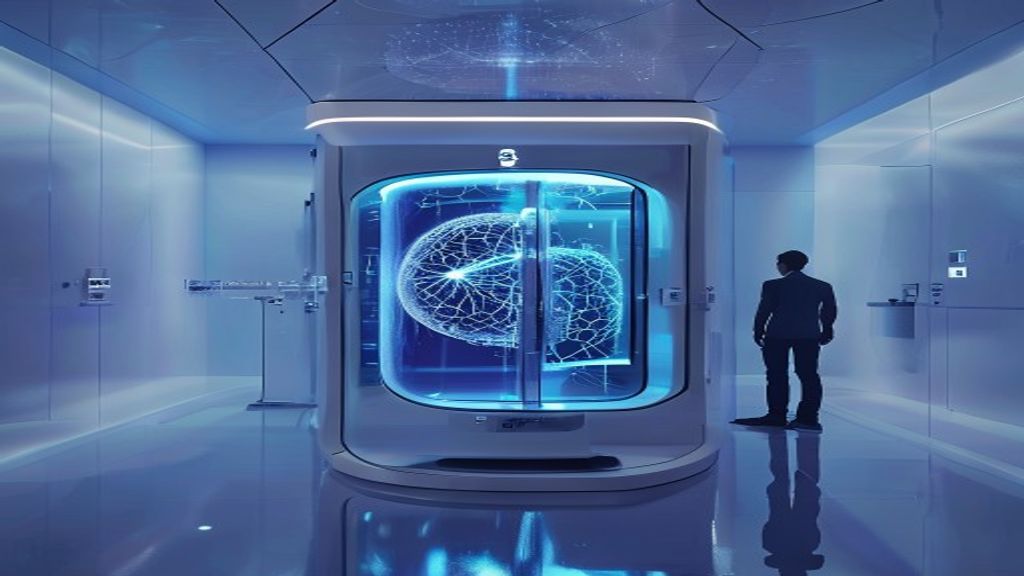
This move is not a simple clinic opening. It represents a paradigm shift in how the annual medical checkup is conceived. Neko Health combines, in a session of approximately one hour, a full-body scan of 70 parameters — including high-resolution medical imaging, a 12-lead electrocardiogram, blood analysis with over 100 biomarkers, and a set of proprietary sensors — with a report generated by artificial intelligence algorithms and reviewed by a physician. The cost for the patient in Sweden is approximately 250 euros; in the U.S., the price is expected to be around $500-600, still well below the cost of a traditional MRI or PET scan.
For IT professionals, healthcare system architects, and technology investment analysts, this move signals a critical convergence: the maturity of computer vision models (such as those based on transformer and diffusion architectures) for medical image analysis, the economic viability of low-cost solid-state sensors, and the growing willingness of consumers to pay out-of-pocket for preventive health services. Those who ignore this trend risk being left behind in the next wave of disruption in the trillion-dollar healthcare sector.
2. Deep Technical Analysis
Neko Health's value proposition rests on three technological pillars that deserve detailed examination: sensor hardware, the image processing pipeline, and the clinical AI model.
Proprietary sensor hardware. Unlike traditional medical scanners (MRI, CT, PET), which require superconducting magnets, large amounts of liquid helium, or radioactive isotopes, Neko Health has developed a modular system based on solid-state sensors and integrated photonics. The company uses a combination of multispectral cameras (capturing information beyond the visible spectrum, including near-infrared and ultraviolet) and bioelectrical impedance sensors. These sensors, manufactured using standard lithography processes from the semiconductor industry, can map tissue density, superficial blood flow, and body composition without the need for ionizing radiation. The manufacturing cost of each scanning unit is estimated at less than $50,000, a fraction of the cost of an MRI machine (which can exceed $2 million).
Image processing pipeline. Raw sensor data is processed by a computer vision pipeline that uses deep learning models trained on multimodal datasets. The company has published that its organ and tissue segmentation system achieves accuracy comparable to human radiologists in detecting structural anomalies (lung nodules, liver cysts, arterial wall thickening). The pipeline includes an image registration step that overlays multispectral captures with 3D anatomical models generated by diffusion, allowing detection of submillimeter changes between successive visits. This level of precision is made possible by the use of vision transformer (ViT) architectures with cross-attention, similar to those powering models like GPT-5.6 Sol or Claude Opus 4.8, but optimized for medical data.
Clinical AI model. The heart of the system is a proprietary foundation model, trained on over 10 million anonymized records of scans, blood tests, and long-term follow-up results. This model not only identifies anomalies but calculates a "biological risk" for each of the 70 parameters, using causal inference techniques and reinforcement learning with human feedback (RLHF) to prioritize clinically relevant alerts. The model can generate a narrative report in natural language, explaining in terms understandable to the patient what each finding means and what preventive actions are recommended. Final review by a human physician acts as a safety layer, but 90% of the analysis is automated. It is important to note that, unlike general-purpose models such as Gemini 3.5 Flash or Grok 4.5, Neko's model is specifically tuned to minimize false positives in cancer detection, a critical problem in AI-assisted radiology.
Expansion to the U.S. will also require significant regulatory adaptation. The FDA has classified Neko's system as a Class II medical device (moderate risk), meaning the company must undergo a 510(k) notification process to demonstrate substantial equivalence to devices already on the market. The company has already initiated this process and expects to obtain authorization by the end of 2026. In parallel, it must comply with HIPAA regulations for health data protection, which implies end-to-end encryption, access audits, and a cybersecurity incident response plan.
3. Industry Impact and Market Implications
Neko Health's entry into the U.S. with $700 million in backing is not an isolated event; it is a catalyst that will reshape multiple sectors.
Insurance sector. U.S. health insurers, such as UnitedHealth Group, Anthem, and Cigna, are closely watching this model. If Neko can demonstrate that its preventive scans reduce long-term costs (by detecting diseases in early, preventable stages), insurers could begin subsidizing or even requiring these checkups as part of their policies. The average cost of a hospital admission for late-stage cancer in the U.S. exceeds $100,000; a $500 scan that detects cancer at Stage I represents a potential savings of 90%. However, there is an inherent tension: insurers make money when patients do not use services, not when they use them preventively. Neko's business model, based on direct out-of-pocket payment, avoids this initial friction but limits its market to the middle-to-high-income population.
Diagnostic imaging industry. Industry giants like GE HealthCare, Siemens Healthineers, and Philips face an existential threat. Their MRI and CT machines, which require specialized facilities, highly qualified personnel, and long wait times, are vulnerable to a model of fast, low-cost, and ubiquitous scanning. We will likely see a response in the form of acquisitions or strategic alliances. Siemens, for example, has already invested in AI startups for radiology, but none offers an integrated package like Neko's. The question is whether traditional manufacturers can pivot to a "hardware as a service" (HaaS) model or whether they will be relegated to high-complexity niches (neuroimaging, interventional cardiology).
Labor market in radiology. Technical consensus suggests that AI will not replace radiologists, but it will transform their work. Radiologists who adopt AI tools like those from Neko will be able to increase their productivity by 3 to 5 times, dedicating more time to complex cases and patient communication. However, radiologists who resist automation could see reduced demand, especially in population screening tasks (mammograms, bone densitometry). The American College of Radiology has already issued guidelines urging its members to become familiar with these technologies.
Data privacy and ethics. The collection of 70 biometric parameters per person, including full body images, poses significant risks of re-identification and secondary use of data. Neko has stated that data is stored on servers located in the European Union and complies with GDPR, but transfer to the US will require strong contractual agreements and possibly the adoption of frameworks like the Data Privacy Framework. Additionally, there is a risk that this data could be used by insurers or employers to discriminate against individuals predisposed to certain diseases, even though the Genetic Information Nondiscrimination Act (GINA) in the US prohibits some of these uses. Transparency in informed consent will be crucial.
4. Expert Perspectives and Strategic Analysis
To gain a comprehensive view, we have synthesized opinions from industry analysts, regulators, and technologists who have closely followed the evolution of Neko Health.
Technical and regulatory feasibility. Analysts in the medical device sector point out that Neko's main challenge is not technological, but regulatory and related to clinical adoption. "The FDA has been cautious with generative AI devices, especially those producing natural language reports," comments an anonymous regulatory consultant with experience in 510(k) approvals. "Neko will have to demonstrate not only that its system is accurate, but that it does not introduce racial or gender biases into its diagnoses, a well-documented problem in computer vision models trained mostly on data from Caucasian populations." The company has stated it is working with academic hospitals in the US to gather diverse training data, but this process will take years.
Business model and scalability. From an investment perspective, the $700 million round values Neko Health at approximately $5 billion (according to unconfirmed market estimates). This implies investors are betting on exponential growth. However, the physical clinic model is capital-intensive: each location requires an initial investment of $2-3 million in equipment, rent, and staff. To achieve significant profitability, Neko would need to operate at least 50 clinics in the US, each performing between 50 and 100 scans per day. The logistics of hiring and training reviewing physicians, imaging technicians, and customer service staff at that scale are formidable. Some analysts suggest Neko could opt for a franchise model or a partnership with pharmacy chains (CVS, Walgreens) to accelerate deployment, similar to what Theranos did... though with the crucial difference that Neko's technology actually works.
Competition and differentiation. Neko is not alone in this space. Startups like Prenuvo (Canada), Ezra (US), and Q Bio (US) offer similar total body scan services with AI. Neko's competitive advantage lies in three factors: the depth of its proprietary hardware (which allows more parameters per scan), the quality of its foundation model (trained with longitudinal follow-up data), and now, its access to capital. With $700 million, Neko can afford a price war and aggressive marketing to capture market share quickly. However, competition will also intensify from tech giants like Apple (whose Apple Watch already collects continuous health data) and Google (which through its Verily division is developing portable health sensors). The convergence between wearables and periodic scans is inevitable.
Strategic recommendations for ecosystem players:
- For hospitals and health systems: Do not see Neko as a threat, but as a potential partner for referring high-risk patients. Establish collaboration agreements to clinically validate Neko's findings and offer specialized follow-up.
- For insurers: Launch pilot programs that partially subsidize Neko scans for their policyholders, in exchange for access to anonymized aggregate data that allows adjusting premiums based on real risks, not population averages.
- For regulators: Develop a specific framework for "low-risk preventive scanning devices" that accelerates approvals without compromising safety, similar to the FDA's "fast track" program for innovative devices.
- For investors: Consider that the true long-term value lies not in the clinics, but in the longitudinal dataset Neko is accumulating. This data could be worth billions for pharmaceutical research and the development of new biomarkers.
5. Future Roadmap and Predictions
Based on the announcement, industry trends, and company statements, we can outline a likely roadmap for the next 36 months.
July 2026 – December 2026: US Entry Phase. Opening of the flagship clinic in Manhattan (New York). Obtaining FDA 510(k) clearance for the scanning system. Launch of direct-to-consumer marketing campaigns on social media and health podcasts. Hiring a team of 50 people including physicians, technicians, and operations staff. The clinic is expected to perform about 20 scans per day during the first three months, increasing to 50 by the end of the year.
January 2027 – June 2027: West Coast Expansion. Opening of a second clinic in San Francisco or Los Angeles. Announcement of a partnership with a major university health system (possibly UCSF or Stanford) for a 10,000-patient clinical validation study. Launch of a mobile app allowing users to view their historical results, compare trends, and receive personalized lifestyle recommendations generated by AI.
July 2027 – December 2027: Scaling and Diversification. Opening of clinics in Chicago, Houston, and Miami. Introduction of a home scanning service using a portable unit (similar to a suitcase) for patients with reduced mobility. Possible acquisition of a home blood test startup (like Thriva or LetsGetChecked) to integrate lab testing into the ecosystem. The company could announce a Series D funding round to finance international expansion to the UK and Japan.
2028 and beyond: Preventive Health Platform. Neko Health will evolve from being a chain of clinics to a health subscription platform. Users will pay a monthly fee (estimated at $50-80) that includes an annual scan, quarterly blood tests, and access to an AI health coach. The company will begin licensing its sensor technology and AI models to hospitals and independent clinics, generating recurring revenue without needing to open new locations. It is expected that by 2030, Neko will have over 1 million active subscribers and a dataset of more than 100 million scans, becoming the world's largest repository of preventive health data.
6. Conclusion: Strategic Imperatives
Neko Health's $700 million fundraising is not just financial news; it is an unmistakable signal that AI-assisted preventive medicine is here to stay. The combination of low-cost hardware, foundational computer vision models, and a direct-to-consumer business model is creating a new service category that challenges established healthcare structures. For technology and business leaders, the message is clear: the future of health is not in hospitals, but in data generated by ubiquitous sensors and analyzed by artificial intelligence.
The immediate strategic imperatives are threefold. First, closely monitor the FDA's regulatory response; any delay in 510(k) approval could slow Neko's growth and open a window for competitors. Second, assess the impact on investment portfolios; traditional diagnostic imaging companies (GE, Siemens) could see their valuations fall if they do not respond with their own innovation. Third, prepare for an ethical and social debate on biometric data privacy and equity in access to preventive healthcare; companies that take a proactive stance on transparency and data protection will win consumer trust.
Ultimately, Neko Health represents the materialization of a promise that artificial intelligence has been making for decades: to democratize access to early and accurate diagnosis. The question is no longer whether this technology will work, but who will have access to it, at what cost, and under what safeguards. The next 18 months will be decisive in determining whether Neko becomes the next healthcare giant or a footnote in the history of medical innovation. As analysts, our recommendation is to maintain active vigilance, but also a healthy dose of skepticism: in the healthcare sector, the path from the laboratory to the patient is full of obstacles that not even $700 million can fully pave over.