Español
 English
 Français
 Português
 Deutsch
 Italiano
NVIDIA Reinstates Jensen Huang After Eleven Days: When Compute Sovereignty Overrides the Boardroom
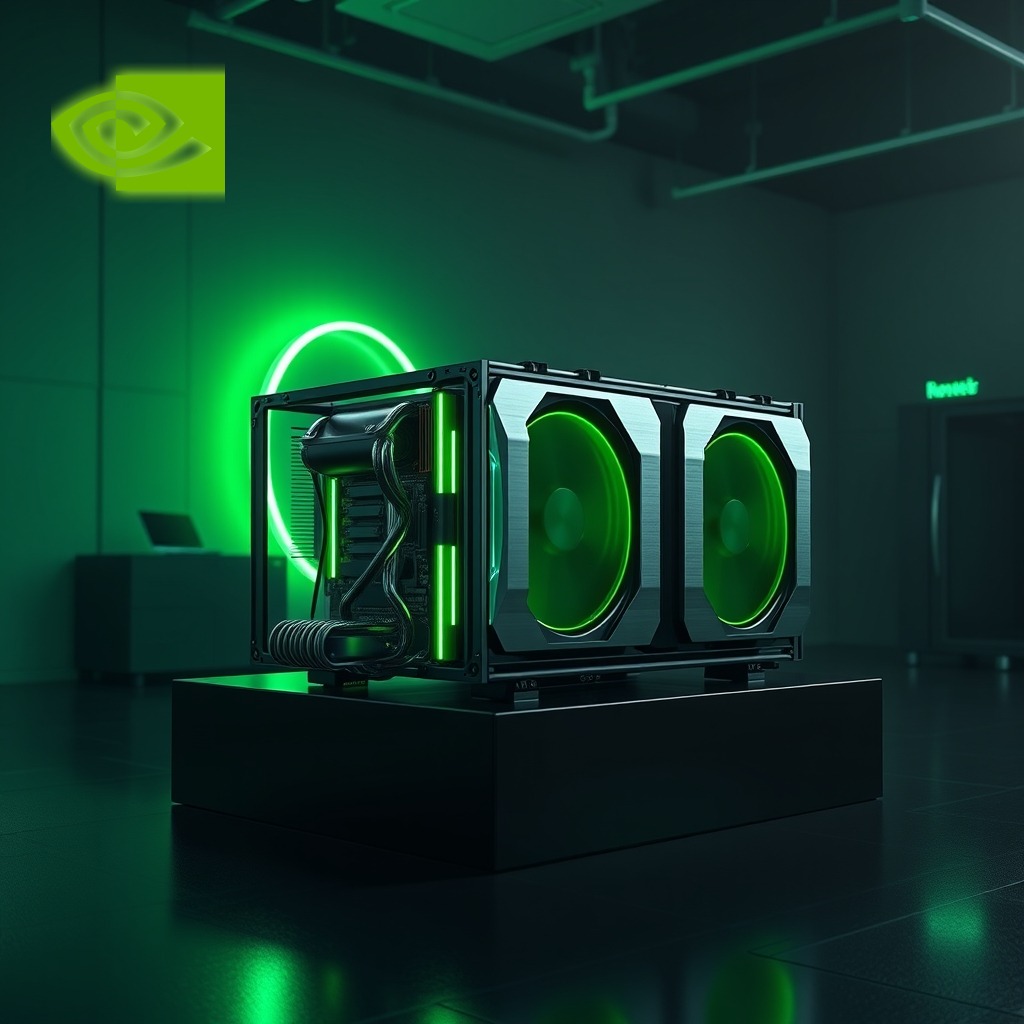 AI-generated
1. Context and Highlights
NVIDIA's board of directors reinstated Jensen Huang as chief executive after an eleven-day absence, a reversal that stands as one of the most consequential governance episodes in the semiconductor industry's recent history. The dismissal did not survive contact with reality: coordinated pressure from the White House, from major institutional investors and from technology executives who depend on NVIDIA's hardware forced the board to walk back a decision it had barely finished announcing. The episode exposed how thin the membrane between corporate governance and national strategic interest has become when the company in question sits at the base of the global artificial intelligence stack.
For anyone tracking the AI industry, the significance is not the personnel drama. It is the precedent. NVIDIA's operational continuity is now treated, explicitly or implicitly, as a national security asset. The speed of the reversal suggests a convergence between government and market: stability under Huang is preferable to the uncertainty of a forced transition, particularly while demand for accelerated compute remains insatiable and competition with foreign actors sharpens by the quarter. It is worth stating plainly what this story is and is not. It is not a model launch, nor a change in the silicon catalog. It is a governance crisis at the compute provider on which the major laboratories depend. That distinction matters because NVIDIA's value does not live only in its chips; it lives in the continuity of a roadmap that its clients plan years in advance, and in the institutional confidence that the roadmap will not be interrupted by a boardroom quarrel.
2. In-Depth Technical and Operational Analysis
To grasp the magnitude of the crisis, one has to understand the technical role NVIDIA plays in the current AI ecosystem. Huang is not merely an executive; he is the architect of CUDA, the de facto standard for training large-scale language models. Eleven days without his leadership produced tangible technical uncertainty. Decisions about the hardware roadmap, cluster interconnect optimization and High Bandwidth Memory bandwidth management require a long-horizon vision that, inside NVIDIA, has been inseparable from his figure.
The underlying technology has evolved drastically. Frontier models from the major laboratories rely on Mixture of Experts architectures that demand massive coordination of computational resources. NVIDIA's ability to orchestrate thousands of GPUs across distributed data centers is a critical bottleneck that is difficult to manage from an interim committee. Huang's reinstatement guarantees continuity in the optimization of those workflows, which is what keeps inference cost per million tokens on its downward trajectory, a vital factor for the economic scalability of generative AI. The crisis also exposed the sector's dependence on a single source of advanced silicon. NVIDIA's GPUs, fabricated on 4nm and 3nm lithography processes, sit at the end of complex global supply chains. Instability at the top could have disrupted negotiations with manufacturing partners and memory suppliers, affecting hardware availability for training runs at the frontier. Part of the government's motivation was to protect that supply chain from stock market volatility and media speculation. From an engineering standpoint, Huang's absence would have slowed rapid decisions on the architecture of upcoming chips, which must balance energy consumption against computational density. Energy efficiency is a key parameter in the sustainability of AI data centers, and Huang's experience in optimizing the ratio of watts to floating-point operations is not easily replaced. The reinstatement allows NVIDIA to defend its advantage in inference efficiency, precisely where competitors, including AMD and hyperscalers' custom silicon, are narrowing the gap. The episode also highlighted the importance of technical governance in capital-intensive companies. By reversing its decision, the board implicitly acknowledged that NVIDIA's technical complexity exceeds the management capacity of a conventional board. The need for a leader with deep technical knowledge and strategic vision was the central argument of Huang's defenders, who maintained that any change in technical direction could have severe consequences for U.S. competitiveness in the AI race. One nuance deserves precision: NVIDIA supplies hardware to the major laboratories but does not hold a controlling equity alliance over them. The relationship is that of critical supplier and strategic client, not parent company and subsidiary. That asymmetry explains why the stability of the supplier becomes a matter of public interest without any formal corporate integration.
3. Industry Repercussions
The market reacted with immediate relief to the reinstatement, but the medium-term impact runs deeper. The crisis reinforced the perception of NVIDIA as too big to fail in the context of technological sovereignty. That could translate into greater regulatory protection and government support for expanding its manufacturing footprint on U.S. soil, reducing reliance on Asian fabrication. For investors, stability under Huang is an asset that justifies valuation premiums regardless of short-term fundamentals.
Across the supplier ecosystem, the crisis triggered a reassessment of concentration risk. Companies that rely on NVIDIA for AI infrastructure, from cloud service providers to AI startups, began to diversify their hardware strategies. Huang's reinstatement has temporarily halted that drift, since confidence in the roadmap has been restored. The lesson, however, is clear: dependence on a single silicon provider is a strategic risk that must be mitigated through long-term supply agreements and the development of alternatives. Competition in the semiconductor sector intensified as a result. AMD, Intel and other manufacturers saw an opening to capture share by exploiting the uncertainty generated by the dismissal. Although the reinstatement reversed part of that advantage, the perception of vulnerability lingers. It will drive increased R&D investment by competitors, accelerating innovation in alternative architectures and inference efficiency. The result should be a more dynamic market, with downward pressure on accelerator prices. For AI software companies, the crisis underscored the importance of code portability. Dependence on NVIDIA's CUDA libraries has long been a friction point for developers seeking more open alternatives. Stability under Huang could slow the development of those alternatives, but it could also push NVIDIA to improve its software ecosystem to retain customers. The competitive pressure the crisis forced could, paradoxically, benefit end users through greater innovation and lower cost.
4. Market Perspectives
The consensus among industry analysts points to U.S. government intervention as the decisive factor in reversing the ouster. The White House, aware that NVIDIA is a pillar of American technological advantage, could not allow an internal governance dispute to compromise national security. This alignment of corporate and state interests sets a delicate precedent, since it could erode board independence and open the door to greater political interference in the management of large technology firms.
From a corporate governance perspective, the crisis exposed the limits of traditional control mechanisms in high-technology companies. NVIDIA's technical complexity requires leadership that combines strategic vision, technical knowledge and the ability to negotiate with governments and global partners. Huang's reinstatement validates that leadership model, but it also serves as a warning to other technology companies that succession and governance mechanisms must be strengthened to avoid similar ruptures. Geopolitical technology analysis streams indicate that the crisis intensified competition between the United States and China for AI dominance. NVIDIA's ability to supply advanced hardware is a key factor in the U.S. advantage, and any weakness in its leadership is read as an opportunity by Chinese competitors. Huang's reinstatement is therefore a strategic defensive measure aimed at preserving the United States' technological edge in a context of rising international tension. For technology and engineering leaders, the main lesson is the need to diversify technological dependencies. NVIDIA remains the undisputed leader, but the crisis showed that reliance on a single supplier is a significant risk. Companies should invest in internal software-optimization capabilities and evaluate hardware alternatives to reduce exposure to supply-chain and governance risk. Technical agility and adaptability will be decisive in an increasingly uncertain environment.
5. Future Outlook
In the short term, NVIDIA will focus on restoring customer confidence and ensuring continuity of hardware deliveries. Huang's reinstatement should accelerate development of the next GPU generations, which will incorporate meaningful improvements in energy efficiency and memory capacity. New architectures designed for the needs of cutting-edge AI workloads, including mixture-of-experts systems and long-context models, are expected to be announced in the coming months.
In the medium term, the crisis will drive greater scrutiny and oversight of large technology companies in the United States. Government authorities may require increased transparency in governance practices and in relationships with foreign suppliers. That could raise compliance costs for NVIDIA and its peers, but it could also strengthen the position of U.S. companies against foreign competition. Public-private collaboration will intensify, with the government playing a more active role in defining R&D priorities in the AI sector. In the long term, the episode has set a precedent that could change the nature of corporate governance across the technology sector. Alignment of interests between the government and large technology firms could lead to deeper integration of national security policy into business strategy. That could constrain companies' ability to operate independently and generate friction with other countries that view the alignment as a threat to their own technological sovereignty. Balancing innovation with national security will remain a permanent challenge for industry leaders.
6. Summary & Assessment
The reinstatement of Jensen Huang at the helm of NVIDIA closes an eleven-day episode that tested the power architecture of the semiconductor industry. Three theses hold at the end of the journey. First, the continuity of technical leadership at the compute provider on which frontier models rely was treated as a matter of national security, not as a simple board dispute. Second, the intervention of the U.S. government and the pressure from institutional investors redrew the boundary between technological sovereignty and corporate governance. Third, the dependence on a single provider of advanced silicon was exposed with uncomfortable clarity for the entire ecosystem.
The final assessment is ambiguous. On one hand, the restored stability preserves the hardware roadmap and the CUDA optimization that underpin the economics of inference. On the other, the precedent of a board reversing its own decision under external pressure leaves an open question about the future independence of boards at major technology companies. NVIDIA emerges with its leadership intact and its market position reinforced, but with a lesson embedded in its governance: in the AI sector, the stability of the compute provider is no longer decided solely in the boardroom.