Español
 English
 Français
 Português
 Deutsch
 Italiano
Nvidia's definitive bet on physical AI: Redefining safety in robotaxis and humanoids
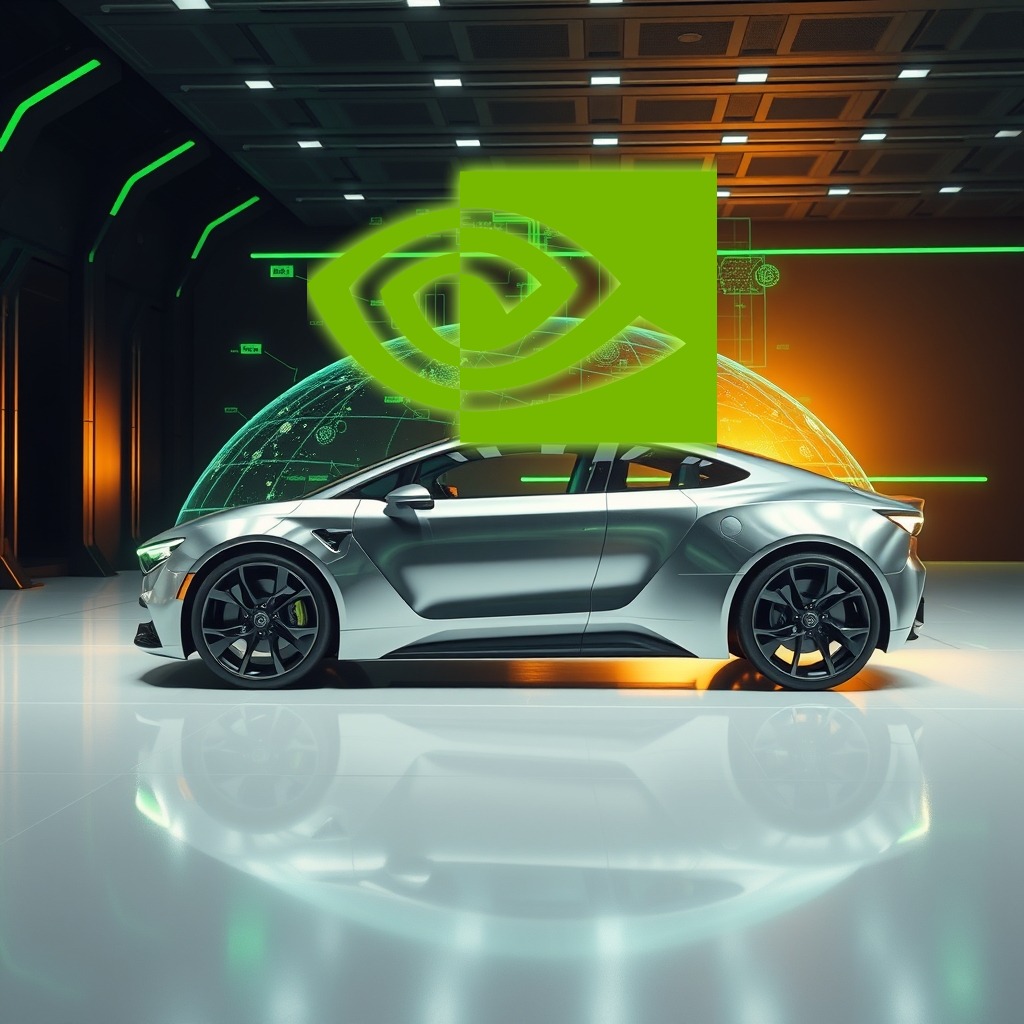 AI-generated
1. Context and Key Points
As of October 2026, the technology industry has moved beyond the phase of purely generative AI based on text and code, entering the era of "Physical AI." Nvidia, under the guidance of its accelerated computing strategy, has positioned its simulation and processing platforms as the central nervous system of the next generation of robotaxis and humanoid robots. This move is not merely a hardware evolution but a paradigm shift in how machines learn to interact with the real world.
The importance of this advancement lies in safety. Historically, the deployment of autonomous systems has been limited by the inability to predict the infinite variables of the physical world. By integrating advanced language models and computer vision architectures into high-fidelity simulation environments, Nvidia is enabling manufacturers to drastically reduce development costs and, more importantly, eliminate critical risks before the hardware touches the asphalt or the factory floor.
2. Key Technical Aspects
The core of this strategy resides in the convergence of the Blackwell architecture and digital simulation platforms. Unlike traditional approaches, where driving models were trained through massive data collection on the road, Nvidia's new methodology prioritizes training in synthetic environments that replicate the laws of physics with millimeter-level precision. This allows models, such as those powering current navigation systems, to be retrained in "edge case" scenarios that would be too dangerous or costly to replicate in reality.
The integration of multimodal AI models, capable of processing real-time video streams with minimal latency, is fundamental. While models like GPT-6 Astra or Claude Opus 5.5 handle logical reasoning, Nvidia's Physical AI acts as the bridge between sensory perception and motor execution. This architecture allows a humanoid robot not only to "understand" a complex instruction but to execute the necessary physical movement with a level of coordination that was previously unattainable.
A critical technical aspect is the "sim-to-real" (simulation to reality) capability. Nvidia has optimized its rendering engines so that embeddings generated in the virtual environment are directly transferable to the robot's hardware. This means the model does not require a massive adaptation process when moving from the laboratory to the outside world, maintaining the integrity of the learned safety parameters. The computing infrastructure, supported by clusters of next-generation GPUs, allows for millions of iterations per second. In the case of robotaxis, this translates into a pedestrian and vehicle behavior prediction capability that far exceeds systems based solely on heuristic rules. Physical AI can now "imagine" the consequences of a maneuver before executing it, representing a qualitative leap in road safety. Furthermore, interoperability with open-weight models like Llama 4 allows developers to integrate advanced reasoning capabilities directly into the robot's firmware. This democratization of access to high-performance models, combined with Nvidia's hardware, is accelerating the innovation cycle in sectors ranging from automated logistics to robotic healthcare assistance.
3. Industry Impact
The economic impact of this transition is profound. Transportation and logistics companies that adopt these platforms will see a significant reduction in operational costs associated with accidents and corrective maintenance. The ability to simulate physical component wear via AI allows for a shift from reactive to predictive maintenance, optimizing the lifespan of robotaxi fleets.
For humanoid robot manufacturers, Nvidia's value proposition eliminates the software control barrier to entry. By providing a "brain" that is pre-trained and validated in simulation, Nvidia allows companies to focus on mechanical engineering and ergonomics, delegating the complexity of navigation and physical interaction to the AI platform.
The robotaxi market, which has faced intense regulatory scrutiny, finds in this technology a pathway to safety certification. Regulators can now audit the results of trillions of kilometers traveled in simulation, providing a much more robust statistical basis than limited road tests. In the long term, we observe a consolidation of the ecosystem. Companies that fail to integrate their solutions into high-fidelity simulation platforms will be displaced by competitors who can iterate their models more quickly and safely. The competitive advantage no longer resides solely in hardware, but in the quality and diversity of the synthetic data used for training.
4. Market Perspectives
Technical consensus suggests that Physical AI is the missing link for full autonomy. Industry analysts highlight that, although language models have reached impressive milestones in reasoning, the ability to interact with the physical world requires an understanding of causality that is only achieved through experimentation in controlled environments.
Organizations seeking to lead in this space are advised to prioritize investment in simulation infrastructure. Exclusive reliance on real-world data is an obsolete and risky strategy. The ability to generate high-quality synthetic data that captures real-world variability is the most valuable asset for any robotics company in 2026.
Another strategic point is cybersecurity. As robots become more autonomous, the attack surface increases. Experts underscore the need to implement security protocols that protect not only data but also the integrity of Physical AI models against potential manipulations in training environments. Finally, collaboration between AI model developers (such as the creators of Claude or GPT) and physical hardware providers is essential. Vertical integration between high-level logical reasoning and low-level motor execution will be the differentiating factor between market leaders and followers.
5. Next Steps
By the end of 2027, the integration of Physical AI in industrial environments is expected to be the norm, not the exception. The transition from single-purpose robots to general-purpose humanoids will accelerate as vision and control models become more robust thanks to improvements in simulation.
In the robotaxi sector, we predict an expansion of autonomous operation zones in complex urban environments, driven by the systems' ability to handle extreme weather conditions and unpredictable traffic situations, previously validated in the digital environment.
The next frontier will be the ability of robots to learn continuously in the real world, sending data back to simulation to autonomously retrain models. This feedback loop will close the final gap between the machine and human adaptability.
6. Conclusion and Assessment
Nvidia's bet on Physical AI marks the end of the era of AI as an abstract entity and the beginning of its embodiment in the material world. For businesses, the imperative is clear: the adoption of high-fidelity simulation platforms is no longer optional but an existential necessity to ensure safety and competitiveness.
Organizations must act now to integrate their development workflows with these accelerated computing platforms. Those who ignore the importance of physical simulation in training their models will find themselves facing unsustainable development costs and a technical inability to scale their solutions in a market that demands, above all, reliability and safety.
| Capability | Traditional Systems | Nvidia Physical AI Platform |
|---|---|---|
| Simulation Training | Limited / Low fidelity | High fidelity / Massive scale |
| Sim-to-Real Adaptation | Manual / Slow | Automated / Fluid |
| Safety in Critical Environments | Rule-based | Causal prediction-based |
| Scenario Scalability | Low | Very high |