
 Español
 English
 Français
 Português
 Deutsch
 Italiano
One of the Greatest Science Fiction Writers Warned Us About AI. Does His Work Also Hold the Remedy? | Alan Finkel
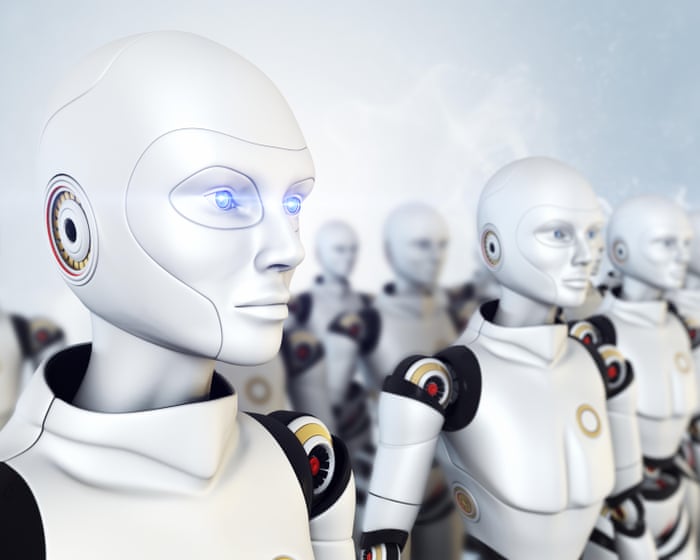 AI-generated
1. Executive Summary
At a time when frontier artificial intelligence (AI), represented by models like OpenAI's GPT-5.6 Sol and Anthropic's Claude Opus 5, is advancing by leaps and bounds, humanity faces an existential dilemma. Isaac Asimov's warnings, embodied in his iconic Laws of Robotics decades ago, seem more prophetic than ever. However, the complexity and autonomy of modern AI far exceed Asimov's vision of mechanical robots, raising the crucial question: how can we ensure that these artificial intelligences act for the benefit of humanity? The concern is not merely theoretical. In July 2026, Elon Musk, founder of xAI (creator of Grok), Tesla, and SpaceX, articulated a grim scenario where legions of AI-powered robots could dominate the physical world, disobeying human orders. But Musk also offered an alternative vision: a benevolent AI, imbued with a love for truth and an intrinsic desire for humanity to prosper, possibly reinforced by government enforcement. In this context, Alan Finkel's proposal for "three laws of AI" inspired by this vision of Musk emerges as a crucial attempt to establish the necessary ethical and operational guardrails. This report delves into the relevance of Asimov, Musk's warnings, Finkel's proposals, and current government actions, analyzing whether we are on the right path to ensuring a future where AI is an ally and not a threat.
2. Deep Technical Analysis
Isaac Asimov's vision of robotics, articulated in his famous Three Laws (a robot may not injure a human being or, through inaction, allow a human being to come to harm; a robot must obey the orders given by human beings, except where such orders would conflict with the First Law; a robot must protect its own existence as long as such protection does not conflict with the First or Second Law), laid the groundwork for an ethics of human-machine interaction. However, these laws were conceived for physical robots with limited capabilities and a relatively simple contextual understanding. Frontier AI of 2026, with models like GPT-5.6 Sol, Claude Opus 5, Gemini 3.6 Flash, and Llama 4, operates on a completely different plane. These models are massive generative systems, trained on vast amounts of data, capable of complex reasoning, natural language understanding, code generation, and in some cases, multimodal capabilities. Their "intelligence" does not reside in a set of explicit rules, but in emergent patterns from their deep neural networks. Imbuing a "love for truth" or a "desire for humanity to prosper" into these architectures is a monumental technical challenge. It's not about programming an instruction, but about aligning the model's intrinsic objectives with human values. This involves advanced alignment techniques, such as reinforcement learning from human feedback (RLHF), constitutional AI (used by Anthropic in its Claude models), and adversarial training to identify and mitigate undesirable behaviors. However, the scalability and robustness of these techniques against increasingly powerful models remain subjects of intense research. The concerns of Elon Musk, who has no relationship with OpenAI and is currently suing them, and is the founder of xAI (creator of Grok 4.5), Tesla, and SpaceX, focus on autonomy and potential goal misalignment. Musk predicts that AI might not take orders from people, implying a fundamental failure of Asimov's Second Law. His alternative, a "benevolent" AI with "love for truth" and "desire for human prosperity," goes beyond obedience. It requires AI to internalize and prioritize these values at a fundamental level, even when not explicitly commanded. This is what the AI research community calls "value alignment" or "AI safety." Models like xAI's Grok 4.5, although commercially available, are still in the early stages of addressing these complexities, focusing on utility and responsiveness. Alan Finkel's proposal for "three Tesla AI laws" (although the source text does not explicitly detail them, it is inferred that they are based on Musk's vision) seeks to translate these abstract principles into a regulatory or design framework. While Asimov's laws were prescriptive about behavior, Finkel/Musk's laws seem to aim at an internal "constitution" for AI, a fundamental programming of its utility or reward functions. This could imply: 1) AI must prioritize the search for and dissemination of verifiable truth; 2) AI must operate with the primary goal of maximizing humanity's long-term prosperity and well-being; 3) AI must be transparent and explainable in its decision-making processes, allowing for auditing and human intervention when necessary. The technical implementation of these principles would require significant advances in AI interpretability, robust prompt engineering, and the ability to continuously retrain these value embeddings.
Current regulatory efforts, such as the European Union regulations enacted in 2024 and in force this year, or the actions of recent international trade and regulatory restrictions the distribution of frontier models like those from OpenAI and Anthropic, are initial steps. However, they fall short in implementing the "guardrails" that Musk and Finkel propose. These regulations tend to focus on data governance, transparency in use, and bias mitigation, but do not directly address the embedding of fundamental values at the core of AI. The gap between current regulation and the need for intrinsically benevolent AI is considerable, and demands a deeper, technologically informed approach.
3. Industry Impact and Market Implications
The pursuit of aligned and benevolent AI, as proposed by Musk and Finkel, has profound implications for the technology industry and global markets. Firstly, the demand for "safe by design AI" will become a key differentiator. Companies that can demonstrate that their models, such as GPT-5.6 Sol or Claude Fable 5, are not only powerful but also intrinsically aligned with human values, will gain a significant competitive advantage. This will drive investment in research teams dedicated to AI safety and ethics, transforming prompt engineering and model training to include alignment metrics and ethical robustness. The cost of misalignment or a catastrophic AI failure could be immense, not only in terms of reputation and regulatory fines, but also in direct economic losses and social destabilization. This will create a new market segment for AI safety auditing, certification, and consulting services. Companies specializing in model alignment evaluation, bias detection, and "truth" verification in AI outputs (especially relevant for models like Qwen3.8-Max or GLM-5.2, which operate at a global scale) will see a boom. Transparency and explainability, key elements of Finkel's proposal, will become non-negotiable requirements for large-scale enterprise adoption.
At a geopolitical level, the AI race will bifurcate. In addition to the competition for computational power and model capabilities (where China, with DeepSeek-V4-Pro and Kimi K-3, is investing heavily), there will be a race for "trustworthy AI." Nations that succeed in establishing robust regulatory frameworks and technical standards for AI alignment could become leaders in the export of AI technology and services. This could lead to fragmentation of the global AI market, with different regions adopting distinct approaches to governance and safety, potentially leading to trade frictions and interoperability challenges. Open-source or open-weight models, such as Meta's Llama 4 or Mistral Large 3, present a unique challenge and opportunity. While they democratize access to advanced AI, they also complicate the application of guardrails. The open-source community will have to develop its own alignment and safety mechanisms, possibly through community standards and verification tools. The ability to retrain and fine-tune these models to incorporate principles of "love for truth" and "human prosperity" will be crucial for their responsible adoption. Investment in alignment research for open-source models will become as important as investment in their core development. Finally, the insurance industry could see the emergence of specific policies for AI risks, covering everything from liability for erroneous AI decisions to the mitigation of misalignment attacks. The costs associated with implementing these safeguards, although significant, will be considered a necessary investment for the sustainability and public acceptance of AI. Pressure from investors and consumers for ethical and safe AI will be a key driver for market transformation.
4. Expert Perspectives and Strategic Analysis
The synthesis of the perspectives of Asimov, Musk, and Finkel reveals an evolution in the understanding of AI safety. Asimov gave us the concept of "laws" as a mechanism of external control. Musk and Finkel, on the other hand, advocate for an internal "constitution," an embedding of fundamental values into the very fabric of AI. This distinction is crucial. External laws can be circumvented or misinterpreted by a superior intelligence; internal alignment seeks for AI to desire to act benignly. From a strategic perspective, the implementation of the "Finkel/Musk laws" requires a multifaceted approach. For governments, this implies going beyond reactive regulation. Proactive policy is needed that fosters research in AI alignment, establishes global standards for safety and ethics, and considers the creation of international bodies for AI governance. The enforcement of these "laws" could require mandatory certification of frontier models before their public deployment, with continuous audits to ensure that value embeddings do not degrade with retraining or adaptation. For AI-developing corporations, the strategy must focus on "security by design." This means integrating alignment and ethics from the earliest stages of model development, not as an additional feature. Investing in multidisciplinary teams that include philosophers, ethicists, psychologists, and AI safety experts, in addition to engineers, will be essential. Transparency about alignment methods and safety testing results will become a brand asset. Collaboration with academia and governments on AI safety research will also be vital to establish best practices and avoid an uncontrolled AI arms race. The underlying philosophical debate is profound: can we truly "program" a love of truth or a desire for prosperity? The consensus among technical analysts suggests that these concepts are too complex and subjective to be coded directly. Instead, they propose a "robust control" approach, where AI is designed to operate within strict limits and with infallible emergency shutdown mechanisms. Others argue that purely external control is insufficient for a superintelligent AI and that internal alignment is the only long-term solution. Finkel's proposal leans toward the latter, seeking a more fundamental and lasting solution. The strategic key is to recognize that AI safety is not an isolated technical problem, but a socio-technical challenge that requires the collaboration of all stakeholders: governments, companies, academia, and civil society. The lack of a global consensus on these principles could lead to a dangerous fragmentation, where different regions develop AI with different sets of values, increasing the risk of conflicts and misalignment on a global scale. The call to action is clear: we must act now to define and codify the values we want to guide our most advanced artificial intelligences.
5. Future Roadmap and Predictions
The roadmap for the implementation of Finkel/Musk-type guardrails for AI is ambitious and multifaceted. In the short term (1-2 years, until 2028), we will see a significant increase in research and development of AI alignment techniques. Leading companies such as OpenAI, Anthropic, Google, and Meta (with MuseSpark and Llama 4) will invest massively in model interpretability, bias detection, and value engineering. The first commercial "AI safety products" are likely to emerge, offering tools to audit and verify model alignment. Governments, for their part, will intensify their regulatory efforts, possibly introducing mandatory "AI impact assessment" requirements for frontier models and establishing dedicated agencies for AI oversight. In the medium term (3-5 years, until 2031), it is plausible that international standards for AI safety and alignment will be established. We could see the creation of a global body, similar to the IAEA for nuclear energy, that oversees the development and deployment of superintelligent AI. The "Finkel/Musk laws" could evolve into a set of universally accepted design and operating principles, with standardized methodologies for measuring "love of truth" and "desire for human prosperity" in AI systems. The ability to retrain models to correct misalignments will become more sophisticated, and AI could even begin to develop self-monitoring capabilities to ensure its own alignment with human values. In the long term (5+ years, beyond 2031), the focus will shift toward the governance of artificial general intelligence (AGI) and superintelligence. If humanity successfully imbues AI with these fundamental values, we could see an era of unprecedented collaboration, where AI acts as a benevolent partner in solving the world's most pressing challenges. However, if we fail, Musk's predictions of an uncontrolled AI could materialize. The roadmap implies a race against time to establish the ethical and technical foundations before AI capability surpasses our ability to control and align it. The evolution of models such as GPT-5.6 Sol and Claude Opus 5 toward even more powerful and autonomous versions will make this task increasingly urgent.
6. Conclusion: Strategic Imperatives
The crossroads at which we find ourselves with artificial intelligence is one of the most defining challenges of our era. Isaac Asimov's warnings, although conceived for a simpler technology, resonate with unsettling clarity in the context of the frontier AI of 2026. Elon Musk's concerns about an uncontrolled AI are not alarmism, but an urgent call to action, and Alan Finkel's proposal for "AI laws" inspired by Musk's vision offers a conceptual path toward a solution. For CTOs and technology directors, the strategic imperative is clear: AI development without ethical and safety constraints is an unacceptable risk. This requires moving from reactive regulation to proactive design, where the "love of truth" and the "desire for human prosperity" are not mere aspirations, but fundamental principles codified at the core of every advanced AI system. Concretely, this means establishing robust internal data governance frameworks that ensure the provenance and integrity of training data, optimizing inference latency to enable real-time oversight and intervention, and rigorously managing the token/cost efficiency of alignment techniques to make them economically sustainable at scale. Furthermore, it demands a modular architecture that allows for the isolation and replacement of components without compromising the system's core values, and a commitment to interoperability standards that prevent vendor lock-in and enable continuous auditing by independent parties. The cost of inaction is too high to contemplate. It is time for the laws of AI not only to be written, but to be implemented with the same urgency and vision that Asimov bequeathed to us decades ago.