Español
 English
 Français
 Português
 Deutsch
 Italiano
President Xi Never Lets a Good Crisis Go to Waste: While Iran, Ukraine, and Palestine Distract the World, He Tightens His Grip
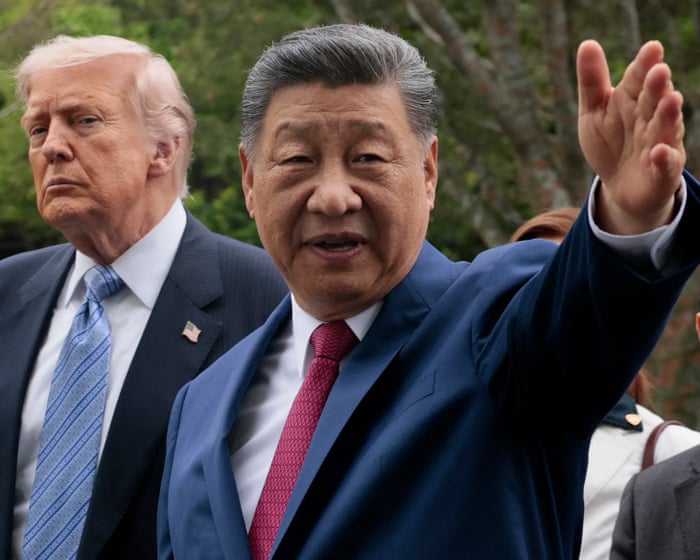 AI-generated
1. Executive Summary
Amid a global situation marked by instability in Iran, the persistent war in Ukraine, and the escalation of the conflict in Palestine, Chinese President Xi Jinping has once again demonstrated his ability to capitalize on international distractions. Far from adopting a passive stance, the Chinese leader has launched a calculated offensive, consolidating his internal power and projecting a more assertive influence on the world stage. This strategy is most palpable in his "sinicization" policy, an aggressive program aimed at the cultural and linguistic assimilation of China's 55 ethnic and religious minorities, which represent approximately 9% of the country's total population.
The essence of this policy, formalized in a new "ethnic unity" law, is the imposition of Mandarin as the mandatory language and the suppression of the distinctive cultural identities of groups such as Tibetans, Mongols, and Uyghurs. Xi argues that these measures will foster national identity and improve life and work prospects, urging minorities to "embrace each other tightly like pomegranate seeds" to build a strong and united China. However, for the affected communities, this is a clear strategy of cultural ethnic cleansing, designed to eradicate their languages, customs, and traditions in favor of a Han monoculture dominated by the Communist Party's vision. This authoritarian turn not only threatens China's cultural diversity but also sends a worrying signal about the direction of the global order and human rights. The relevance of this situation transcends China's borders. For the international community, governments, and corporations, Xi's consolidation of control at a time of global vulnerability raises critical questions about investment ethics, supply chain stability, and the defense of democratic values and human rights. Passivity or complicity in the face of these internal actions by China could have significant long-term geopolitical and moral costs, redefining norms of sovereignty and international responsibility in an increasingly interconnected world.
2. Deep Technical Analysis
Xi Jinping's "sinicization" policy is not a spontaneous initiative, but rather the culmination of a meticulously designed strategy that integrates legal, educational, technological, and social control elements. The legal framework is articulated through the new "ethnic unity law," which, under the pretext of strengthening national cohesion, grants the State broad powers to intervene in the cultural and religious life of minorities. This legislation is the pillar that legitimizes the mandatory expansion of Mandarin, the rewriting of history to align with the Communist Party's narrative, and the restriction of religious and cultural practices that do not conform to "socialist values." The law's ambiguity allows for flexible interpretation and draconian enforcement, facilitating the gradual erosion of cultural autonomy.
In the educational sphere, the imposition of Mandarin is a central tool. Schools in minority regions are being forced to adopt Mandarin as the primary language of instruction, relegating native languages to a secondary role or eliminating them entirely from the curriculum. This linguistic shift not only affects children's ability to learn in their mother tongue but also disrupts the intergenerational transmission of culture and identity. The official justification is to improve "life and work prospects" by integrating minorities into the Han-dominated national economy, but the practical effect is the marginalization of non-Han identities and the creation of linguistic and cultural dependence on the center.
Beyond the legal and educational aspects, Xi's strategy relies on a state-of-the-art surveillance and digital control infrastructure. Although the source text does not explicitly mention it, it is a well-known fact that the Chinese government uses advanced artificial intelligence technologies, facial recognition, and big data analysis to monitor its citizens, especially in regions with minorities such as Xinjiang. Social credit systems and surveillance camera networks, often powered by AI models such as DeepSeek-V4-Pro or Qwen 3.8-Max (used for data analysis and language processing), allow the State to identify and suppress any form of dissent or cultural expression that deviates from the official line. These technological tools not only detect but also prevent the organization of resistance, creating an environment of fear and self-censorship.The narrative of "embracing each other tightly like pomegranate seeds" is a key piece of social engineering. This seemingly benign metaphor is a euphemism for forced homogenization. It is promoted through massive propaganda campaigns, state media, and digital platforms, using recommendation algorithms and censorship to ensure that the message of "unity" and "harmony" prevails. The dissemination of this ideology seeks to reshape public perception, both internally and externally, presenting sinicization not as oppression, but as a path toward prosperity and stability. The strategy also incorporates elements of resettlement and re-education. In some regions, programs have been implemented that relocate minority members to other areas or subject them to "re-education camps" (e.g., in Xinjiang) where they are forced to renounce their beliefs and cultural practices. These programs, although denied or minimized by Beijing, are documented by human rights organizations and use psychological and physical indoctrination techniques. The goal is to dismantle existing social and cultural structures, replacing them with an identity imposed by the Party. Finally, Xi's offensive benefits from global distraction. The world's attention, fragmented by crises in Ukraine, Iran, and Palestine, reduces the capacity for coordinated response and international pressure on China. This window of opportunity allows Beijing to implement controversial domestic policies with a perceived lower diplomatic cost. The calculated timing of these actions demonstrates a deep understanding of geopolitical dynamics and a willingness to exploit the weaknesses of the international order to advance its domestic and strategic objectives.
3. Industry Impact and Market Implications
The intensification of Xi Jinping's sinicization policy, in a context of global distraction, has profound implications for industry and international markets. Companies operating in China or relying on its supply chains face a landscape of growing ethical, reputational, and operational risks. The pressure to comply with Communist Party guidelines, even if they contravene human rights principles, intensifies, creating a moral and strategic dilemma for global corporations.
One of the most direct impacts is the increased scrutiny of supply chains. Concerns about forced labor, especially in regions like Xinjiang, where Uyghur minorities are subjected to systematic repression, have led to legislation such as the Uyghur Forced Labor Prevention Act (UFLPA) in the United States. This obliges companies to conduct thorough due diligence to ensure their products are not linked to coercive labor practices. The cost of this verification is considerable, and the risk of supply chain disruption due to import bans is a constant threat. Companies that cannot guarantee the absence of forced labor face sanctions, consumer boycotts, and irreparable damage to their brand. Furthermore, the sinicization policy affects diversity and inclusion within companies operating in China. The promotion of a Han monoculture and the suppression of minority identities can create a hostile work environment for employees from ethnic minorities, both local and expatriate. Multinational companies that value diversity as a pillar of their corporate culture find themselves at a crossroads: either they adapt to the norms imposed by Beijing, compromising their values, or they risk facing regulatory or market retaliation. This can lead to a brain drain or difficulties in attracting qualified professionals who do not wish to operate in such a restrictive environment. Market implications also extend to investment and innovation. Growing political uncertainty and the perception of a less free business environment can deter foreign direct investment. Although China remains an attractive market due to its size, the tightening of state control and the prioritization of ideology over economic efficiency can erode long-term investor confidence. Technology companies, in particular, face pressure to share data, comply with strict censorship laws, and potentially integrate surveillance technologies into their products and services, raising serious ethical and security dilemmas. Finally, Xi's stance on minorities contributes to broader geopolitical polarization. As Western democracies criticize human rights violations, trade and diplomatic tensions can escalate. This translates into a more volatile market environment, with the risk of tariffs, technology export restrictions, and the fragmentation of global supply chains. Companies must prepare for a scenario of partial or total "decoupling," where the resilience and diversification of their operations become strategic imperatives to mitigate the costs of geopolitical instability.
4. Expert Perspectives and Strategic Analysis
Xi Jinping's strategy of intensifying sinicization while the world is distracted is viewed by many analysts as a masterstroke of realpolitik, albeit with profound human and ethical costs. Experts in Chinese politics and human rights agree that the timing is no coincidence. Global attention divided by conflicts in Ukraine, Iran, and Palestine offers Beijing a window of opportunity to consolidate its internal control without facing unified and forceful international condemnation. "Xi never wastes a good crisis" is a maxim that resonates in geopolitical analysis circles, underscoring his pragmatism and his long-term vision for the stability of the Communist Party.
From a strategic perspective, sinicization is fundamental to Xi's vision of a "great rejuvenation of the Chinese nation." For him, ethnic and cultural diversity, if not firmly anchored in a unified national identity under Party leadership, represents a potential vulnerability. The metaphor of "pomegranate seeds" is a rhetorical tool to justify homogenization as a strengthening, rather than a suppression. Analysts point out that this policy seeks to eliminate any focus of separatism or dissent that could be exploited by foreign powers, thereby ensuring the internal cohesion necessary to project external power. However, the international human rights community and many academics view this policy as a form of "ethnic cleansing by another name," a phrase that Simon Tisdall, among others, has used to describe the situation. The eradication of languages, religions, and ancestral customs is not just a matter of cultural identity, but a fundamental violation of human rights. The suppression of cultural autonomy for Tibetans, Mongols, and Uyghurs, among others, generates resentment and may sow the seeds of future instability, despite Beijing's efforts to impose "unity." Strategic recommendations for the international community are complex. On one hand, there is a need for stronger and more coordinated moral and diplomatic condemnation. Governments and international organizations must continue documenting and denouncing human rights violations, using platforms such as the UN to maintain pressure. On the other hand, economic interdependence with China makes direct confrontation difficult. Many experts suggest a "two-track" approach: maintaining channels of dialogue and cooperation in areas of mutual interest (such as climate change or global economic stability), while exerting selective pressure and establishing clear red lines on human rights and security. For corporations, strategic analysis points to the need for a deep reevaluation of their operations in China. Complacency is no longer an option. Greater transparency in supply chains, the implementation of independent audits, and the diversification of production outside China where possible are recommended. Reputation and corporate values are increasingly intertwined with ethical practices, and the cost of inaction or complicity can far outweigh short-term economic benefits. The call to action is clear: companies must align their operations with their stated values, even if this involves difficult decisions.
5. Future Roadmap and Predictions
The future roadmap of Xi Jinping's sinicization policy appears clear: continued intensification and expansion. As the Communist Party consolidates its control, it is foreseeable that the "ethnic unity law" will be applied with greater rigor, extending its reach into more aspects of minority life. This will include increased pressure for the adoption of Mandarin in all spheres, from education to public administration and media. Minority languages, already under siege, could face even more severe restrictions, with the ultimate goal of relegating them to purely domestic use or, in the worst case, extinction.
In the technological sphere, China is anticipated to continue refining its surveillance and social control tools. The integration of advanced AI models such as Claude Mythos 5 or Gemini 3.6 Flash (although these are Western models, China develops its own equivalent capabilities such as Qwen 3.8-Max or GLM-5.2) into facial recognition systems, behavioral analysis, and social media monitoring will become even more sophisticated. This will enable more precise identification of any activity the state deems "disharmonious" or "separatist," facilitating preventive repression and management of the official narrative. The "Great Firewall" will become taller and more impenetrable, limiting access to external information and reinforcing Party ideology. Internationally, predictions point to persistent tension between human rights condemnation and the pragmatic need for economic engagement. Western democracies are likely to continue issuing statements and applying selective sanctions, but a unified and forceful response will remain a challenge due to economic dependence on China and existing geopolitical divisions. China, for its part, will continue using its economic and diplomatic influence to counter criticism, promoting its governance model as a viable alternative to Western liberalism, especially in the Global South. The distraction of other global crises will remain a factor Beijing will strategically exploit. In the long term, sinicization could have irreversible demographic and cultural consequences. The erosion of minority identities could lead to an irrecoverable loss of languages, traditions, and ancestral knowledge. However, it is also possible that, despite repression, more subtle and resilient forms of cultural resistance may emerge. History demonstrates that cultural identity is difficult to eradicate completely. The international community must therefore prepare for a scenario where the struggle for minority rights in China becomes a persistent and long-lasting challenge, with implications for regional stability and universal human rights principles.
6. Conclusion: Strategic Imperatives
In conclusion, the strategic analysis of President Xi Never Wastes a Good Crisis: While Iran, Ukraine, and Palestine Distract the World, He Tightens His Control underscores a critical transformation in the architecture of modern software and in decision-making at the executive level. The speed of innovation not only demands evaluating the raw performance of new technologies, but rigorously quantifying economic efficiency, latency in production environments, and the interoperability of corporate infrastructures.
For Chief Technology Officers (CTOs) and architecture teams, the strategic imperative lies in avoiding exclusive dependence on single vendors (vendor lock-in), implementing robust enterprise data governance mechanisms, and designing agile systems capable of routing workloads according to operational complexity. Competitive advantage will belong to organizations that execute this integration with technical discipline and long-term vision.