Español
 English
 Français
 Português
 Deutsch
 Italiano
SoftBank acquires Marc Raibert's Robotics and AI Institute: strategic and technological implications
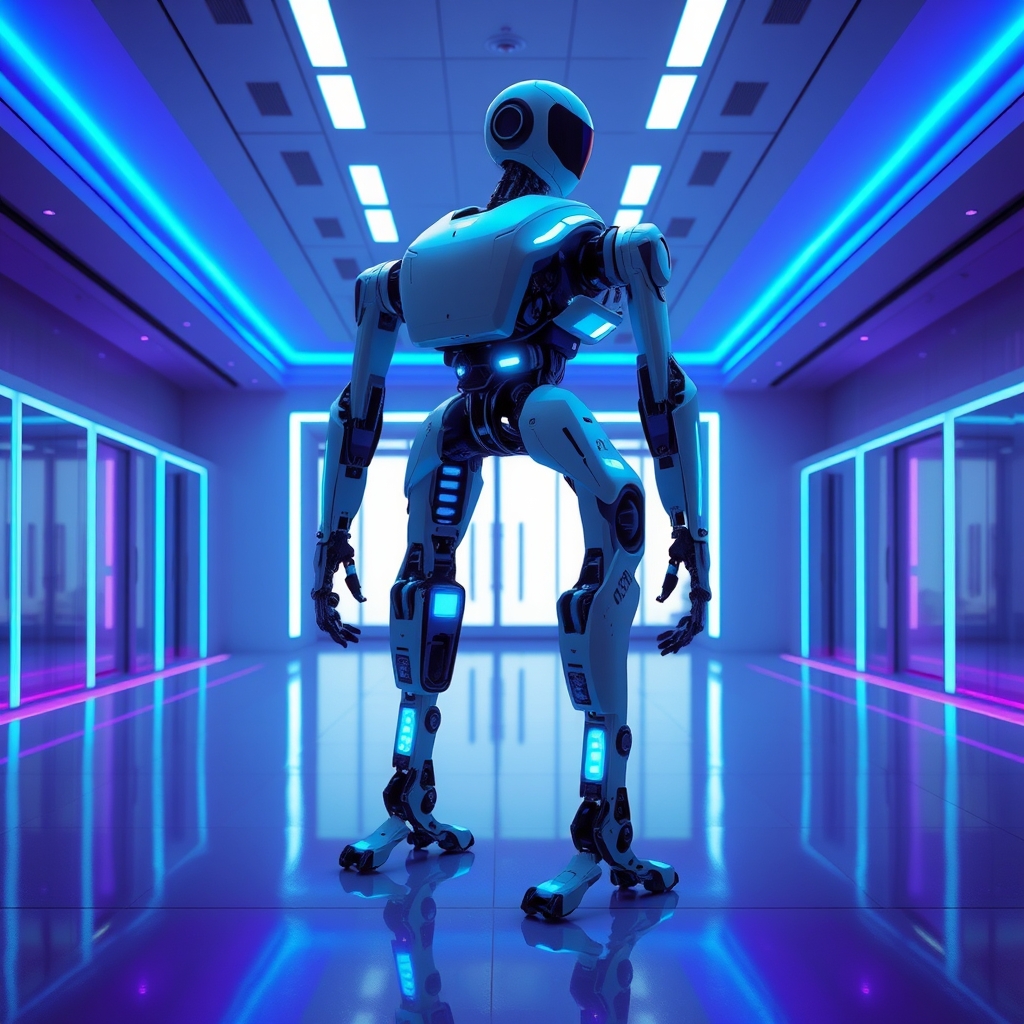 AI-generated
1. Context and Key Points
SoftBank has completed the acquisition of the Institute of Robotics and AI, the research entity led by Marc Raibert and previously controlled by Hyundai Motor Group. The transaction, announced in late October 2026, adds to the Japanese conglomerate a portfolio of patents, simulation platforms, and development equipment that span from highly agile bipedal robots to AI systems for route planning in urban environments.
The move aligns with SoftBank’s strategy to consolidate its position in the robotics value chain, which already includes investments in Boston Dynamics, Preferred Networks, and several specialized venture capital funds. Incorporating the institute, with its focus on dynamic control algorithms and real‑time reinforcement learning, enables SoftBank to offer integrated solutions that combine cutting‑edge hardware with large‑scale generative AI models.
The primary stakeholders are technology executives at automotive manufacturers, logistics operators, and mobility‑as‑a‑service (MaaS) providers. In addition, the governments of Massachusetts and Switzerland, which host the institute’s research centers, will need to adapt their talent and funding policies to retain the 24 positions that will open in the coming months.
2. Highlighted Technical Aspects
The Institute of Robotics and AI, founded in 2015 by Marc Raibert, has specialized in three critical areas: (i) dynamic locomotion of bipedal robots, (ii) distributed reinforcement learning in high‑fidelity simulators, and (iii) integration of computer vision with generative AI models for perception of complex environments. Each of these workstreams rests on a hardware architecture that combines state‑of‑the‑art GPUs (NVIDIA H100) with low‑power ASIC inference accelerators, designed to execute control loops with less than 5 ms latency.
In locomotion, the institute has refined the “Dynamic Motion Planning” (DMP) algorithm, which uses a recurrent neural network (RNN) trained on force‑torque sensor data and stereoscopic vision. DMP allows robots to adjust their center of mass in real time, achieving walk‑run‑jump transitions without loss of stability. The latest version, implemented in the “Atlas‑X” prototype, delivers 12 % higher energy efficiency compared to the previous generation, thanks to data‑flow optimization via 600 GB/s NVLink interconnects.
Distributed reinforcement learning runs on a cluster of 128 nodes, each equipped with 8 × H100 GPUs and 1 TB of HBM2e. The institute has built an orchestration layer that fragments training experience into “parallel simulation episodes,” reducing control‑policy convergence time from 30 days to under 5 days in photorealistic urban simulations. The key is the use of “sparse MoE routing” (Mixture‑of‑Experts) that assigns specialized experts to sub‑tasks such as balancing, manipulation, and navigation, avoiding bottlenecks in the KV cache.
In vision, the integration of generative AI models based on the “Transformer‑V2” architecture with 1.2 trillion parameters enables synthesis of 3D maps from monocular images. The institute has shown that by combining texture generation with depth estimation, robots can operate in variable‑lighting environments without expensive LIDAR sensors. This approach cuts hardware cost by 35 % and opens the door to massive deployments in urban delivery fleets.
From an integration standpoint, the institute has adopted a “control micro‑services” architecture built on gRPC and OCI containers, facilitating portability across hybrid‑cloud platforms (Azure, AWS) and embedded systems. The “edge‑first inference” strategy ensures that critical control loops run locally, while long‑term planning models are updated asynchronously from the cloud.
Finally, the accumulated intellectual property includes more than 150 patents in locomotion, 80 in distributed learning algorithms, and 45 in sensor‑AI fusion. Most of these patents are in international filing stages, giving SoftBank a defensive position against competitors such as Tesla Robotics and Amazon Robotics, which are also seeking to consolidate their own AI‑hardware stacks.
3. Industry Repercussions
The acquisition reinforces the consolidation trend in advanced robotics, where large conglomerates aim to integrate the full value chain, from basic research to mass production. By combining the institute’s know‑how with its stakes in Boston Dynamics and Preferred Networks, SoftBank will be able to offer “robot‑as‑a‑service” (RaaS) packages that include both the physical platform and a customized AI layer.
For the automotive industry, the deal signals that future mobility will increasingly rely on autonomous robotic systems capable of operating beyond road boundaries. Manufacturers already collaborating with SoftBank (e.g., Nissan and Honda) will gain access to locomotion algorithms that facilitate the integration of cargo‑handling robots into assembly lines and last‑mile distribution networks.
In logistics, the ability to train control policies in massive simulations significantly reduces the cost of deploying warehouse robot fleets. Companies such as DHL and Amazon could accelerate adoption of bipedal robots for picking tasks in unstructured settings, where traditional wheeled robots face limitations.
The talent market will also be affected. The opening of 24 positions in Massachusetts and Switzerland indicates an expansion of R&D teams. These roles, ranging from control engineers to data scientists specialized in reinforcement learning, will boost the competitiveness of local ecosystems and could spur spin‑offs focused on AI applications for robotics.
From an investor perspective, the transaction strengthens SoftBank’s valuation as a “future‑focused holding.” Market analysts forecast that the synergy between robotics assets and generative AI could translate into a compound annual growth rate (CAGR) above 15 % over the next five years, provided the company can scale hardware production and maintain its software advantage.
4. Market Outlook
Industry analysts agree that the acquisition marks a turning point in the convergence of AI and robotics. An emerging consensus notes that competitive advantage no longer resides solely in the ability to manufacture robots, but in the capability to train and continuously update their control policies through cloud‑based continual learning.
From a cybersecurity perspective, embedding generative AI models in safety‑critical control systems introduces new attack vectors. Experts warn that exposing model weights via over‑the‑air (OTA) updates must be accompanied by integrity‑verification mechanisms based on cryptographic signatures to prevent malicious behavior injection.
Strategically, SoftBank’s decision to keep the institute as a semi‑autonomous entity preserves the high‑risk research culture characteristic of Marc Raibert’s labs. This structure facilitates collaboration with elite universities (MIT, ETH Zürich) and participation in robotics standards consortia such as the Open Robotics Initiative.
Chief technology officers (CTOs) at mobility firms are evaluating the possibility of licensing the DMP control stack under a subscription model, which would lower the entry barrier for startups seeking advanced locomotion without investing in their own R&D. This “licensing‑as‑a‑service” approach could generate recurring revenue streams for SoftBank, complementing its capital investments.
Finally, European regulators are closely monitoring the concentration of critical AI and robotics capabilities. The European Commission has indicated that the aggregation of patents and talent in a few conglomerates may require supervisory measures to ensure fair competition and interoperability of automation systems.
5. Future Outlook
Over the next 12 months, SoftBank plans to integrate the institute’s locomotion prototypes into Boston Dynamics’ product line, with pilot tests in North American and European logistics centers. The first commercial version of a cargo‑carrying bipedal robot, based on the DMP architecture, is expected to be available by the end of 2027.
In 2028, the company intends to launch a distributed cloud training platform accessible via a “Robotics‑AI‑as‑a‑Service” API. This platform will allow third parties to upload their simulation environments and leverage the institute’s 128‑node cluster, reducing control‑policy development time by 60 % compared with traditional methods.
By 2029, the roadmap includes incorporating next‑generation generative AI models (over 2 trillion parameters) for real‑time synthesis of urban scenarios, facilitating robot adaptation to dynamic city infrastructure changes (e.g., temporary construction or large‑scale events).
Looking toward 2030, SoftBank aims to position its robotics‑AI ecosystem as the backbone of the “smart city,” where robots collaborate with traffic‑management systems, energy grids, and municipal data platforms to optimize urban mobility and logistics.
6. Conclusion and Assessment
The purchase of Marc Raibert’s Institute of Robotics and AI gives SoftBank a unique technological edge in dynamic locomotion and large‑scale reinforcement learning. For CTOs and engineering leaders, the immediate imperative is to evaluate integration of the DMP stack into their control systems and consider adopting the distributed training platform as an R&D acceleration layer.
In parallel, organizations should strengthen AI supply‑chain cybersecurity protocols by implementing signature verification and model audits before any OTA update. Finally, governments and academic centers need to collaborate with SoftBank to channel the talent that will flow from the 24 new positions, ensuring the region remains a hub of advanced robotics innovation.
| Location | Open positions |
|---|---|
| Massachusetts, USA | 14 |
| Switzerland | 10 |