Español
 English
 Français
 Português
 Deutsch
 Italiano
Space-Based Data Centers: The Future of AI Computing?
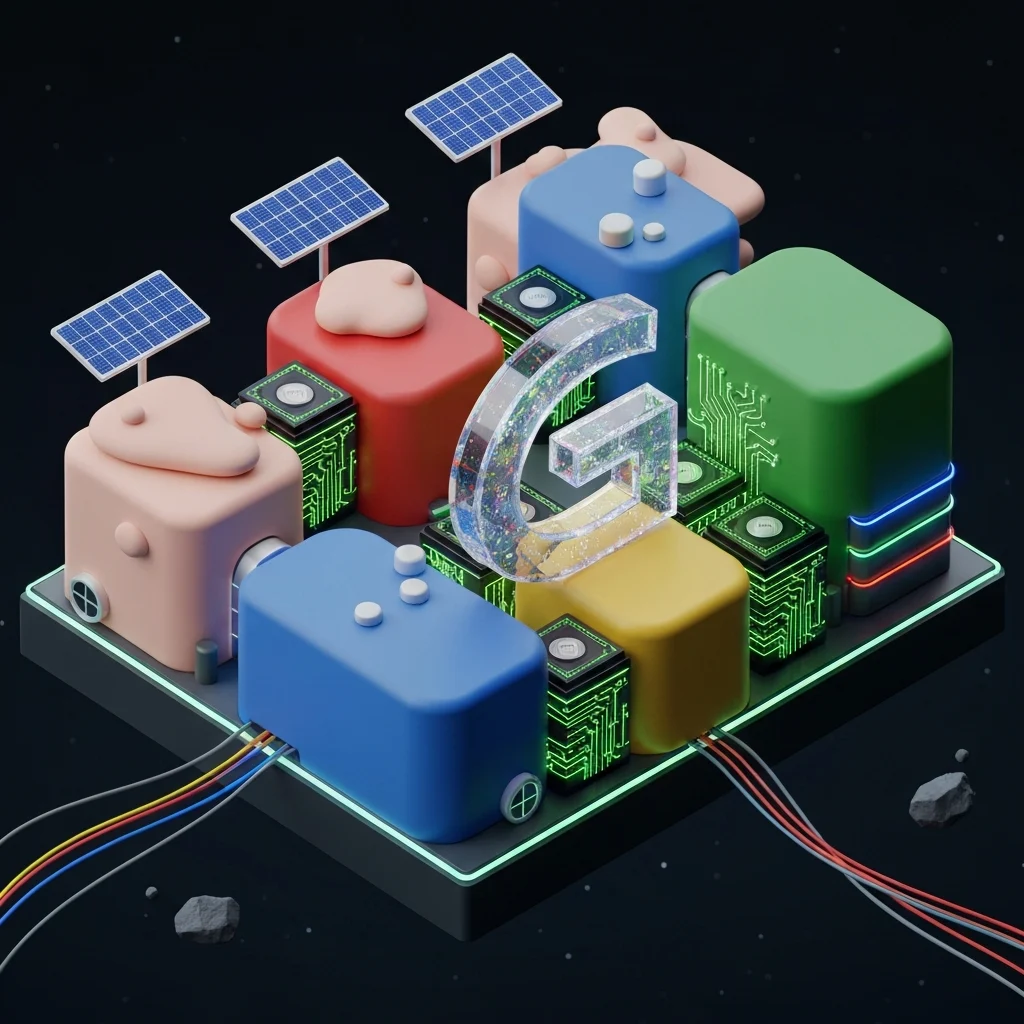 AI-generated
The relentless demand for computing power, fueled by the explosive growth of artificial intelligence, is pushing tech companies to explore radical solutions. One increasingly discussed idea is the deployment of data centers in space. Elon Musk's SpaceX recently filed a proposal to launch potentially a million data centers into Earth's orbit. This ambitious plan aims to unlock the full potential of AI while mitigating the environmental impact of terrestrial data centers.
SpaceX isn't alone in this vision. Amazon's Jeff Bezos has also suggested that the future of computing lies in space. Google reportedly has plans to launch data-crunching satellites, potentially testing a constellation of around 80 satellites in the near future. Furthermore, Starcloud, a startup, already launched a satellite equipped with a high-performance GPU, representing the first orbital test of advanced AI processing hardware.
But what are the key challenges in realizing this ambitious vision of space-based computing? Several critical factors need to be addressed before orbital data centers become a viable alternative to their Earth-bound counterparts.
First, cost is a major obstacle. Launching equipment into space is expensive. The economics need to be carefully considered, weighing the benefits of space-based computing against the significant upfront investment and ongoing operational costs.
Second, power management is crucial. Data centers require substantial energy, and in space, relying on solar power or other alternative energy sources becomes essential. Efficient energy storage and distribution systems will be critical for continuous operation.
Third, heat dissipation presents a unique challenge. Data centers generate a lot of heat, and in the vacuum of space, traditional cooling methods are ineffective. Innovative thermal management solutions will be required to prevent overheating and ensure the reliable performance of the hardware.
Finally, maintenance and repair pose logistical difficulties. Servicing equipment in space is complex and expensive. Robust and redundant systems, designed for long-term autonomous operation, are essential. Remote diagnostics and repair capabilities will also be crucial.
While the idea of data centers orbiting the Earth might seem like science fiction, the increasing demand for computing power and the potential environmental benefits are driving serious consideration of this innovative approach. Overcoming the technological and economic hurdles will be key to unlocking the potential of space-based computing and shaping the future of AI.