Español
 English
 Français
 Português
 Deutsch
 Italiano
Starmind Orbital Constellation Proposal for AI Processing and Its Technical Feasibility
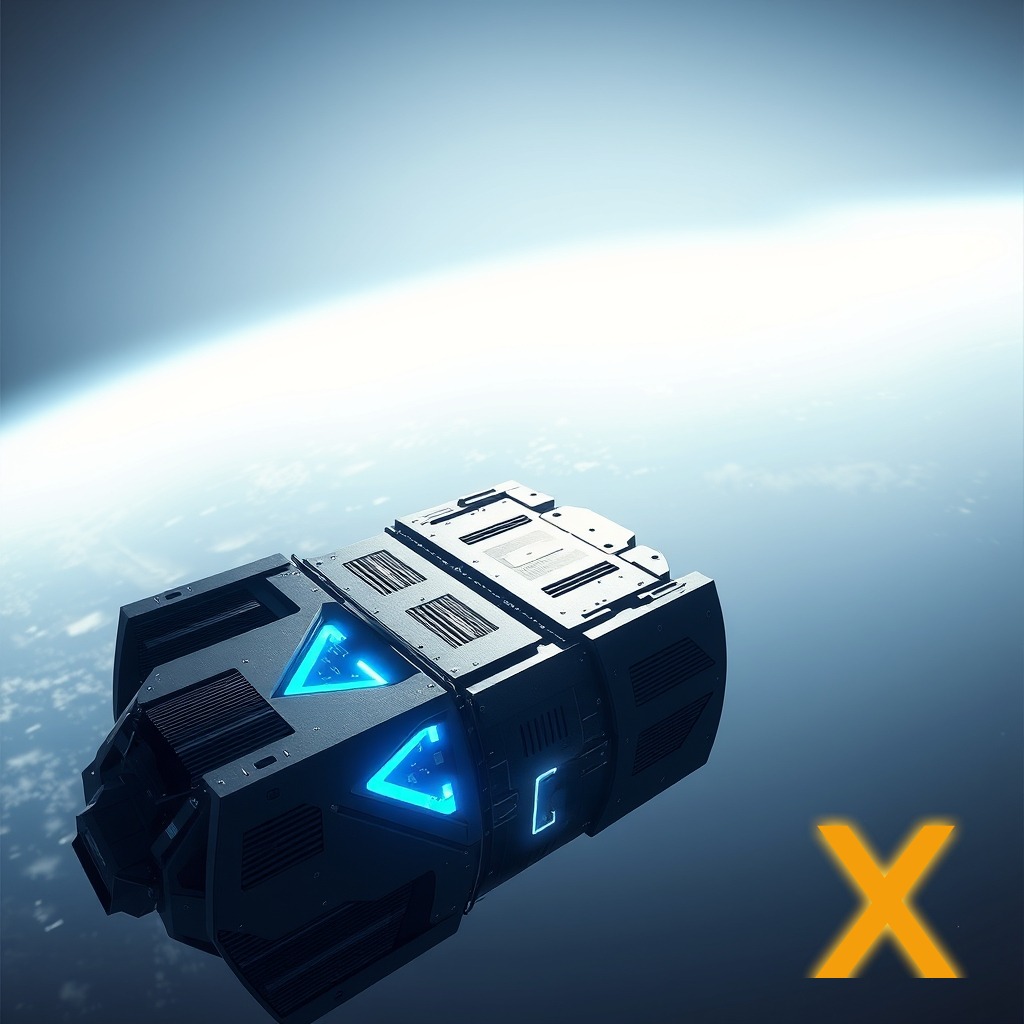 AI-generated
1. Context and key points
SpaceX and xAI have introduced a proposal for an orbital constellation designated as Starmind, aimed at providing high-performance artificial intelligence computing capacity from low Earth orbit (LEO). The initiative explores the manufacturing and deployment of a fleet of satellites specialized in massive-scale processing and storage. This concept emerges as a strategic response to the escalating energy constraints and thermal management bottlenecks currently limiting the expansion of terrestrial data centers.
In theory, a space-based infrastructure could leverage continuous solar energy and passive thermal dissipation via vacuum radiators, mitigating the reliance on liquid cooling systems and terrestrial electrical grid infrastructure. However, the proposal remains in the conceptual study phase and has not received authorization from the Federal Communications Commission (FCC) or other international regulatory bodies.
For system architects, CTOs, and stakeholders, this scenario presents critical questions regarding the feasibility of migrating massive training and inference workloads beyond the atmosphere, alongside the associated costs, signal latency, and regulatory risks.
2. Technical highlights
The proposed architecture integrates SpaceX's reusable launch capabilities with specialized hardware accelerators developed by xAI. Each satellite would function as an autonomous computing node, equipped with tensor processing units optimized for AI workloads, including the execution of models from the frontier AI models family, developed by xAI.
The thermal environment of space necessitates a departure from terrestrial cooling; heat dissipation must be achieved exclusively through high-efficiency radiators, as conduction and convection media are absent. SpaceX engineers are evaluating steerable solar arrays to maximize photovoltaic capture while minimizing direct solar exposure, ensuring a stable power supply for onboard processors.
Inter-satellite communication would rely on high-speed laser links, establishing a low-latency mesh network that reduces dependence on terrestrial relay stations. This topology requires robust protocols to manage packet loss and the dynamic reconfiguration of the constellation due to orbital mechanics. From a software perspective, managing workloads across millions of nodes necessitates distributed operating systems capable of fault tolerance, ensuring that the failure of an individual satellite does not corrupt model states or interrupt inference tasks.
On the ground, support infrastructure would be significantly reduced compared to traditional fiber-optic networks, though radio spectrum coordination and frequency sharing remain significant technical hurdles. Initial operating costs could be amortized if space-based solar energy proves more efficient than terrestrial industrial power, though the capital expenditure for such a constellation remains highly speculative.
3. Impact on the sector
The potential approval of a constellation like Starmind would fundamentally alter the data center industry. Cloud providers and semiconductor manufacturers would face competition from infrastructure operating outside terrestrial boundaries, theoretically unconstrained by local energy limits. The market for aerospace-grade components and radiation-hardened semiconductors would likely see increased demand, as satellites require processors capable of enduring constant exposure to cosmic rays and energetic particles.
| Analysis vector | Terrestrial data centers | Starmind orbital constellation |
|---|---|---|
| Energy source | Local power grid and intermittent renewables | Continuous direct solar energy |
| Thermal dissipation | Air, liquid, and water tower cooling | High-efficiency radiators in space vacuum |
| Physical infrastructure cost | High cost of land, permits, and civil works | Cost focused on launches and satellite mass production |
| Routing latency | Limited by the speed of light in fiber optics | Optimized via direct space laser links |
Geopolitically, space-based computing infrastructure would reduce vulnerability to power supply interruptions or the physical sabotage of submarine cables. Conversely, data sovereignty and the legal jurisdiction of information processed in orbit would necessitate the development of new international regulatory frameworks.
4. Market outlook
The long-term viability of Starmind depends on SpaceX's ability to maintain an industrialized launch cadence and the existence of a supply chain capable of producing satellites and optical components at scale. Scalability is also contingent upon the evolution of global demand for AI capacity and the competitive pressure from increasingly efficient terrestrial solutions. Regarding cybersecurity, operating processing nodes outside of national jurisdictions presents unprecedented challenges for data protection, likely driving the creation of specific international standards for orbital data security.
5. Conclusion and assessment
The Starmind proposal is an ambitious vision that could potentially redefine the architecture of AI computing. However, as it currently exists in a study phase without regulatory authorization or proven economic viability, it remains a theoretical model. Technology management and engineering teams must rigorously evaluate the potential benefits against the significant technical, regulatory, and financial risks before committing to large-scale investment. The project's success hinges on overcoming the physical limitations of space-based thermal management and the establishment of a robust legal framework for orbital data processing.