Español
 English
 Français
 Português
 Deutsch
 Italiano
The hidden market: Industrial factories dismantle thousands of RTX 5090 cards to power AI servers
 AI-generated
1. Context and key points
A recent video leak on Asian platforms has exposed a stark reality of current technological infrastructure: the systematic, industrial-scale dismantling of high-end consumer graphics cards, specifically the NVIDIA RTX 5090, to recycle their processing cores and memory into servers dedicated to artificial intelligence. This clandestine phenomenon underscores the massive gap between the voracious demand for computing power for advanced models, such as deployments of or advanced reasoning models, and the geopolitical and commercial restrictions that limit direct access to specialized accelerator chips in certain regions.
The impact of this practice transcends a mere workshop anecdote; it raises serious doubts about the integrity of the hardware supply chain and the massive diversion of resources originally intended for the enthusiast and content creator market. As the acquisition cost of enterprise hardware skyrockets and trade sanctions tighten, industrial actors are resorting to drastic reverse engineering, putting the stability of the global graphics component market at risk. Industry analysts, hardware engineers, and IT infrastructure managers are watching this phenomenon with concern. It not only distorts market prices but also redefines the concept of resource utilization in the era of large language models (LLMs) and agentic computing. This report analyzes the technical causes, economic implications, and the future of a supply chain pushed to the limit.
2. Technical highlights
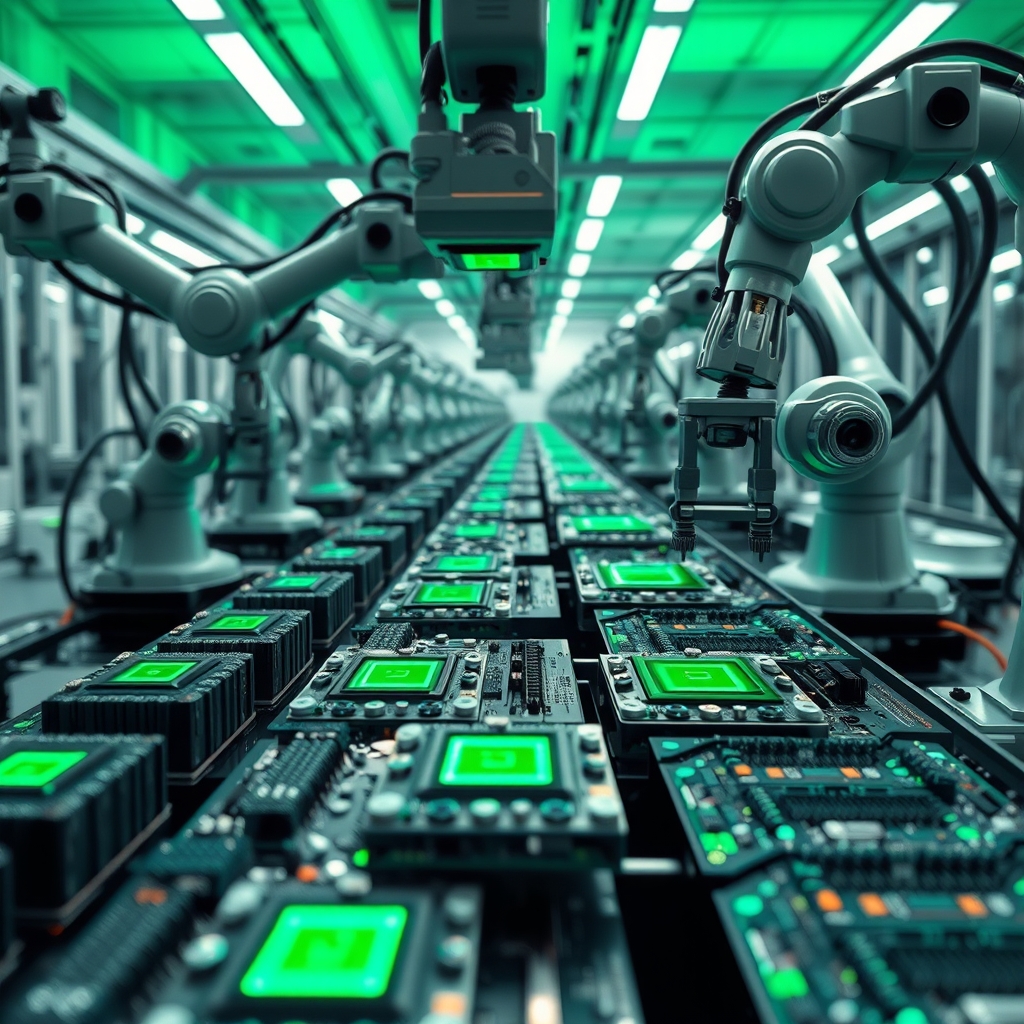
The process exposed in the leaked videos reveals a surgical and highly mechanized operation. In facilities mimicking high-precision assembly lines, thousands of RTX 5090 units are removed from their original packaging to undergo complete disassembly. The primary goal of this intervention is neither repair nor the resale of peripheral components, but the intensive recovery of the main graphics chip and the high-speed memory modules accompanying it.
From an architectural perspective, the most advanced consumer GPUs share critical similarities with accelerators destined for data centers. The underlying architecture of these processors offers performance in floating-point operations and parallel processing capabilities that, with the appropriate firmware and BIOS modifications, can be redirected toward inference workloads and lightweight training. Operators unsolder the graphics processors and high-density memory banks using automated reballing stations to prevent thermal damage to the silicon. Once extracted, these cores are relocated onto custom-designed printed circuit boards (PCBs) built to integrate into high-density server chassis, usually liquid-cooled. These modified boards eliminate traditional video outputs and conventional air-cooling systems, replacing them with high-speed interconnection interfaces adapted for server clusters dedicated to massive AI data processing. The technical challenge of this process is not minor. Integrating silicon designed for the consumer market into data center environments requires overcoming significant obstacles related to thermal management, power supply stability, and compatibility with high-speed network controllers (such as InfiniBand or ultra-low-latency Ethernet). However, the pressure to obtain computing power outweighs the risk of high failure rates during the modification process. Preliminary performance tests conducted on these hybrid systems demonstrate that, while they lack certain hardware-level optimizations found in dedicated professional lines, they offer an acceptable performance-per-watt ratio for open-source model inference tasks and large-scale local deployments. The phenomenon also highlights the versatility of modern silicon, but demonstrates a concerning diversion of resources. While laboratories and industries seek to maximize efficiency by running workloads on optimized architectures such as advanced reasoning models, the base physical infrastructure suffers unprecedented stress due to these technological cannibalization practices.
| Feature | RTX 5090 (original consumer) | Modified board for AI server |
|---|---|---|
| Operating environment | High-end desktops and workstations | Server chassis in data centers |
| Cooling system | Triple-fan air heatsink | Liquid cooling or high-density blocks |
| Video interfaces | Active DisplayPort and HDMI | Removed to optimize rack space |
| Firmware and drivers | Optimized for gaming and graphic applications | Modified for parallel computing and inference |
3. Impact on the sector
The repercussions of this component black market are spreading rapidly across the entire technology value chain. First, end consumers and content creators face chronic shortages and artificial price inflation of high-end graphics cards. The massive absorption of stock by intermediaries supplying these industrial operations drastically reduces availability in traditional retail channels.
For small and medium-sized enterprises attempting to deploy local artificial intelligence infrastructure without the multi-million-dollar budgets of tech giants, the situation becomes unsustainable. Faced with the difficulty of acquiring official enterprise accelerators due to distribution quotas and international trade restrictions, the temptation to resort to modified or gray-market hardware creates an opaque and unregulated commercial ecosystem. Semiconductor manufacturers are watching this trend with great concern. Although initial graphics card sales are accounted for as positive revenue, the unauthorized use of these components in data center environments violates terms of service and standard commercial licenses. Furthermore, it hinders long-term demand forecasting and distorts metrics regarding the adoption of professional versus consumer hardware. The financial impact is also reflected in supply chain security. The proliferation of extracted and relabeled components increases the risk of fraud in the used and refurbished component market. Companies acquiring servers from unverified suppliers risk integrating silicon that has undergone prior thermal stress, which reduces the expected lifespan of their data centers' critical infrastructure. At the macroeconomic level, these practices demonstrate that regulatory barriers and export controls, while effective in slowing down the formal acquisition of cutting-edge technology, stimulate the emergence of sophisticated parallel markets. Industrial inventiveness to bypass physical supply limits frequently outpaces the adaptation speed of international regulatory frameworks.
4. Market outlook
Industry analysts agree that the phenomenon of mass dismantling of consumer graphics cards is a clear symptom of a demand that has not yet found its physical equilibrium. Various supply chain experts point out that as long as the race to deploy advanced language models and agentic systems continues to demand outsized computing power, any source of silicon capable of performing matrix operations will be exploited, regardless of its original design.
From a strategic standpoint, organizations relying on local computing must rethink their provisioning policies. Dependence on modified consumer hardware introduces operational vulnerabilities that are unacceptable for stable production environments. It is recommended to diversify technological strategies, prioritizing software optimization, model compression, and the use of efficient cloud services over the risk of building infrastructure on uncertified hardware foundations. Likewise, cybersecurity experts warn about the risks inherent in the physical manipulation of motherboards and BIOS modification in critical components. The introduction of unofficial firmware into server environments can open unknown attack vectors, compromising the confidentiality and integrity of data processed by artificial intelligence models hosted on those nodes. Strategic recommendations for corporate technology departments involve rigorously auditing the provenance of all hardware acquired in the secondary market. Component traceability is becoming a security asset as important as protecting the software itself.
5. Next steps
Looking ahead to the coming quarters, the evolution of this phenomenon will depend on the ability of semiconductor manufacturers to flood the market with moderately priced professional solutions and on the evolution of international trade policies.
- Short term (coming months): High-end graphics card shortages will persist in the consumer market due to continuous diversion toward industrial cannibalization operations in regions with severe restrictions.
- Medium term (1 to 2 years): Manufacturers will implement hardware- and firmware-level countermeasures to hinder the unauthorized extraction and reuse of graphics cores in server chassis.
- Long term: The maturation of specialized silicon architectures and extreme optimization of AI software will reduce dependence on brute force in consumer hardware, stabilizing prices and discouraging these clandestine practices.
6. Conclusion and evaluation
The leaked video exposing the industrial dismantling of RTX 5090 cards to power artificial intelligence servers is a stark reminder of the lengths to which organizations will go to secure scarce processing capabilities. Rather than relying on unverified consumer hardware modifications, the long-term viability of the sector depends on transparent supply chains, rigorous architectural planning, and robust software optimization around advanced flagships.