Español
 English
 Français
 Português
 Deutsch
 Italiano
The New Security Paradigm in Humanoid Robotics: Agility and Human-Robot Collaboration
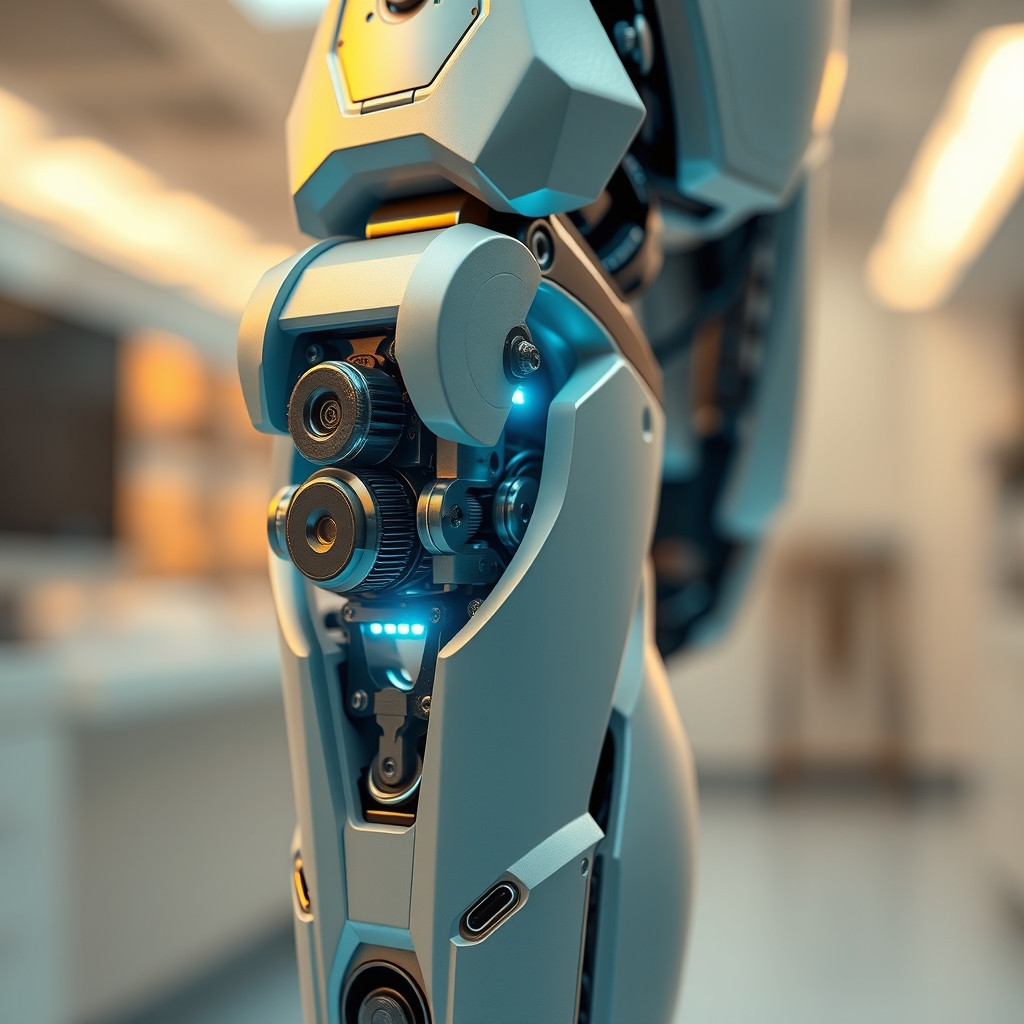 AI-generated
1. Executive Summary
In a breakthrough that redefines safety expectations in collaborative work environments, Agility's new humanoid robot has demonstrated an innovative capability: proactively stopping and crouching to avoid collisions and harm to its human coworkers. This seemingly simple functionality represents a qualitative leap in Human-Robot Interaction (HRI) and addresses one of the most significant barriers to the mass adoption of advanced robotics in industry: the perception of risk and physical safety.
This development is not merely an incremental improvement; it is a strategic statement about the future direction of robotics. By prioritizing safety and harmonious coexistence, Agility is not only building more capable machines but also more acceptable and reliable ones for deployment in spaces shared with humans. The implications of this innovation are profound, affecting everything from employee morale and operational efficiency to regulatory frameworks and the dynamics of the global automation market. This report from IAExpertos.net breaks down the technical significance, industrial impact, and future prospects of this milestone.

2. In-Depth Technical Analysis
The ability of a humanoid robot to stop and crouch safely and contextually in the presence of a human is the result of a complex integration of cutting-edge technologies. At the heart of this functionality lies a highly sophisticated environmental perception system. This system likely combines data from multiple sensors, including high-resolution LiDAR, stereo vision cameras, and depth sensors, to build a real-time 3D map of the environment. The fusion of this data allows the robot not only to detect the presence of objects but also to classify them as humans, identify their movements, and predict their trajectories with unprecedented precision.
Beyond mere detection, artificial intelligence plays a crucial role in interpreting this data. Deep learning models, possibly trained on vast datasets of human interactions in industrial settings, allow the robot to understand the context of the situation. This includes distinguishing between a human moving intentionally toward the robot and one simply passing nearby, or even an inanimate object. Real-time inference capability is vital, as the robot must make decisions in milliseconds to ensure a safe and timely response. Once a potential collision is detected and the threat is classified as human, an advanced motion planning and control system comes into play. This system not only calculates the safest trajectory to stop but also orchestrates the sequence of movements to crouch. Crouching is not a trivial movement for a humanoid robot; it requires precise control of multiple joints, dynamic balance, and the ability to maintain stability while shifting its center of gravity. This involves force and torque control algorithms that allow the robot to interact in a "soft" and "compliant" manner, minimizing any residual risk even if accidental contact occurs.
The software architecture supporting this capability is likely based on an advanced Robot Operating System (ROS) or a similar proprietary platform, which integrates modules for perception, cognition, planning, and control. Continuous retraining of AI models, using data from real and simulated scenarios, is fundamental to improving the robustness and reliability of this safety feature. Furthermore, redundancy in safety systems, at both the software and hardware levels, is standard practice to ensure the robot can respond safely even in the event of partial failures.
The implementation of this functionality also involves mechanical design considerations. The robot's actuators must be powerful enough to execute fast and precise movements, but also sensitive enough to operate safely near humans. The choice of materials and weight distribution are critical factors for stability during the crouching movement. In essence, this capability is a symphony of robust hardware, high-fidelity sensors, and state-of-the-art AI algorithms, all working in concert to achieve safe and fluid human-robot interaction.3. Industry Impact and Market Implications
The introduction of humanoid robots with safety capabilities as advanced as Agility's has a transformative impact on multiple industrial sectors. Historically, the integration of robots into work environments shared with humans has been limited by strict safety zones, physical cages, and emergency stop protocols that often disrupt workflow. A robot's ability to react autonomously and safely to human presence removes many of these barriers, opening the door to more fluid and efficient collaboration.
In the logistics and warehousing sector, where humanoid robots like Agility's are designed to operate, this feature is a game-changer. Warehouses are dynamic environments with constant traffic of people and vehicles. A robot that can navigate safely and avoid collisions with human workers can operate without the need for physical segregation, which optimizes space and improves productivity. This reduces operational costs associated with facility reconfiguration and the implementation of restrictive safety measures.
For manufacturing, especially on assembly lines where flexibility and adaptability are key, safe humanoid robots can take on repetitive or dangerous tasks, freeing human workers for higher value-added roles. Confidence that the robot will not cause harm is fundamental to workforce acceptance. This trust not only improves morale but can also reduce resistance to automation, facilitating a smoother transition toward smart and collaborative factories. From a market perspective, this innovation positions Agility as a leader in safe and collaborative robotics. Safety becomes a key differentiator in an increasingly competitive market. Companies looking to automate their operations will be more inclined to invest in solutions that minimize risks to their employees and comply with workplace safety regulations, which are expected to become stricter as advanced robotics becomes more widespread. This could drive a new wave of investment in humanoid robotics, with a renewed focus on safe HRI. Furthermore, the implications extend to training and workforce management. With robots that can coexist safely, companies can develop training programs that teach employees to work alongside these machines, rather than simply supervising them from a distance. This fosters a culture of collaboration and empowerment, where humans and robots complement each other to achieve common goals. The reduction in workplace accidents also translates into lower insurance costs and a better corporate reputation.
4. Expert Perspectives and Strategic Analysis
Industry analysts and robotics experts agree that safety in human-robot interaction is the "Holy Grail" for the widespread adoption of humanoid robotics. The ability of Agility's robot to stop and crouch proactively is seen as a fundamental breakthrough that directly addresses primary concerns regarding safety and public acceptance. Industry analysts suggest that the perception that a robot is inherently dangerous has been a huge psychological and practical barrier, and that this feature not only mitigates physical risk but also builds trust, which is essential for large-scale integration.
From a strategic perspective, this move by Agility underscores the importance of a human-centered approach to robot design. It is not just about efficiency or payload capacity, but about how the robot integrates into the human ecosystem. Companies that prioritize safety and ease of interaction will be the ones to dominate the market in the long term. This approach also resonates with growing ethical and social expectations surrounding artificial intelligence and automation, where accountability and harm minimization are paramount considerations.
Investment in high-fidelity perception and motion control systems, such as those enabling this safety functionality, is a smart strategy. Although the initial cost of such systems may be higher, the long-term benefits in terms of accident reduction, productivity improvement, and accelerated adoption far outweigh the investment. Furthermore, the ability to continuously retrain and improve these systems through AI, using proprietary models like GPT-6 Astra or Claude Mythos 5.1 for data processing and decision-making, ensures that the robot's safety can evolve over time. Another strategic point is standardization. As more humanoid robots enter the market, the need for universal safety standards will become critical. Agility's innovation could set a precedent for what is considered an acceptable level of safety in HRI. Regulators and standards bodies will likely watch these developments closely to inform future guidelines, which could influence the design and capabilities of competitor robots. Finally, this feature has implications for the public perception of robotics. By seeing robots that demonstrate "considerate" and "safe" behavior, the public may develop a more positive and less threatening view of automation. This is crucial for overcoming the "uncanny valley" and fostering greater acceptance of robots in daily life and the workplace, paving the way for future applications beyond industrial settings.
5. Future Roadmap and Predictions
The ability of Agility's robot to stop and crouch is just the beginning of a much more ambitious HRI safety roadmap. In the next 3 to 5 years, we can expect to see an evolution toward even more sophisticated and proactive safety behaviors. This will include the ability of robots to anticipate human movements with greater precision, not just reacting, but also adapting their own trajectory to avoid close encounters before they become a potential threat. The integration of human intent, inferred through computer vision and movement pattern analysis, will be key.
We foresee that future humanoid robots will incorporate enhanced "situational awareness," allowing them to understand not only the presence of humans but also their emotional state or level of attention. For example, a robot could slow its movement or emit an audible warning if it detects that a human is distracted or unaware of its presence. This will require advances in multimodal AI, where models like Gemini 3.8 Flash or Llama 4 process not only visual and depth data but also audio signals and, potentially, even anonymized biometric data in controlled environments.
In the longer term, over the next decade, humanoid robotics could evolve toward "adaptive safety" where the robot learns and adjusts its safety protocols based on experience and continuous interaction with different individuals and environments. This could involve retraining behavioral models in real-time, allowing the robot to customize its level of caution according to the specific context and the preferences of the human team it works with. Collaboration with digital twins and advanced simulation environments will be fundamental to testing and validating these complex behaviors before their deployment in the real world. Finally, the integration of humanoid robotics with smart factory and smart city ecosystems will be a dominant trend. Robots will not only communicate with humans but also with other robots, building management systems, and sensor networks to create an inherently safe work and living environment. Safety will become a feature of the entire system, not just an individual robot, with coordinated emergency protocols and centralized risk management. This will require robust interoperability and open communication standards, driving collaboration between different manufacturers and technology providers.
6. Conclusion: Strategic Imperatives
Agility's demonstration of a humanoid robot capable of stopping and crouching to avoid harming its human coworkers is a strategic milestone that cannot be underestimated. It marks a turning point in the evolution of robotics, shifting the focus from mere functional capability to safe coexistence and effective collaboration. For companies looking to capitalize on the potential of advanced automation, safety in human-robot interaction is no longer a luxury, but a fundamental strategic imperative.
Organizations must prioritize investment in robotics technologies that demonstrate an unequivocal commitment to human safety. This implies not only evaluating technical specifications but also the design philosophy and testing protocols of robot manufacturers. The adoption of safe humanoid robots will not only improve operational efficiency and reduce costs associated with accidents, but will also foster a culture of innovation and trust within the workforce. It is a call to action for business and technology leaders to recognize that the future of automation lies in the harmony between humans and machines, not in their segregation.