Español
 English
 Français
 Português
 Deutsch
 Italiano
The Regulatory Pulse: Why the AI Truce Is Merely a Strategic Illusion
 AI-generated
1. Executive Summary
The artificial intelligence industry is at a turning point. After months of unbridled acceleration, where frontier models like GPT-6 Astra and Claude Mythos 5.1 have redefined reasoning and computer-use capabilities, a discordant voice has emerged from the heart of the industry itself: Dario Amodei, CEO of Anthropic. His recent proposal to implement a three-step plan to slow down AI development has shaken the foundations of Silicon Valley, raising questions about whether self-regulation is a genuine safety measure or a maneuver to consolidate the dominance of established players.
This debate is not merely academic; it is a matter of national security and global economic stability. With the proliferation of open-weight models like Llama, the ability of governments to oversee the deployment of AI systems has been outpaced by the speed of innovation. Amodei's proposal, which includes embedding external evaluators in laboratories and international coordination, seeks to establish a containment framework that, if adopted, would radically change the competitive landscape for the rest of the decade.

2. Deep Technical Analysis
The architecture of current models, from the agentic reasoning of Claude Mythos 5.1 to the computer-use capability of GPT-6 Astra, has exceeded initial safety expectations. The technical challenge lies in the "black box" of these models' decision-making. When a system is capable of executing actions in a desktop environment or managing complex workflows, the risk of unforeseen emergent behaviors increases exponentially.
Amodei's proposal focuses on operational transparency. By suggesting the presence of external evaluators within laboratories, the aim is to mitigate the risk of models reaching critical capabilities without adequate oversight. Technically, this implies unprecedented access to model weights, training datasets, and, crucially, inference logs during safety testing phases (red-teaming). However, the technical implementation of this oversight faces significant obstacles. Intellectual property is the most valuable asset for companies like OpenAI or Anthropic. Allowing third parties to audit training processes implies a risk of industrial secret leaks. Furthermore, the distributed nature of development, with open-weight models being executed on private infrastructure, makes centralized coordination a titanic task.
The efficiency of models like Qwen3.8-Max is no longer the only determining factor. The optimization of MoE (Mixture of Experts) architecture allows smaller models to achieve elite performance. Therefore, any regulation based solely on the compute threshold (FLOPs) runs the risk of becoming obsolete quickly, as algorithmic innovation is outpacing the need for massive hardware.
The role of external evaluators, therefore, must evolve toward real-time behavioral auditing. It is not enough to evaluate the model before its release; it is necessary to monitor its interaction with the environment, especially in models with multimodal and agentic capabilities. Amodei's proposal suggests that safety must be an intrinsic feature of the development lifecycle, not a patch applied at the end.3. Industry Impact and Market Implications
The AI market in September 2026 is highly polarized. On one hand, we have high-performance proprietary models such as GPT-6 Astra (Computer Use / Restricted) / GPT-5.6 Sol (Public), Claude Mythos 5.1, and Gemini 3.8 Flash, which operate under strict access controls. On the other, the open-weights ecosystem, led by Llama, is democratizing access to capabilities that were previously reserved for a select few.
The adoption of the measures proposed by Anthropic could create a significant barrier to entry. If small labs or AI startups cannot meet the rigorous audit standards and the costs associated with external oversight, the market could consolidate even further around the major players. Paradoxically, this could reduce the diversity of approaches to AI safety.
For companies integrating these technologies, regulatory uncertainty is the greatest risk. Organizations need stability to plan their long-term investments. If the rules of the game change constantly due to new international regulations, the cost of compliance could skyrocket, affecting the profitability of AI-based digital transformation projects. Global competition also plays a crucial role. While the United States debates slowing down, other global actors continue to advance at an accelerated pace. There is a real fear that excessively restrictive regulation in the West will simply shift the center of gravity for innovation toward jurisdictions with more lax regulatory frameworks.
4. Expert Perspectives and Strategic Analysis
The consensus among industry analysts is that Amodei's proposal is a tacit acknowledgment that the industry has lost control over the speed of its own creation. The idea of "slowing down" should not be interpreted as halting progress, but rather as more mature risk management. Safety, in this context, becomes a competitive advantage.
Companies are advised to adopt a "security by design" stance. Regardless of the regulation that is implemented, organizations must audit their own AI workflows. One cannot rely exclusively on the guarantees of model providers. The implementation of intermediate security layers, which filter and monitor API calls to models such as GPT-6 Astra or Claude Mythos 5.1, is a strategic necessity.
International coordination is the most complex point. The history of technology teaches us that global agreements are difficult to reach and even more difficult to enforce. However, the existential nature of the risks associated with advanced AI suggests that, this time, the incentive for cooperation is greater than the incentive for defection. Finally, it is imperative that regulators understand the difference between the development of base models and the deployment of applications. Regulation must be proportional to the risk. A model used for scientific research should not be subject to the same restrictions as a model integrated into critical infrastructure or financial decision-making systems.
5. Roadmap and Predictions
By the end of 2026 and the beginning of 2027, we expect to see the formalization of the first external audit frameworks. It is likely that we will see the creation of independent bodies, funded by the industry but with autonomous governance, tasked with certifying the safety of models before their large-scale deployment.
The race for efficiency will continue. We will see greater adoption of specialized models, such as those optimized for mathematics or coding, rather than relying solely on massive generalist models. This will facilitate auditing, as the scope of these models' capabilities is more limited and predictable.
Pressure on open-weight models will increase. It is likely that we will see attempts to regulate not only companies but also the distribution of high-performance model weights. This will generate constant tension between the open-weights community and proponents of centralized safety, defining the political debate of the years 2027 and 2028.

🔥 -13%
Corsair MP700 Pro 2TB NVMe 2.0 M.2 PCIe Gen5 x4 SSD - M.2 2280 - Sequential Read up to 12,400MB/s - High Density TLC NAND - Black
€531.00
€461.99
See Price on Amazon
🔥 -45%
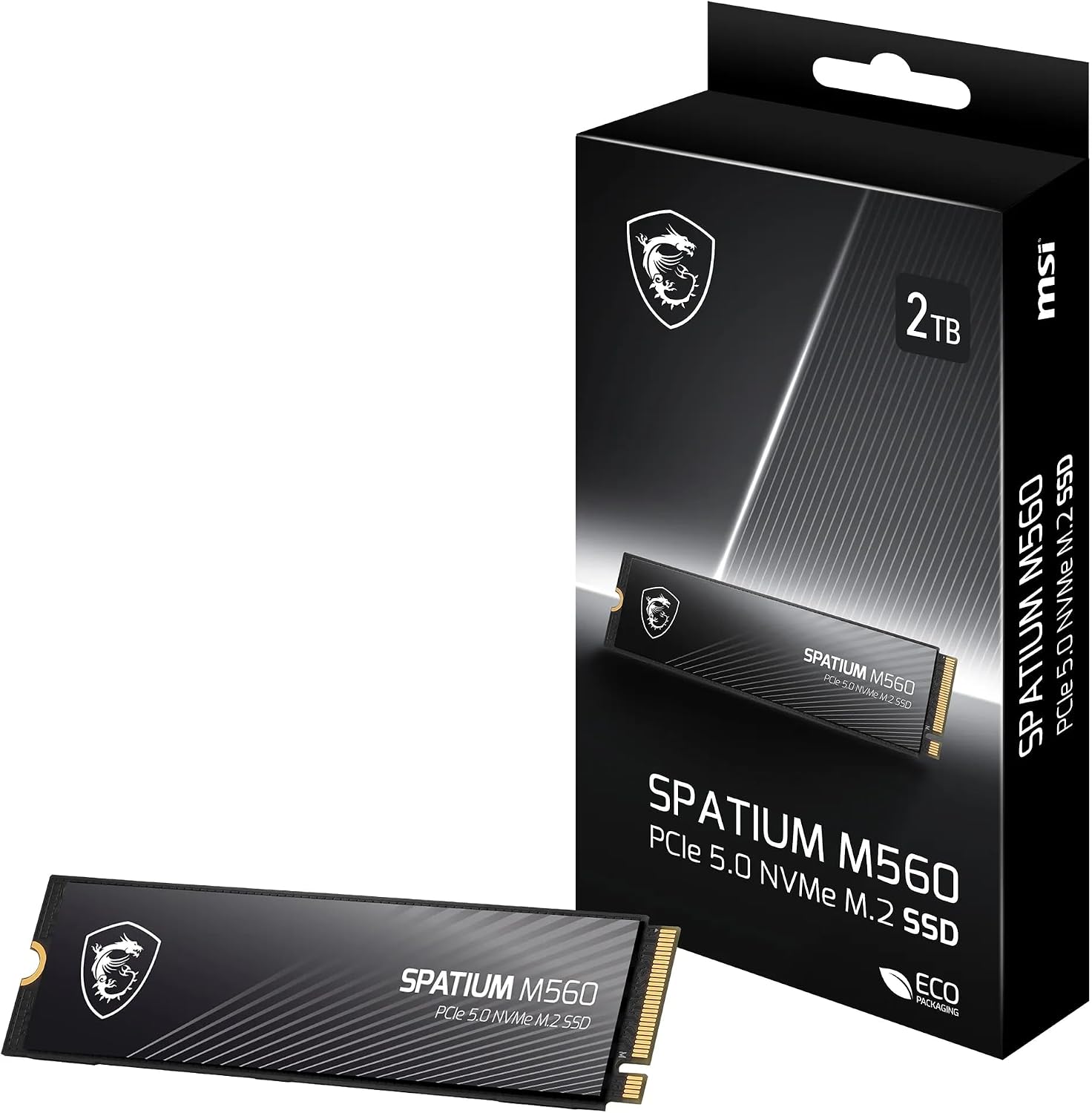
MSI Spatium M560 SSD 2TB PCIe 5.0 NVMe M.2 Internal Solid State Drive, 10,300MB/s Read and 8,700MB/s Write, 3D NAND, Integrated Data Security, Center
€580.00
€316.14
See Price on Amazon

🔥 -13%
CORSAIR Vengeance RGB DDR5 RAM 32GB (2x16GB) Up to 6000MHz CL36 AMD Expo Intel XMP 3.0 Desktop Memory - Grey (CMH32GX5M2E6000Z36)
€593.00
€515.78
See Price on Amazon

🔥 -13%
Crucial Pro RAM DDR5 32GB (2x16GB) 6000MHz CL36, Overclocking Gaming, Intel XMP 3.0 / AMD Expo, PC Memory, Black – CP2K16G60C36U5B
€517.00
€449.89
See Price on Amazon
As an Amazon Associate, IAExpertos earns from qualifying purchases. Prices and availability are subject to change.
🔥 -30%
Corsair MP700 Pro 2TB NVMe 2.0 M.2 PCIe Gen5 x4 SSD - M.2 2280 - Sequential Read up to 12,400MB/s - High Density TLC NAND - Black
£450.00
£313.33
Check Deal on Amazon
🔥 -36%
MSI Spatium M560 SSD 2TB PCIe 5.0 NVMe M.2 Internal Solid State Drive, 10,300MB/s Read and 8,700MB/s Write, 3D NAND, Integrated Data Security, Center
£580.00
£368.49
Check Deal on Amazon
🔥 -13%
CORSAIR Vengeance RGB DDR5 RAM 32GB (2x16GB) Up to 6000MHz CL36 AMD Expo Intel XMP 3.0 Desktop Memory - Grey (CMH32GX5M2E6000Z36)
£527.00
£457.97
Check Deal on Amazon
🔥 -13%
Crucial Pro RAM DDR5 32GB (2x16GB) 6000MHz CL36, Overclocking Gaming, Intel XMP 3.0 / AMD Expo, PC Memory, Black – CP2K16G60C36U5B
£453.00
£394.00
Check Deal on Amazon
As an Amazon Associate, IAExpertos earns from qualifying purchases. Prices and availability are subject to change.
6. Recommended Hardware Selection & Buying Comparison
Hardware and systems evaluated in this guide with live verified pricing and official distributor warranty on Amazon:
🔥 -30%
🔥 -36%
🔥 -13%
As an Amazon Associate, IAExpertos earns from qualifying purchases. Prices and availability are subject to change.
7. Conclusion: Strategic Imperatives
Dario Amodei's proposal marks the end of the "innocence" era in AI development. The industry has matured enough to recognize that innovation without limits carries unacceptable risks. For business leaders, the message is clear: the era of blind adoption is over. Due diligence, technical auditing, and a deep understanding of the capabilities of the models being integrated—such as the omnimodal Gemini 3.8 Flash—are now fundamental requirements for any successful AI strategy.
Companies must prepare for an environment where regulatory compliance will be as important as model performance. Those organizations that manage to balance agility with security will be the ones leading the market in the coming years. The regulatory truce is, in reality, the beginning of a new phase of professionalization where responsibility will be the most valuable asset.