Español
 English
 Français
 Português
 Deutsch
 Italiano
The Silent Epicenter: Unveiling the Global R&D Hub Redefining the Technological Future
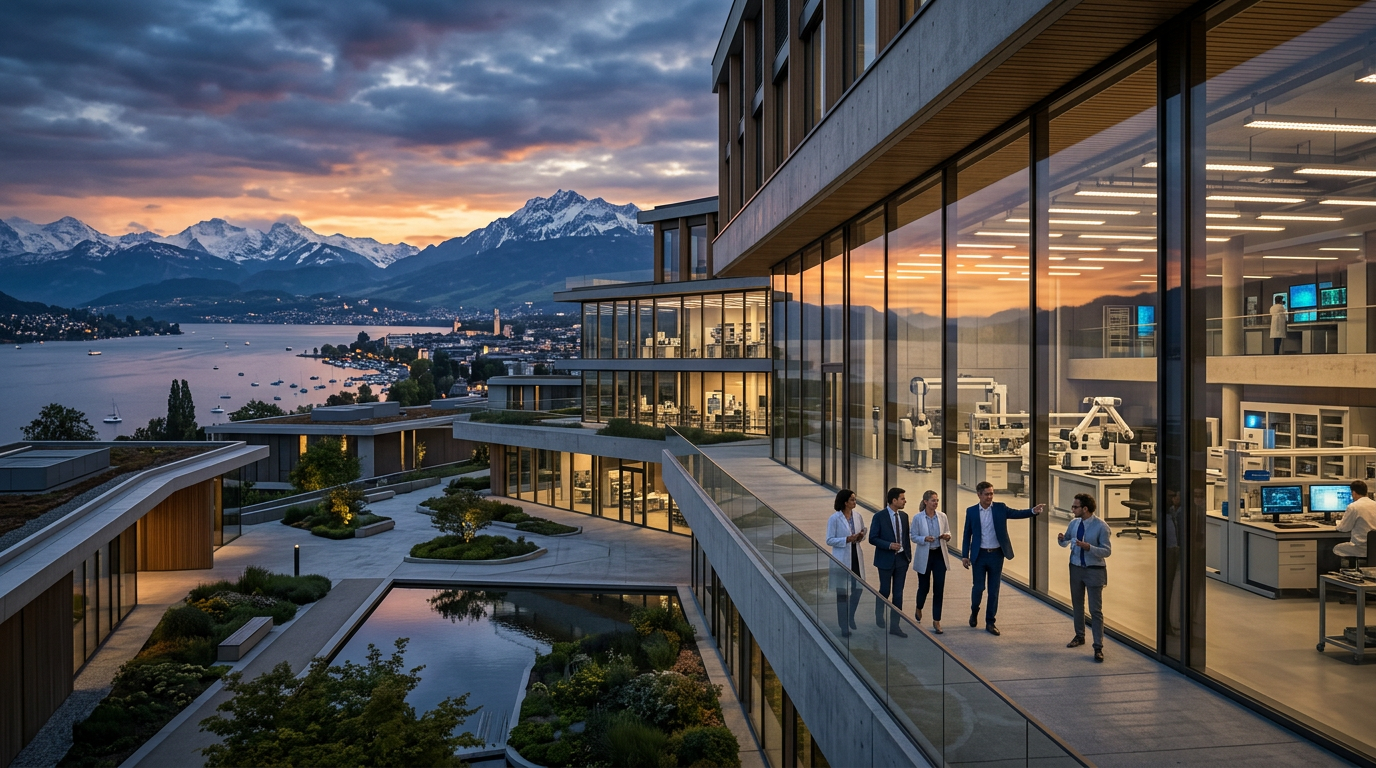 AI-generated
1. Executive Summary
In a phenomenon that has gone unnoticed by many, but which is redefining the landscape of global innovation, a medium-sized city, with a population barely exceeding 400,000 inhabitants, has consolidated itself as a top-tier technological research and development epicenter. This discreet hub, whose geographical identity remains strategically in the background, today houses the R&D centers of some of the planet's most influential corporations: Apple, Anthropic, Disney Research, Google, Meta, Microsoft, NVIDIA, and OpenAI. This concentration of intellectual power and financial resources, unprecedented outside the Californian valleys, is not a coincidence, but the result of a confluence of strategic factors that are accelerating the next wave of technological disruptions.
The relevance of this development is monumental. The simultaneous presence of giants fiercely competing in markets such as artificial intelligence, spatial computing, semiconductors, and digital entertainment, creates a unique breeding ground for innovation. Here, proximity fosters both fierce competition for talent and ideas, as well as a cross-pollination of knowledge that would otherwise be impossible. For the industry, this means an unprecedented acceleration in the development of advanced language models like GPT-5.5 and Claude 4.8 Opus, new hardware architectures like NVIDIA's, and immersive experiences that go beyond virtual reality. This report delves into the dynamics that have led to this phenomenon, its technical and market implications, and what it means for the future of global technology.
2. Deep Technical Analysis
The convergence of these technological powerhouses in a single geographical point is not merely a matter of real estate; it is a deliberate strategy to capitalize on an environment that facilitates cutting-edge research. The type of R&D carried out in this hub is predominantly fundamental and applied in critical areas such as artificial intelligence (AI), high-performance computing, advanced robotics, extended reality (XR), and, to a lesser extent, biotechnology and new materials. The presence of OpenAI and Anthropic, backed by Microsoft and Google respectively, underscores the primacy of generative AI and AI safety as central focuses. Here, the next generations of foundational models, such as GPT-5.5, Claude 4.8 Opus, and Gemini 3.5 Flash, are being trained and retrained, pushing the boundaries of natural language understanding, computer vision, and multimodality.
NVIDIA, as an essential provider of computing infrastructure, plays a crucial role. Its centers in this hub not only develop new GPU architectures (such as the successors to Blackwell) but also collaborate closely with AI teams to optimize model performance. The synergy is palpable: NVIDIA's hardware advancements enable the training of larger and more complex models, while the demands of AI researchers drive innovation in chip design. This symbiotic relationship is fundamental to the race towards Artificial General Intelligence (AGI), where computational efficiency is as critical as algorithmic sophistication.
Meta and Apple, for their part, are heavily investing in spatial computing and extended reality. While Meta seeks to perfect its metaverse with MuseSpark and Llama 4, Apple focuses on integrating AI into its devices and creating immersive experiences with its own platform. Disney Research, with its focus on immersive storytelling and entertainment robotics, complements this ecosystem, exploring how AI and XR can transform human interaction with digital and physical content. The proximity of these teams facilitates the transfer of knowledge on user interfaces, graphics processing, and performance optimization in 3D environments.
The competition for talent is fierce, but it also stimulates an environment of excellence. Researchers and developers benefit from the opportunity to work on cutting-edge projects and from mobility between companies, which in turn raises the overall level of research. This hub has become a living laboratory where the boldest theories are put to the test, from neural network architectures that surpass the current capabilities of 2024 models, to new paradigms of human-machine interaction. The ability to attract and retain the world's best minds is, without a doubt, one of this epicenter's greatest assets.
In addition to AI and XR, research in this hub covers areas such as advanced cybersecurity, quantum computing (in more exploratory phases), and autonomous robotics. The interconnection of these fields is evident: AI powers robotics, quantum computing promises to revolutionize cryptography and the optimization of AI algorithms, and cybersecurity is fundamental to protecting all these advancements. High-speed network infrastructure and state-of-the-art data centers are invisible pillars supporting this explosion of innovation, enabling massive data processing and real-time collaboration between teams.
It is crucial to highlight that, while collaboration is a natural byproduct of proximity, companies maintain strict operational independence and fierce strategic competition. Microsoft, as a major investor in OpenAI with over $13 billion, integrates its models into Azure and Copilot, but OpenAI retains its autonomy. Google, for its part, invests $2 billion in Anthropic, while actively developing its own Gemini line. Google evaluates Gemini for iOS, but without equity alliances. NVIDIA provides hardware to OpenAI, but without equity control. These "coopetition" dynamics are a hallmark of the hub, where competition drives excellence and proximity allows for logistical efficiency in the talent and resource supply chain.
3. Industry Impact and Market Implications
The consolidation of this R&D hub has profound implications for the global technology industry. Firstly, it intensifies the "war for talent." The concentration of the most innovative companies in one place creates an unprecedented demand for engineers, data scientists, AI researchers, and hardware experts. This raises salaries and professional expectations, but also drains talent from other regions and companies that cannot compete with the resources and visibility of these giants. Nearby universities, if any, become strategic breeding grounds, and the brain drain towards this point accelerates.
Secondly, this epicenter acts as a catalyst for accelerating innovation. Physical proximity facilitates informal interaction, the exchange of ideas, and rapid concept validation. Geographical and cultural barriers are minimized, allowing emerging technologies to mature at a dizzying pace. This translates into shorter product development cycles and the faster emergence of new market categories, from smarter AI assistants to more immersive and accessible mixed reality devices. Companies without a presence in this hub could find themselves at a disadvantage, losing access to the latest trends and the pulse of innovation.
From an economic perspective, the city in question is experiencing an unprecedented boom. Investment in infrastructure, the creation of high-value jobs, and the increased demand for local services transform the regional economy. However, this also brings challenges, such as the rising cost of living, gentrification, and pressure on public services. Managing this explosive growth becomes a strategic imperative for local authorities, who must balance economic development with social and environmental sustainability.
The geopolitical implications are equally significant. A hub of this magnitude becomes a national strategic asset, attracting the attention of governments seeking to secure their technological leadership. The ability to influence the direction of research in AI, quantum computing, or cybersecurity can have ramifications for national security, economic competitiveness, and international diplomacy. The protection of intellectual property and the management of data flows become matters of state security.
Finally, the concentration of innovative power in this hub could reconfigure the global competitive landscape. Companies present here have an inherent advantage in access to talent, resources, and a supportive ecosystem. This could hinder the entry of new players or the expansion of smaller competitors, further consolidating the dominance of tech giants. However, a new generation of "spin-off" startups could also emerge from these centers, leveraging accumulated knowledge and experience to create their own disruptions.
4. Expert Perspectives and Strategic Analysis
The decision of these companies to establish themselves in this hub is not accidental. Industry analysts point out that the strategy responds to several key factors. One of them is the search for "neutral ground" or a more flexible regulatory environment for certain lines of research, especially in AI, where regulations can vary significantly between jurisdictions. Another factor is access to a specialized talent pool that, for various reasons (quality of life, lower cost of living than in Silicon Valley, or the presence of renowned academic institutions), has chosen this region as its base.
Technical consensus suggests that the discretion of the hub also plays a role. By not being as high-profile a tech center as others, it allows companies to operate with a degree of confidentiality that can be crucial for highly sensitive or strategic R&D projects. This is particularly valuable in the race for AGI, where every advance is a closely guarded secret. The ability to experiment and fail quickly, away from constant public scrutiny, is a luxury that few environments can offer.
From a strategic perspective, the presence of multiple competitors in the same space fosters an innovation "arms race." Each company is forced to outperform the others, which accelerates the overall pace of technological progress. However, it also poses risks. Brain drain between companies is a constant concern, as is the possibility of intellectual property being compromised. Companies invest heavily in security measures and in creating corporate cultures that foster loyalty, but the risk persists.
The long-term sustainability of this hub model is a subject of debate. Some analysts suggest it is a transitional phase, driven by the need to concentrate resources in the race for AI. Others believe it represents a new paradigm for R&D, where geographical specialization and talent concentration outweigh the advantages of dispersion. The key will lie in the hub's ability to adapt to technological and economic changes, and in the willingness of companies to continue investing in it as their strategic priorities evolve.
Alliances and "coopetition" are a central element of this ecosystem. The relationship between Microsoft and OpenAI is a paradigmatic example: a massive investment that grants Microsoft commercial rights and deep integration into Azure and Copilot, while OpenAI maintains its operational independence. Similarly, Google invests in Anthropic, but competes with Gemini. These complex dynamics demonstrate that, even in a highly concentrated environment, companies seek to maximize their strategic advantages without ceding total control. NVIDIA, as a hardware provider, benefits from the demand of all players, maintaining a neutral but indispensable position.
5. Future Roadmap and Predictions
Looking to the future, this hub is positioned to be a key driver in the evolution of global technology over the next decade. Specialization in AI and advanced computing is expected to deepen even further. By 2028, we could see the emergence of AI models that significantly surpass the capabilities of GPT-5.5 or Claude 4.8 Opus, approaching AGI in specific domains. Research in multimodal AI, capable of understanding and generating content across text, image, audio, and video fluidly, will be an area of intense activity.
Spatial computing and extended reality will also see significant advances. The integration of AI into XR devices will enable much more personalized and interactive experiences. By 2029-2030, mixed reality devices could be as common as smartphones today, with basic neural interfaces beginning to be explored for even more intuitive interaction. Disney Research, in particular, could lead the application of these technologies to the creation of entirely new content and entertainment experiences.
The hub's infrastructure will also evolve. Continuous investment in next-generation data centers is anticipated, optimized for large-scale AI model training and quantum computing. Sustainable energy and energy efficiency will be critical considerations, given the carbon footprint of these operations. Collaboration between the public and private sectors will be essential to ensure that physical and digital infrastructure can support exponential demand growth.
In terms of talent, the hub will likely expand, attracting more researchers and auxiliary companies. This could lead to the creation of specialized "sub-hubs" within the same region, focused on areas such as bio-AI or precision robotics. However, the challenge of maintaining a reasonable cost of living and a high quality of life will be crucial for its sustainability. Other countries and regions will try to replicate this model, but the unique combination of factors that has fostered this hub will be difficult to emulate.
6. Conclusion: Strategic Imperatives
The emergence of this discreet but immensely powerful R&D hub is a testament to the changing nature of technological innovation. Silicon Valley is no longer the sole beacon of progress. The concentration of Apple, Anthropic, Disney Research, Google, Meta, Microsoft, NVIDIA, and OpenAI in a city of 400,000 inhabitants is a phenomenon that deserves deep attention and continuous analysis. It represents a new strategy for accelerating research, driven by the pursuit of talent, operational efficiency, and, in many cases, an environment that allows for greater discretion in cutting-edge projects.
For companies, the strategic imperative is clear: understand the dynamics of these new epicenters and decide whether physical presence is essential to maintain competitiveness. For governments and local authorities, the lesson is that investment in education, infrastructure, and a favorable regulatory environment can transform a region into a global magnet. And for society in general, this hub is a barometer of what is to come in AI, computing, and human interaction with technology. Its evolution will largely dictate the pace and direction of the next technological revolution.
The developments of this "silent epicenter" will be closely followed, unveiling its secrets and analyzing its implications for a future that is built, day by day, in its laboratories and data centers. The race for technological supremacy is a marathon, and this hub has proven to be a formidable long-distance runner.