Español
 English
 Français
 Português
 Deutsch
 Italiano
Unitree Robotics' IPO: The Starting Gun for the Golden Age of Humanoid Robotics?
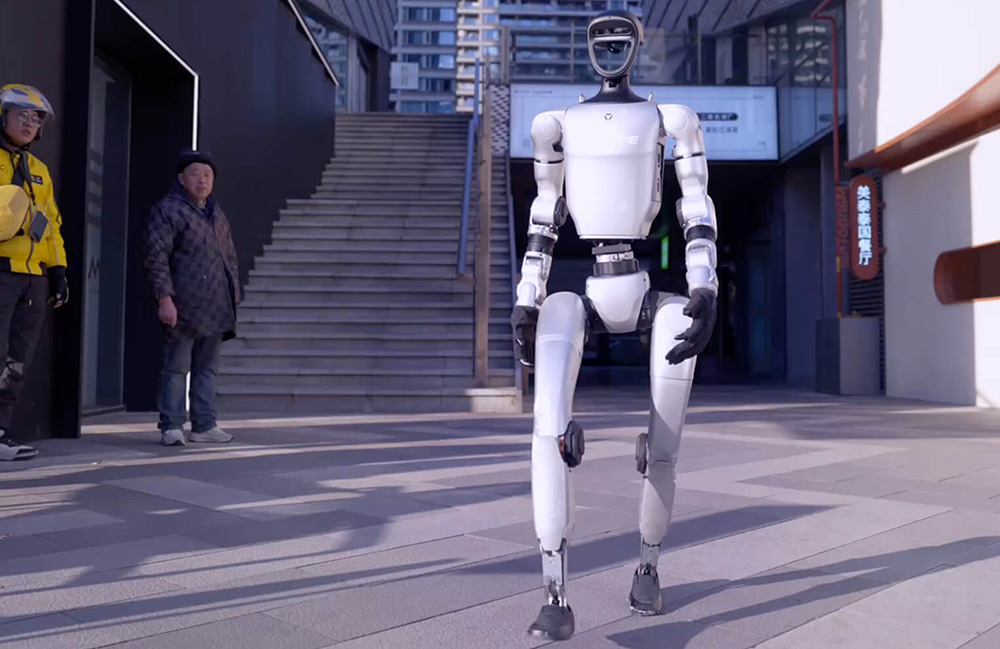 AI-generated
Unitree Robotics' stock market debut, confirmed this week on the Shanghai stock exchange (STAR Market), is not simply a corporate financial event; it is a seismic inflection point for the humanoid robotics industry. For years, the sector has been a battlefield of engineering demonstrations, futuristic promises, and billion-dollar venture capital funding rounds. However, Unitree's IPO, which has valued the company at a figure exceeding $30 billion according to agency sources, transforms the paradigm: humanoids are no longer just a laboratory bet, but a tradable asset class with fiduciary responsibilities to public shareholders.
This strategic move, which takes place against a backdrop of global technological euphoria driven by advances in generative AI and reinforcement learning models, forces a deep reevaluation of the ecosystem. For institutional investors, automakers, logistics, and the healthcare sector, the question is no longer "when will robots arrive?", but rather "which companies have the technical and financial solvency to scale and dominate?". This article, crafted from a senior analyst's perspective, dissects the operation, its technical implications, and, crucially, maps out who will be next to cross the public market threshold.
1. Executive Summary
Unitree Robotics has completed its initial public offering (IPO) on Shanghai's STAR Market, marking the first major liquidity milestone for a pure-play manufacturer of general-purpose humanoid robots. The operation, which has raised approximately $1.5 billion, is intended to finance the expansion of its mass production capacity (target: 100,000 units annually by 2027), the development of its next flagship model (the Unitree H2), and the construction of a proprietary software ecosystem. This injection of public capital not only validates Unitree's business model but also establishes a valuation precedent for the entire sector.
The importance of this event transcends Chinese borders. For the West, and especially for companies like Tesla (with its Optimus Gen 3), Figure AI, or 1X Technologies, Unitree's IPO represents a competitive wake-up call. It means that patient capital from Asian public markets is willing to back large-scale robotic hardware manufacturing, an area where American companies have traditionally been more cautious, prioritizing software. Those who should pay attention are Fortune 500 chief strategy officers, technology fund managers, and industrial policy leaders, as the race for the physical automation of labor has officially entered its phase of capitalist consolidation. Ultimately, Unitree's IPO is not the end of a journey, but the starting gun for a new era of fierce competition, consolidation, and, predictably, a price war that will democratize access to humanoid robotics much sooner than the most conservative analysts had forecast.
2. Deep Technical Analysis
To understand the magnitude of Unitree's IPO, we must analyze the technical architecture that underpins its valuation. Unlike its competitors, Unitree has prioritized a philosophy of "extreme vertical integration" in hardware. Its high-torque-density linear actuators, developed in-house, offer a power-to-weight ratio that surpasses most components available on the market. This integration not only reduces costs (a critical factor for future profitability) but also enables closed-loop control over the robot's dynamics, essential for stability in unstructured environments.
Software is the other fundamental pillar. The company has developed a centralized "brain" that runs reinforcement learning (RL) models trained in massive simulations (sim-to-real). This approach, similar to that used by major AI laboratories, allows the robot to acquire locomotion and manipulation skills without the need for explicit programming. Integration with the latest Chinese large language models (LLMs), such as Alibaba's Qwen3.8-Max or DeepSeek-V4-Pro, enables advanced natural language interaction, transforming the robot from an automation tool into a cognitive agent capable of understanding complex and contextual commands.
However, the true technical differentiator justifying the IPO is energy and thermal efficiency. Unitree's engineers have managed to reduce idle-mode energy consumption to less than 200 watts, a notable figure that extends operational autonomy to more than 4 hours with next-generation solid-state batteries. This advance is crucial for economic viability during real work shifts in factories or warehouses, where frequent recharging would be an unsustainable operational burden. Unitree's strategy is also distinguished by its aggressive pricing policy. While Western prototypes are marketed in the $100,000 to $200,000 range, Unitree has set the price of its current commercial model (the Unitree G1) at around $16,000 for bulk orders. This "low margins, massive volume" strategy is a classic Chinese manufacturing play, but applied to cutting-edge robotics. The IPO capital is precisely designed to sustain this price war for the next 24 months, forcing competitors to reduce their own costs or seek high-value-added market niches.
Finally, it is essential to mention the development platform. Unitree has launched an open SDK (Software Development Kit) that allows third parties to program custom skills. This platform strategy, similar to Apple's with iOS, seeks to create a robotic application ecosystem that increases hardware utility and generates recurring service revenue, a business model that public investors highly value for its predictability.
3. Industry Impact and Market Implications
Unitree's IPO acts as a catalyst that reshapes global competitive dynamics. Firstly, it pressures Western tech giants. Tesla, whose Optimus Gen 3 robot has been presented as a revolutionary project, now faces a competitor with solid public valuation and demonstrated manufacturing capability. Elon Musk's promise to produce millions of units at a cost below $20,000 now seems like a race against the clock, not a distant vision. Tesla investors will demand more aggressive production milestones to justify the company's valuation premium.
For Western startups like Figure AI or 1X Technologies, the impact is twofold. On one hand, Unitree's IPO validates the sector, facilitating their own private funding rounds. On the other hand, it raises the bar for investor expectations. It is no longer enough to show a walking prototype; now reliability metrics (MTBF - Mean Time Between Failures), unit production costs, and a clear roadmap to profitability are required. Venture capital patience has run out; the era of "laboratory demonstrations" is over. In the supply chain arena, Unitree's IPO will have a domino effect. Massive demand for precision components (harmonic drives, torque sensors, high-frequency IMUs) will benefit Asian suppliers such as Harmonic Drive Systems or Chinese sensor manufacturers. This could create bottlenecks in the global supply of critical components, raising prices in the short term for smaller competitors that lack Unitree's purchasing power.
The logistics and manufacturing sector will be the first major beneficiary. With an aggressive entry price and expanding production capacity, Unitree can offer e-commerce and automotive companies a flexible automation solution that does not require costly reconfiguration of traditional production lines. The promise of a "worker" that can learn to palletize, assemble, or inspect within hours, without the need for fixed infrastructure, is an irresistible selling point for operations directors struggling with labor shortages. However, not everything is positive. Unitree's entry into Western markets could face regulatory and national security barriers. Dependence on Chinese-origin components and software will be a point of friction in sensitive sectors such as defense or critical infrastructure. We will likely see a bifurcation of the market: one Asian market dominated by Unitree and its compatriots, and another Western market where local companies must demonstrate the "technological sovereignty" of their solutions to access government contracts.
4. Expert Perspectives and Strategic Analysis
The consensus among industry analysts is that Unitree's IPO is a strategic move that is both defensive and offensive. Defensive, because it secures a massive capital reserve to survive a potential prolonged price war. Offensive, because it sends a clear signal to the market: Unitree intends to be the undisputed leader in volume, not just in technology.
From a strategic analysis perspective, the recommendation for investors is clear: diversification is key. One should not bet everything on a single hardware manufacturer. The humanoid robotics value chain is complex and includes AI chip manufacturers (such as NVIDIA with its Jetson Thor platform), control middleware developers, and system integrators. Unitree's IPO will likely drive a wave of consolidation in these adjacent segments, creating investment opportunities in simulation software and robotic fleet management companies.
Technical analysts point out that the real battlefield will not be hardware, but data. By selling thousands of units, Unitree will generate a massive amount of teleoperation and autonomous operation data in real-world environments. This "digital gold" is the fuel for training the future AI models that will endow robots with general intelligence. Companies that do not have a clear strategy for capturing and anonymizing operational data will be irremediably left behind. The IPO provides Unitree with the funds to build this data infrastructure, a competitive moat that is difficult to replicate.
Another critical point is talent strategy. The war for robotics and machine learning engineers is fierce. With IPO capital, Unitree can offer compensation packages that rival those of Silicon Valley tech giants, attracting the best minds from Europe and the Americas. This reverse brain drain could weaken Western competitors that depend on a smaller talent pool. Finally, regulatory experts warn that the IPO does not exempt Unitree from compliance challenges. Machinery safety regulations (ISO 10218) and the European Union's future AI directives will be a significant obstacle. Unitree's strategy must include substantial investment in certifications and a global regulatory affairs team to prevent its products from being blocked in key markets such as Europe.
5. Future Roadmap and Predictions
Based on typical industry execution timelines and the company's public statements, we can outline a likely roadmap for the next 24 months.
Phase 1 (Q4 2026 - Q2 2027): Production Scaling and Commercial Expansion. Unitree will use IPO funds to double its manufacturing capacity at its new Shanghai plant. We expect to see the first major contracts with e-commerce logistics companies in China and Southeast Asia. The focus will be on reliability and reducing maintenance costs. They will announce their first large order of more than 10,000 units for a Chinese state-owned enterprise.
Phase 2 (Q3 2027 - Q1 2028): The Leap to the West and the Price War. With production stabilized, Unitree will seek CE and UL certification for its products. We will see the launch of an aggressive market penetration campaign in Europe and North America, likely through partnerships with local distributors. This phase will coincide with the launch of the Unitree H2, which promises superior manual dexterity. Competitive pressure will force Figure AI or Tesla to announce significant price reductions, eroding their margins.
Phase 3 (2028-2029): Software Ecosystem Consolidation. The focus will shift from hardware to software. Unitree will launch its "App Store" for robots, where third-party developers can sell specialized skills (e.g., welding, gardening, elderly care). The company will generate recurring revenue through transaction commissions and cloud subscriptions for custom model training. This will be the phase that demonstrates whether the business model is sustainable in the long term or merely a passing fad. The boldest, yet plausible, prediction is that by 2029, the cost of a Unitree general-purpose humanoid robot will fall below $10,000, a disruptive price point that will turn it into just another household appliance, accelerating adoption in homes and small businesses. This scenario, which seemed like science fiction just three years ago, is now a realistic possibility thanks to the injection of public capital.
6. Conclusion: Strategic Imperatives
Unitree Robotics' IPO is a generational event that redefines the rules of the game in humanoid robotics. We are no longer facing a technological race, but an industrial and financial battle. For CTOs and technology directors, the imperative is clear: humanoid automation is no longer an experimental option, but a strategic variable that must be integrated into 5-year business plans. Ignoring this trend is condemning your organization to an insurmountable competitive disadvantage in costs and efficiency.
The strategic imperative for enterprise data governance is paramount. Organizations must establish robust frameworks for capturing, anonymizing, and securely managing the vast operational data generated by robotic fleets. This data is critical for training specialized AI models, optimizing performance, and ensuring compliance. A modular architectural approach, leveraging interoperable standards for robotic control and data exchange, will be essential to mitigate vendor lock-in and enable agile integration with existing enterprise systems. Furthermore, optimizing latency in real-time robotic control and ensuring token/cost efficiency in integrated large language models, such as Qwen3.8-Max or DeepSeek-V4-Pro, will be key performance indicators for successful deployments. The ability to rapidly iterate on robotic capabilities through efficient model fine-tuning and deployment will directly translate into competitive advantage and long-term economic viability.