Español
 English
 Français
 Português
 Deutsch
 Italiano
Kraken, la startup di navi autonome, raccoglie 175 milioni di dollari e raggiunge una valutazione di 1 miliardo: analisi approfondita della nuova era della guerra navale senza equipaggio
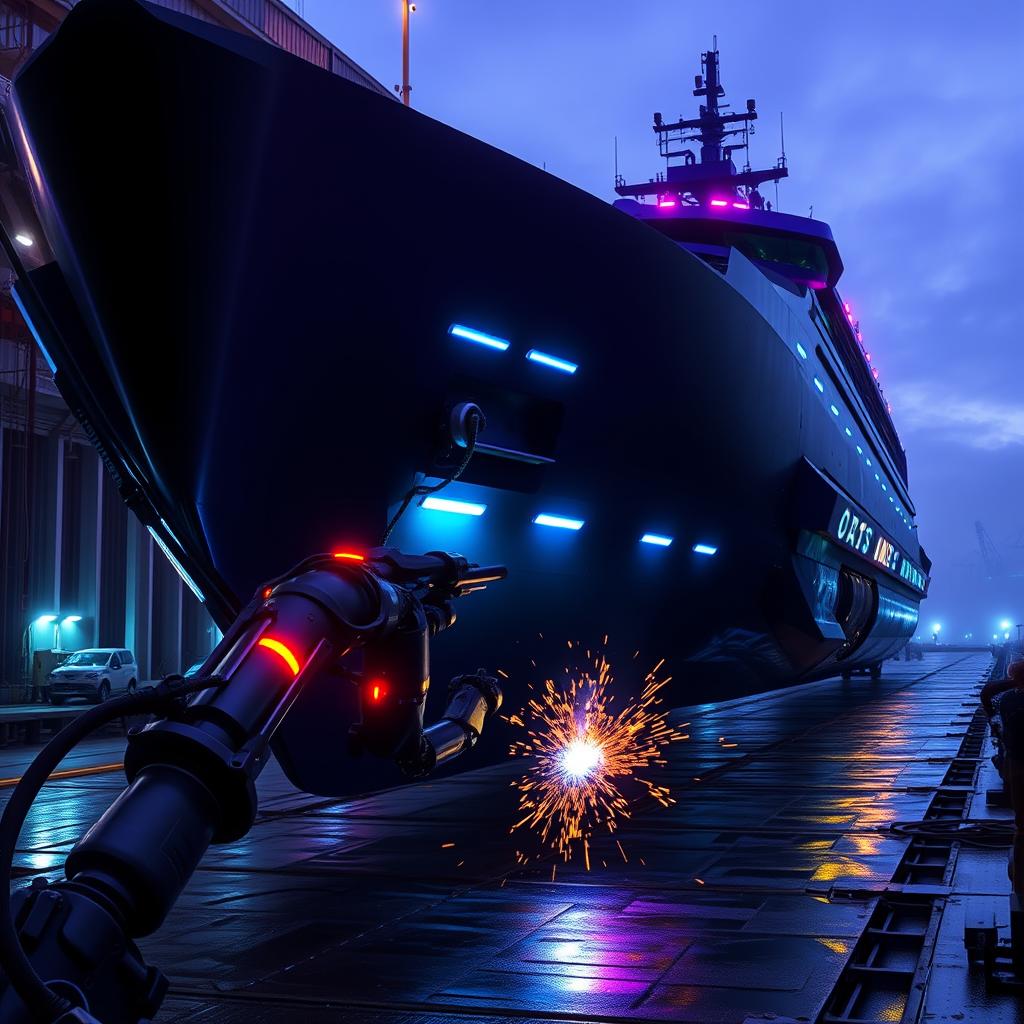 Generata da IA
1. Executive Summary: The Unmanned Warfare Unicorn
On July 10, 2026, the defense and maritime technology landscape underwent a significant shift. Kraken Technology Group Ltd., a UK-based startup specializing in the development of Autonomous Surface Vessels (ASVs), announced the closing of a Series B funding round worth $175 million. The operation, led by venture capital fund DTCP, raises the company's valuation above $1 billion, establishing it as the first European unicorn in the unmanned naval warfare sector.
What makes this round particularly significant is not just the figure, but the composition of the investor syndicate. Alongside DTCP are the UK government's British Business Bank, the NATO Innovation Fund (NIF), NATO's venture capital fund, and over half a dozen additional institutional and strategic investors. This alignment between private, sovereign, and military alliance capital underscores a reality: autonomous warfare has moved from a laboratory experiment to a strategic priority.
For industry analysts, this news is not a simple funding round. It is the signal that the market for unmanned defense systems is entering a phase of hypergrowth, driven by the need for asymmetric deterrence, risk reduction for human personnel, and the maturity of technologies such as autonomous navigation in GPS-denied environments and AI-based sensor fusion. This article is an analysis of what this milestone truly means for the industry, technology, and global geopolitics.
2. Technical Analysis: The Architecture of an Autonomous Hunter
To understand why Kraken has achieved this valuation, it is necessary to examine the technological core of its platforms. Unlike aerial drones, autonomous surface vessels operate in one of the most hostile and dynamic environments: the sea. Waves, salt corrosion, electromagnetic interference, and the lack of constant communication infrastructure pose considerable engineering challenges.
Kraken's main platform, codenamed "Kraken K-1", is a high-speed vessel, approximately 15-20 meters in length, designed for intelligence, surveillance, reconnaissance (ISR), and precision strike missions. Its central control system is a level 4-5 autonomous control system, meaning it can operate independently for days or weeks without direct human intervention, making tactical decisions in real-time.
The "brain" of the K-1 is based on a hybrid AI architecture that combines deep learning models for environmental perception (object detection, vessel classification, threat analysis) with rule-based and fuzzy logic systems for navigation according to the International Regulations for Preventing Collisions at Sea (COLREGS). This combination is crucial: Large Language Models (LLMs) are not suitable for critical navigation decision-making where safety is paramount. Instead, Kraken uses specialized computer vision models to process data from radar, LIDAR, optical, and infrared cameras.
A key technical aspect is communications resilience. In a real conflict, adversaries are expected to attempt to jam or interfere with radio and satellite signals. Kraken's vessels are designed with a "degraded operations" mode that allows them to execute pre-programmed missions using inertial navigation and map correlation, even if they lose the data link with the command center. This is achieved through a continuous edge retraining system, where onboard AI models are updated and refined with the new data they collect, without needing to send everything to the cloud. It is an approach reminiscent of federated learning techniques seen in models like Gemma 4 (optimized for edge computing) or Llama 4 in its extended context variant, but applied to tactical decision-making.
The $175 million investment will be directed, according to sources close to the company, towards three critical technical areas: 1) Scaling production of the K-1 hull and developing a larger variant (K-2) with the capability to launch aerial drones (UAVs). 2) Deepening the integration of directed energy weapon systems (lasers) and short-range missiles, automating the "observe, orient, decide, act" cycle (OODA loop). 3) Developing a "digital twin" of the ocean, a massive simulation environment where Kraken's AI models can train for millions of hours of navigation and combat, accelerating the learning cycle without the costs and risks of sea trials.
3. Industry Impact and Market Implications
The entry of the NATO Innovation Fund into a Series B round is a milestone that redefines the rules of the game. Traditionally, defense funds and governments entered at much later stages or through direct contracts. That NATO, as an entity, invests in a growth-stage startup indicates a paradigm shift: the Atlantic Alliance is betting on the agility of tech startups to counter the industrial capacity of adversaries like China and Russia.
This move has direct implications for the European defense ecosystem. Companies like France's Naval Group or Italy's Fincantieri, giants of traditional shipbuilding, now face an agile competitor, backed by capital and with technology that could render manned vessels obsolete for certain missions. It is not that aircraft carriers will disappear, but that "low-risk patrol" or "vanguard exploration" tasks could be performed by swarms of autonomous vessels like Kraken's, which are much cheaper to produce and operate.
From a market perspective, the $1 billion valuation sets a new ceiling for the sector. A domino effect is likely: other startups in the autonomous defense space (aerial, ground, and underwater) will seek aggressive funding rounds. The cost of capital for these companies could decrease, and a wave of Initial Public Offerings (IPOs) may be seen in the next 18-24 months. The British Business Bank, for its part, seeks to ensure that the UK is not just a consumer of defense technology, but a net exporter of autonomous systems, competing directly with Israeli (IAI, Elbit) and American (Anduril, Palantir) offerings.
However, not everything is optimistic. This autonomous arms race raises considerable regulatory and ethical dilemmas. Who is responsible when an autonomous vessel makes a mistake causing civilian casualties? How are these systems integrated into existing chains of command? The maritime insurance industry, already grappling with the costs of cyberattacks on ports, views the arrival of vessels that can make combat decisions without direct human oversight with apprehension. Insurance costs for this type of operation will be high until clear jurisprudence is established.
4. Outlook and Strategic Analysis
The technical consensus among defense analysts is that the key to Kraken's success lies not just in the ship's hardware, but in its swarm orchestration software. The ability to coordinate dozens or hundreds of K-1s into a cohesive swarm, where vessels share sensor data and dynamically allocate targets, is the true differentiating value. This requires a mesh communications infrastructure and multi-agent optimization algorithms that are closer to consumer robotics than to traditional defense.
Da una prospettiva strategica, l'investimento del NIF è una risposta diretta alla guerra in Ucraina e alle tensioni nell'Indo-Pacifico. L'Ucraina ha dimostrato il potere dei droni navali senza equipaggio (i "Sea Baby" e "Magura V5") nel negare l'accesso alla flotta russa del Mar Nero. Tuttavia, quei droni erano in gran parte radiocomandati e monouso. Kraken offre una piattaforma riutilizzabile, con maggiore autonomia e capacità di attacco di precisione, cambiando l'equazione della deterrenza. Un paese piccolo come l'Estonia o la Norvegia, con una flotta limitata, potrebbe schierare uno sciame di K-1 per chiudere l'accesso ai suoi fiordi o al Mar Baltico a una flotta invasore molto più grande.
Le raccomandazioni per gli attori del settore sono chiare. Per i responsabili della sicurezza nazionale: è imperativo iniziare a progettare dottrine di guerra che integrino sistemi autonomi letali. La formazione degli ufficiali navali deve includere moduli obbligatori su IA, cybersecurity e guerra degli sciami. Per gli investitori tecnologici: lo spazio della difesa autonoma è ora un settore di investimento principale, non una scommessa secondaria. Cercare startup che risolvano i colli di bottiglia di questa tecnologia (batterie a lunga durata, comunicazioni quantistiche resistenti alle interferenze, sistemi di evitamento delle collisioni in alto mare) potrebbe essere estremamente redditizio. Per gli sviluppatori di IA: il mercato dei modelli di visione e controllo per ambienti marittimi è sottovalutato. Le tecniche di simulazione su larga scala (sim-to-real) e l'apprendimento per rinforzo per la navigazione autonoma sono le competenze più richieste in questo nuovo ecosistema.
5. Tabella di Marcia Futura e Previsioni
Basandosi sul calendario di sviluppo tipico di queste tecnologie e sulle dichiarazioni degli investitori, si può tracciare una tabella di marcia plausibile per Kraken e il settore:
- 2026-2027 (Fase di Integrazione e Test): Kraken utilizzerà i fondi per completare i test in mare del K-1 con carichi utili di armi reali. È probabile che si vedano i primi contratti di acquisizione con la Royal Navy britannica e possibilmente con la Marina dell'Ucraina o della Polonia. Il NATO Innovation Fund spingerà affinché il sistema sia interoperabile tra tutti i membri dell'Alleanza.
- 2028-2029 (Dispiegamento Operativo e Scalabilità): I primi squadroni operativi di K-1 potrebbero entrare in servizio. È possibile che venga lanciato il K-2, una nave madre in grado di lanciare e recuperare UAV e piccoli USV (veicoli di superficie senza equipaggio). La concorrenza si intensificherà: si prevede un'acquisizione importante da parte di un gigante aerospaziale (come BAE Systems o Thales) di una startup rivale, o un'IPO di Kraken se la domanda sarà sufficientemente alta.
- 2030 e oltre (Maturità e Disruption): La guerra navale con equipaggio potrebbe diventare un lusso per missioni di alto prestigio. La maggior parte delle pattuglie, delle scorte e delle missioni d'attacco potrebbe essere svolta da flotte autonome. È probabile che emergano i primi trattati internazionali sull'uso di sistemi d'arma autonomi letali (LAWS), probabilmente guidati dall'ONU, ma la loro efficacia potrebbe essere limitata. Il vero campo di battaglia potrebbe essere il cyberspazio, dove gli avversari tenteranno di prendere il controllo degli sciami nemici tramite attacchi di avvelenamento dei dati o spoofing del segnale GPS.
6. Conclusione: Imperativi Strategici
Il round da 175 milioni di dollari di Kraken non è una semplice notizia finanziaria; è un segnale di una nuova era nella guerra navale. La combinazione di capitale privato, sovrano e di alleanza militare ha creato un veicolo per l'innovazione nella difesa autonoma. Ignorare questa tendenza non è un'opzione per nessuno stato-nazione o azienda con interessi marittimi.
L'imperativo strategico immediato è duplice. Primo, per i governi: devono accelerare i processi di acquisizione e creare ambienti normativi controllati dove aziende come Kraken possano testare le loro tecnologie senza la burocrazia che spesso affligge gli appaltatori della difesa tradizionali. Secondo, per l'industria tecnologica: devono capire che la prossima frontiera dell'IA non sono solo i chatbot o le auto a guida autonoma, ma i sistemi che operano negli ambienti più estremi del pianeta. L'investimento in hardware robusto, software di controllo critico per la sicurezza e cybersecurity offensiva e difensiva per sistemi robotici sarà ciò che definirà i vincitori del prossimo decennio.
L'evoluzione di Kraken e dei suoi concorrenti sarà seguita da vicino. La guerra è cambiata, e l'intelligenza artificiale è il nuovo acciaio dei mari.