Español
 English
 Français
 Português
 Deutsch
 Italiano
Atlas Robot's New Hand Defies Anthropomorphic Designs: The End of Human Aesthetics in Industrial Robotics?
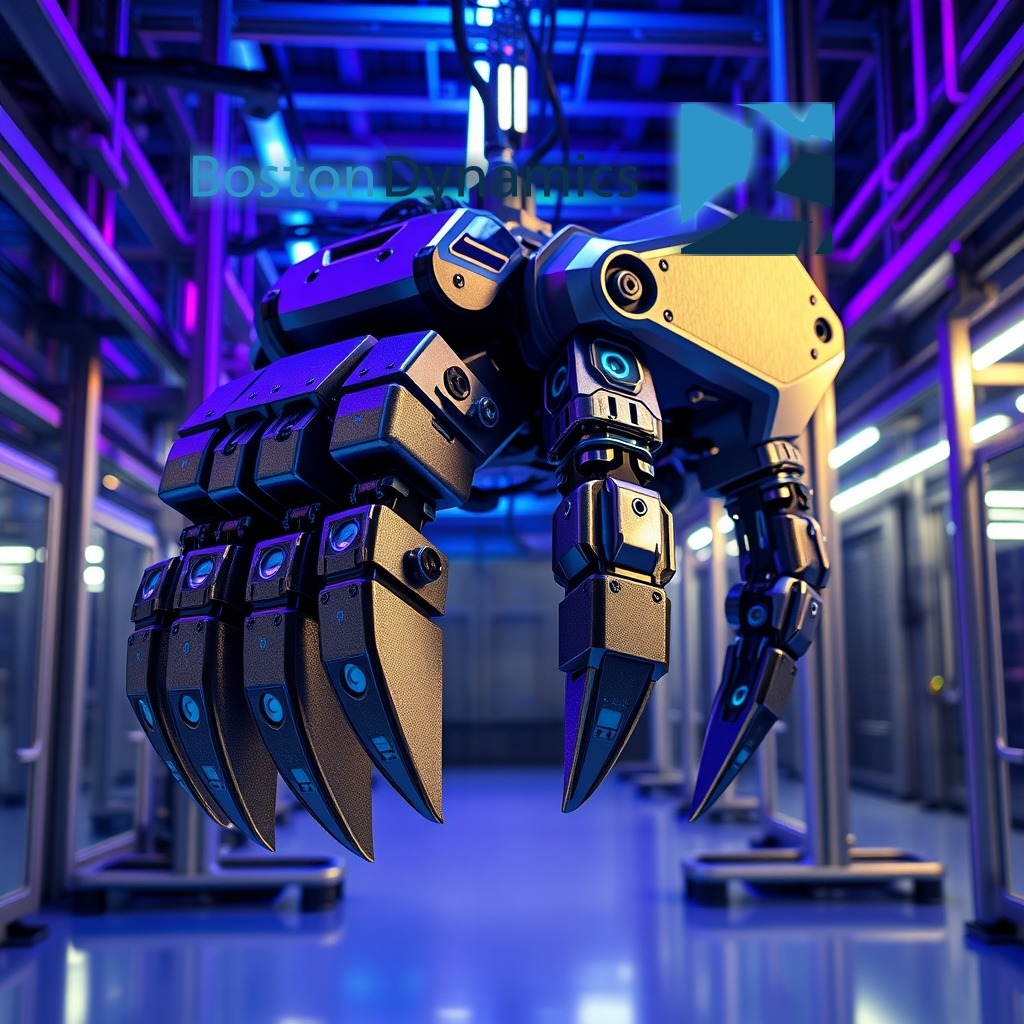 AI-generated
1. Context and Highlights
The humanoid robotics industry is at a philosophical and engineering crossroads. For years, research labs and startups have prioritized the creation of artificial hands that mimic the anatomy, flexibility, and appearance of human hands with startling precision. These stylish appendages, while capable of performing feats of manipulation that border on science fiction in controlled environments, carry an endemic structural vulnerability. Today, Boston Dynamics has marked a turning point by announcing a complete redesign of the hand for its Atlas robot, abandoning the anthropomorphic illusion in favor of a robust, reliable industrial architecture oriented toward mass production.
This move transforms previously overlooked questions into absolute priorities: how can an end effector be built to meet the operational needs of industrial automation while maintaining efficient production costs and long-term durability? While previous three-finger designs enabled specialized operations but were limited to research environments, the new iteration seeks to cross the boundary into the real world. For companies evaluating the adoption of advanced automation, this paradigm shift redefines expectations of what a marketable robot must be.
This technical report analyzes the underlying trade-offs in robotic effector design, contrasts aesthetics with industrial functionality, and examines the economic and strategic implications of manufacturing hardware capable of surviving the harsh conditions of global manufacturing and logistics, moving away from mere laboratory technology demonstrations.
2. Key Technical Aspects
The design of a robotic hand represents one of the most uncompromising trade-offs in modern engineering. As industry experience itself points out, there is no perfect solution: every design decision requires sacrificing something. When attempting to compress the actuators, force sensors, wiring, and transmission mechanisms necessary to replicate the complete functionality of a human hand within an identical form factor, engineers face a physical dead end that results in components that are either extremely fragile, prohibitively expensive, or both simultaneously.
The highly humanoid hands that populate the catalogs of numerous robotics companies today generate fascination. Seeing these machines manipulate objects with sleek grace and fluid movements is an undeniable technical achievement. However, this exceptional performance is usually limited to controlled demonstrations. In the real world, where dust, vibrations, impacts, and continuous 24-hour duty cycles put the hardware to the test, these complex structures fail far too often. The extreme miniaturization of internal components compromises thermal dissipation and mechanical resistance under heavy workloads.
In contrast, the new hand implemented in the Atlas robot adopts a pragmatic approach that prioritizes mechanical simplicity and durability. Although aesthetically it may seem crude or bulky compared to stylized mechanical copies of human anatomy, its architecture is conceived to withstand the demands of mass production in dozens or hundreds of units. By dispensing with the obligation to imitate biological form, the engineers at Boston Dynamics have optimized stress distribution, simplified kinematic chains, and reduced potential points of mechanical failure.
This technical shift implies a conceptual separation between form and function in mobile robotics. For decades, imitating human morphology was considered an indispensable requirement to operate in environments designed by and for people. However, accumulated experience shows that end effectors do not need to have five separate fingers or a flexible palm to execute gripping, transport, or assembly tasks with industrial efficiency. In fact, alternative designs can surpass human dexterity in specific domains of load capacity and wear resistance.
The transition from research prototypes to scalable products requires rethinking the manufacturing processes of the robotic parts themselves. A complex hand with hundreds of moving parts machined to microscopic tolerances is incompatible with high-volume assembly lines. The new Atlas design points toward components that are easier to integrate, calibrate, and replace, drastically reducing operational maintenance costs during the robot's lifecycle in industrial facilities.
Likewise, the integration of force and tactile control benefits from a less cluttered structure. With fewer redundant joints and greater torsional rigidity, robotic behavior control algorithms can more accurately interpret sensor feedback without the noise induced by the bending of excessively delicate structures. This translates into more predictable and safer manipulation when interacting with heavy or irregularly shaped objects.
Ultimately, the engineering of this new hand demonstrates that the maturity of a technology is measured by its ability to solve practical problems of reliability and cost, rather than by its skill at generating visual awe. While hyper-realistic designs will continue to have a space in advanced research and the exploration of conceptual limits, massive industrial application demands unquestionable physical robustness.
| Feature | Traditional Anthropomorphic Hands | New Atlas Industrial Design |
|---|---|---|
| Main focus | Anatomical and aesthetic imitation | Reliability, robustness, and manufacturability |
| Mechanical complexity | Very high (multiple joints and actuators) | Optimized to reduce points of failure |
| Production scalability | Low (fragile and expensive components) | High (oriented toward mass production) |
| Optimal operating environment | Laboratories, research, and demonstrations | Real industrial environments and production lines |
| Wear resistance | Limited by structural fragility | High tolerance to continuous duty cycles |
3. Industry Impact and Market Consequences
The decision to prioritize industrial viability over human mimetization in a component as critical as the Atlas robot's hand sends an unmistakable signal to the entire humanoid robotics ecosystem. Over recent years, the market has been dominated by an aesthetic arms race, where numerous startups competed to showcase robots capable of performing delicate actions with almost organically appearing hands. This promotional approach has generated elevated expectations, but it has also masked the unsustainable difficulties associated with the durability of such systems.
For companies planning to integrate humanoid automation into their supply chains, warehouses, or assembly plants, the absolute priority is not the robot's visual elegance, but return on investment and operational continuity. A robot that stops frequently due to failures in its delicate end-effectors represents an unacceptable financial liability. By offering a hand specifically designed to be robust and cost-effective at scale, critical barriers to mass commercial adoption are removed.
This strategic shift also impacts the supply chain for specialized robotic components. The manufacturing of actuators, reducers, and sensors adapted to non-human yet highly efficient shapes opens new opportunities for traditional industrial suppliers. Instead of relying on hyper-customized and artisanal mechanisms, the industry can move toward standardized components that reduce the overall unit cost of humanoid robots.
Likewise, robotic behavior control software companies will need to adapt to this transition. Algorithms trained to handle highly complex and redundant hand geometries will have to be redirected toward more direct effectors, optimizing trajectory planning and grip force for simplified yet extremely powerful mechanical configurations.
4. Market Perspectives
Industry analyst consensus indicates that humanoid robotics has moved past its purely speculative phase and entered the realm of economic validation. Experts point out that robotic hardware design has always been an exercise of relentless balancing between idealized performance and the physical limitations of manufacturing. Attempting to replicate the biological perfection of the human hand using miniature motors and cables has proven to be an economic dead end for mass production.
From a strategic perspective, the evolution observed in Atlas's design suggests that the physical form of robots in industrial environments will tend to diverge from human anatomy whenever function requires it. Just as autonomous vehicles do not mimic animal walking, quadrupedal or bipedal robots destined for heavy work adopt morphologies optimized for energy efficiency and structural stability. Hands are no exception to this rule of functional design.
Organizations evaluating the integration of humanoid robots into their operations are advised to adopt a selection criterion based on operational reliability metrics (such as mean time between failures) rather than being swayed by dexterity demonstrations in controlled environments. A vendor's maturity is demonstrated by their ability to ensure hardware can operate for thousands of hours without unexpected maintenance interventions.
5. Future Outlook
In the short term, the market is witnessing a polarization in the humanoid robotics sector. On one hand, companies focused on academic research and conceptual demonstrations continue to invest in hyper-mimetic hands to explore the limits of fine dexterity. On the other hand, manufacturers targeting the mass industrial market follow the path of simplification and structural robustness, prioritizing durability over anatomical resemblance.
Looking toward the medium term, commercial deployments of humanoid robots in warehouses and manufacturing plants are expected to lean overwhelmingly toward pragmatic and modular end-effector designs. The ability to rapidly swap tools or specialized hands depending on the required task will outweigh the need for a fragile universal hand.
In the long term, the convergence between artificial intelligence and physical robotics will enable advanced operating systems to compensate for any morphological limitations through adaptive manipulation strategies. Software will learn to use unconventional tools and contact surfaces with an efficacy that will render the need to faithfully replicate human anatomy entirely obsolete.
6. Conclusion and Evaluation of the Atlas Robot and Its New Design
The redesign of the Atlas robot's hand represents a fundamental milestone that transcends mere mechanical component updates, marking the definitive maturation of humanoid robotics toward the rigorous standards of mass industrial production. By abandoning the dead end of fragile anatomical imitation, Boston Dynamics establishes a technical precedent regarding the primacy of reliability, durability, and cost efficiency over mere anthropomorphic aesthetics in high-operational-demand environments.
This evolution consolidates the transition from the laboratory to the real assembly line, demonstrating that the future of advanced automation lies in functional, results-oriented architecture rather than biological mimicry. With this strategic move, the Atlas robot redefines the parameters of commercial adoption for the sector, forcing the entire industry to re-evaluate its design priorities in favor of physical robustness and long-term profitability.