Español
 English
 Français
 Português
 Deutsch
 Italiano
Hardware Sovereignty vs. the Cloud: The Coway Purifier Case and User Autonomy
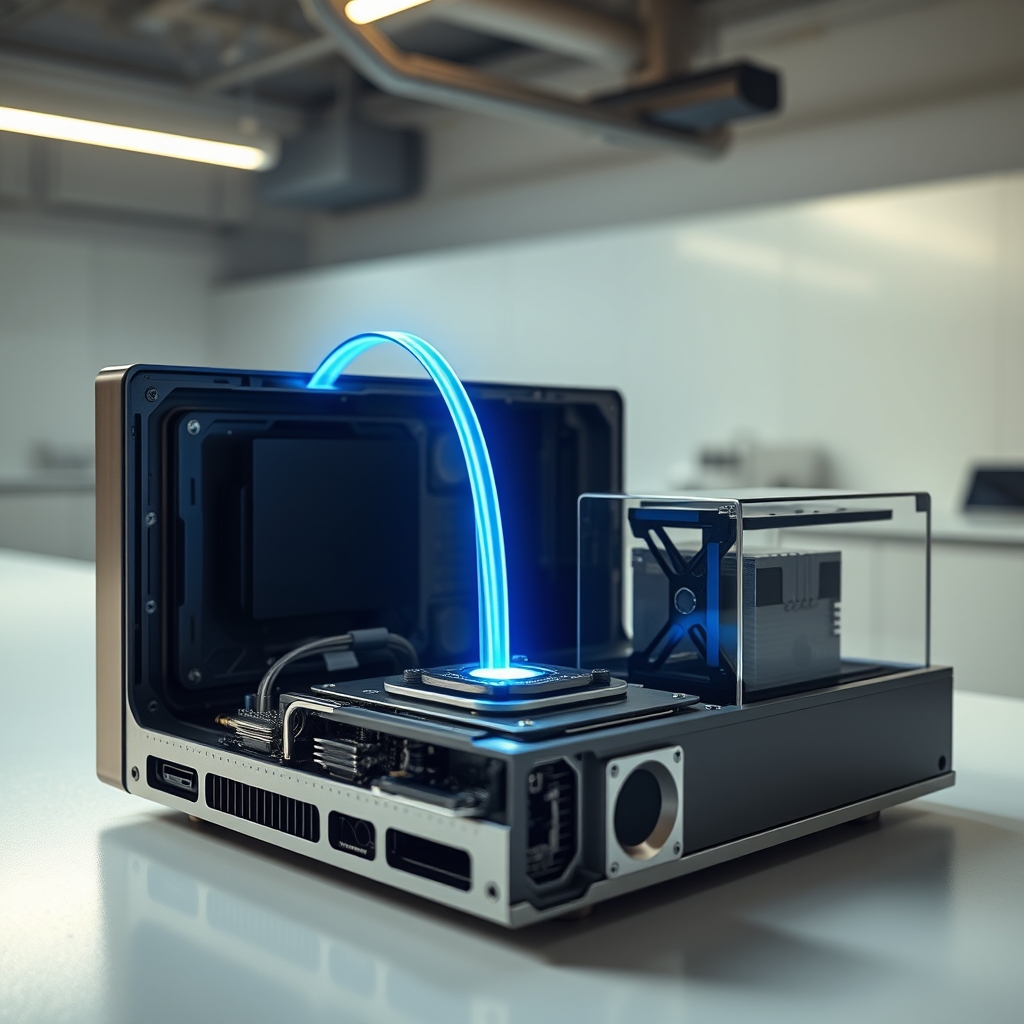 AI-generated
1. Context and key points
The recent technical intervention on a Coway air purifier, through which a developer managed to disconnect the device from the manufacturer's central servers, sets a critical precedent at the intersection of the Internet of Things (IoT) and digital sovereignty. By eliminating reliance on the cloud, the user has regained full control over the local operation of their hardware, preventing the equipment's functionality from depending on the availability of external services or the manufacturer's willingness to maintain long-term support.
This event transcends the realm of technical curiosity to sit at the center of the debate on the right to repair and the ownership of connected devices. For consumers, this intervention represents a victory against the "mandatory cloud" architecture that characterizes most modern household appliances. For the industry, it serves as a warning about the growing sophistication of users who, faced with the imposition of business models based on subscriptions or constant telemetry, opt for the forced decoupling from closed ecosystems.
2. Technical highlights
The process of disconnecting the Coway purifier was not a simple configuration change, but an intervention at the firmware and communication protocol level. Modern IoT devices, such as high-end air purifiers, operate under a client-server architecture where the hardware acts as a peripheral node that sends constant telemetry to the manufacturer's cloud. This architecture allows for remote management, but introduces a single point of failure: if the server goes down or the manufacturer decides to withdraw support, the device loses much of its operational intelligence.
The developer identified that the purifier used a communication protocol based on MQTT (Message Queuing Telemetry Transport) to synchronize its status with the cloud. By intercepting network traffic, it was possible to map control commands and status responses. The technical challenge lay in authentication: the device expected a cryptographic handshake with the remote server to validate its identity and allow full control of its functions, including fan speed and filtering cycles. Through reverse engineering techniques on the firmware extracted from the control chip, it was possible to identify the encryption keys and certificates necessary to emulate a local server. By redirecting the device's DNS traffic to a local instance, a home server running a lightweight container, the purifier could be tricked into believing it was still connected to the official infrastructure. This emulation allows the device to function autonomously, eliminating cloud latency and ensuring that the equipment remains operational even if the manufacturer ceases operations. This level of intervention requires a deep understanding of the network stack and memory management in embedded systems. Unlike large-scale language models, where optimization focuses on weight efficiency and reducing inference latency, here the goal is functional persistence. The cost of this operation, measured in hours of reverse engineering, is high, but the value obtained is total hardware independence.
3. Impact on the sector
The smart home industry is at a crossroads. For years, the business model has favored data centralization to feed machine learning algorithms that supposedly improve the user experience. However, the Coway case demonstrates that there is a latent demand for devices that work offline. Companies that insist on forcing their users to go through the cloud to turn on a fan are creating a technical and trust debt that consumers are starting to settle on their own.
For manufacturers, this incident should serve as a lesson on the fragility of closed ecosystems. The trend toward the mandatory cloud not only increases operational server maintenance costs, but also exposes the company to legal and reputational risks when services fail. The alternative, which some industry players are already exploring, is the adoption of local interoperability standards that allow device management without the need for a constant internet connection.
| Feature | Traditional model (cloud) | Autonomous model (local) |
|---|---|---|
| Internet dependency | Critical | None |
| Data privacy | Low (external telemetry) | High (local control) |
| Product longevity | Limited by support | Indefinite |
| Control latency | Variable (depends on network) | Minimal (local network) |
4. Market perspectives
The consensus among cybersecurity analysts is that these types of interventions should not be seen as acts of vandalism, but as a natural response to the erosion of private property in the digital age. When a user buys an air purifier, they expect the device to belong to them. The imposition of a software layer that can be remotely deactivated by the manufacturer is increasingly seen as a violation of the implicit purchase contract.
From a strategic perspective, companies must consider opening their APIs to allow for local integration. Resistance to this openness only encourages the creation of developer communities that, as in the Coway case, end up breaking the manufacturer's protections. It is preferable to offer a documented local control interface than to force users to reverse engineer the firmware, which introduces uncontrolled security risks. The recommendation for Chief Technology Officers (CTOs) is clear: product architecture must be designed with resilience as a priority. If a device loses its basic functionality when disconnected from the cloud, the design is inherently flawed. The trend toward edge computing should be the standard, allowing the device's intelligence to reside in the hardware and not in a remote data center.
5. Next steps
In the next 24 months, we are likely to see an increase in demand for cloud-agnostic devices. Regulatory pressure, especially in the European Union, will begin to require that smart devices maintain their basic functionality even without an internet connection. This will force manufacturers to redesign their software architectures to separate local control functions from value-added cloud services.
Likewise, we will see a proliferation of open-source tools designed to facilitate the liberation of IoT devices. Just as there are platforms today to manage local home automation, specific tools will emerge for purifiers, thermostats, and lighting systems that will allow users to migrate their devices from proprietary clouds to private home servers with a single click. The evolution of AI models, from large centralized systems to language models that can run locally on consumer hardware, will accelerate this trend. The ability to process data locally without sending information to the cloud will be the differentiating factor that will define market leaders in the next decade.
6. Conclusion and assessment
The Coway purifier case is a reminder that technology should serve the user, not the other way around. Forced disconnection from the cloud is not an act of rebellion, but a recovery of autonomy. For companies, the imperative is clear: transparency and local interoperability are not optional, but fundamental requirements for survival in a market where the consumer is increasingly aware of their digital sovereignty.
Industry leaders must abandon the walled garden strategy and adopt open standards. Those who resist this change will find themselves with a user base that, armed with reverse engineering tools and growing technical capability, will end up dismantling their restrictions. True innovation does not lie in the ability to control a device from the cloud, but in the ability to offer a product that is useful, private, and durable, regardless of the internet connection.