Español
 English
 Français
 Português
 Deutsch
 Italiano
Perplexity Computer integrates Multiagent: Orchestrating 16 agents for cross-knowledge validation
 AI-generated
1. Context and Key Points
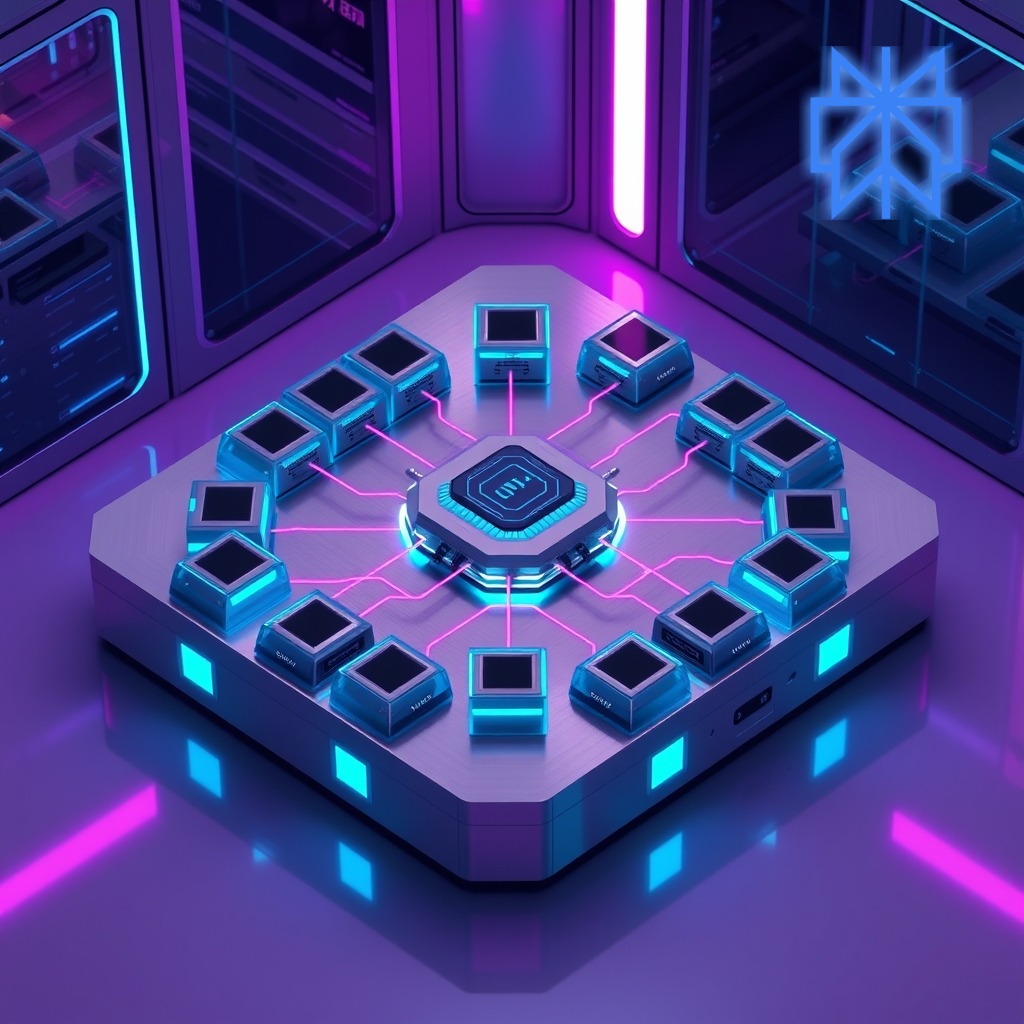
The recent update to Perplexity Computer marks a turning point in the architecture of autonomous agents. By introducing Multiagent functionality, the platform transcends the "single model" paradigm to adopt a distributed orchestration approach. In this new scheme, a central supervisor agent manages a swarm of up to 16 independent agents, which operate on a heterogeneous infrastructure integrating Claude, GPT, and Gemini.
This move addresses a critical need in the sector: reducing the error rate in complex research tasks. By allowing multiple models to analyze, critique, and validate the findings of their peers, Perplexity seeks not only to improve factual accuracy but also to establish an internal audit system that operates transparently for the end user. This development is particularly relevant for analysts, researchers, and professionals who require reliability superior to that offered by simple inference systems.
2. Notable Technical Aspects
Perplexity's Multiagent architecture should not be confused with a simple concatenation of API calls. It is a hierarchical orchestration system that implements a distributed consensus protocol. The lead agent acts as a task planner, decomposing a complex query into atomic sub-tasks that are distributed among the 16 subordinate agents. These agents, which operate on cutting-edge models such as Claude Mythos 5.5, Claude Sonnet 5.5, GPT-6.2 Astra, and Gemini 4 Carbon, execute their reasoning processes in parallel.
The core of the innovation lies in the "cross-verification" layer. Once the subordinate agents generate their initial responses, the system activates a critique phase where each agent is instructed to identify inconsistencies, biases, or lack of evidence in the results of its peers. This "internal debate" process is managed through a shared memory architecture that allows agents to access the sources cited by others, ensuring that the final convergence toward a single answer is grounded in a knowledge base validated by multiple inference sources.
From a systems engineering perspective, this deployment imposes significant challenges in terms of latency and resource management. The simultaneous execution of up to 16 instances of large models requires a computing infrastructure with massive High Bandwidth Memory (HBM) and efficient KV-cache management to avoid bottlenecks. The orchestration of models like Claude Mythos 5.5, known for their logical reasoning capabilities, along with the speed of Gemini 4 Carbon, suggests that Perplexity is using an intelligent routing system that assigns task complexity to the most suitable model for each sub-process. The integration of Claude into this ecosystem is fundamental. Claude's architecture, particularly in its Claude Mythos 5.5 and Sonnet 5.5 versions, has demonstrated superior capability in following complex instructions and maintaining coherence in long contexts. By using Claude as one of the pillars of this swarm, Perplexity leverages the robustness of its context window to perform comparisons of extensive documents that would otherwise be unmanageable for models with more limited architectures. It is imperative to note that this system does not rely on a real-time internet connection for training, but rather uses Perplexity's indexed search capability to feed the agents' context. The difference between this approach and static pre-training systems is radical: here, "intelligence" does not reside in the model's weights, but in the interaction dynamics between agents during inference.
3. Industry Impact
Perplexity's adoption of multi-agent systems alters the competitive dynamics of the AI-assisted search market. To date, competition has focused on a single model's ability to respond with greater accuracy or lower latency. With the introduction of Multiagent, the differential value shifts toward orchestration capability and the reliability of the verification process.
For businesses, this means that reliance on a single model provider becomes less risky. By integrating Claude, GPT, and Gemini into the same workflow, Perplexity offers a form of "quality insurance" against the biases inherent in any specific neural network architecture. If one model tends to hallucinate in a particular technical domain, the other 15 agents act as a safety filter, drastically reducing the probability of erroneous information reaching the user.
This change also has direct implications for operational costs. Executing 16 agents for a single query is, by definition, more expensive than simple inference. However, for sectors such as legal, financial, or scientific research, the additional cost is justified by the reduction in time spent on manual data verification. We are witnessing the birth of a market where "verified accuracy" becomes a premium product. The industry must observe how model providers react to this trend. If multi-agent orchestration becomes the standard, loyalty to a single ecosystem (such as OpenAI's or Google's) could weaken in favor of platforms that act as "intelligence aggregators," capable of combining the best of each architecture to solve specific problems.
4. Market Perspectives
Technical consensus suggests that the era of monolithic models is giving way to the era of modular systems. Industry analysts agree that a system's ability to "self-criticize" is the necessary step to achieve reliability levels close to 99.9% in reasoning tasks. Perplexity's implementation is, in essence, a practical application of game theory principles applied to AI: by incentivizing agents to find errors in others, the risk of systemic failure is minimized.
CTOs and engineering directors are advised to evaluate the integration of multi-agent workflows in their own internal processes. The lesson from Perplexity is clear: do not attempt to build a model that does everything perfectly; build a system that knows how to delegate and verify. The winning strategy in 2026 is not the search for the largest model, but the most resilient architecture.
A point of attention is latency management. Although response quality improves, wait times increase proportionally to the number of agents involved. Companies must decide whether their use case prioritizes speed (simple inference) or accuracy (multi-agent orchestration). The strategic recommendation is to implement a dynamic routing system that only activates Multiagent mode when the complexity of the query exceeds a predefined threshold.
5. Next Steps
The logical next step for Perplexity is the specialization of agents. Instead of using 16 generic agents, it is likely that we will see the introduction of agents with defined roles: a "researcher" agent for search, an "analyst" agent for synthesis, a "lawyer" agent for source verification, and an "editor" agent for final coherence. This specialization will allow for optimized resource usage, assigning lighter models to simple tasks and high-capacity models like Claude Mythos 5.5 to critical reasoning tasks.
In the short term, we expect to see a reduction in inference costs as model distillation techniques allow subordinate agents to be more efficient without losing reasoning capability. The integration of open-weight models, such as Llama 4, into these agent swarms is also a latent possibility, which would allow companies to execute parts of the verification process on their own infrastructure, guaranteeing data privacy.
By the end of 2027, agent orchestration will be a standard feature in all enterprise-level AI platforms. Competition will not be about who has the most powerful model, but about who has the best "orchestrator" capable of managing the diversity of models available in the market.
6. Conclusion and Assessment
The integration of Multiagent into Perplexity Computer is not a simple product improvement; it is a redefinition of how we interact with artificial intelligence. For technology leaders, the message is unequivocal: the era of blind trust in a single AI response has ended. Cross-validation and the orchestration of multiple models are now the pillars of reliability.
Immediate actions for organizations should focus on auditing their current workflows. If your company relies on AI for critical decision-making, it is imperative to migrate toward architectures that incorporate redundant verification mechanisms. Claude's technology, along with other cutting-edge models, already offers the necessary capability to implement these systems. The competitive advantage will belong to those who adopt multi-agent orchestration before it becomes a commodity.
| Feature | Traditional Model (Single-Agent) | Multiagent Architecture (Perplexity) |
|---|---|---|
| Fact-checking | Dependent on training | Active cross-verification |
| Hallucination rate | Moderate/High | Low (Mitigated by consensus) |
| Model diversity | Single | Heterogeneous (Claude, GPT, Gemini) |
| Task complexity | Limited | High (Hierarchical decomposition) |