Español
 English
 Français
 Português
 Deutsch
 Italiano
Precision Neuroscience Raises $250 Million in Series D Funding, Surpassing $1 Billion Valuation in Brain-Computer Interfaces
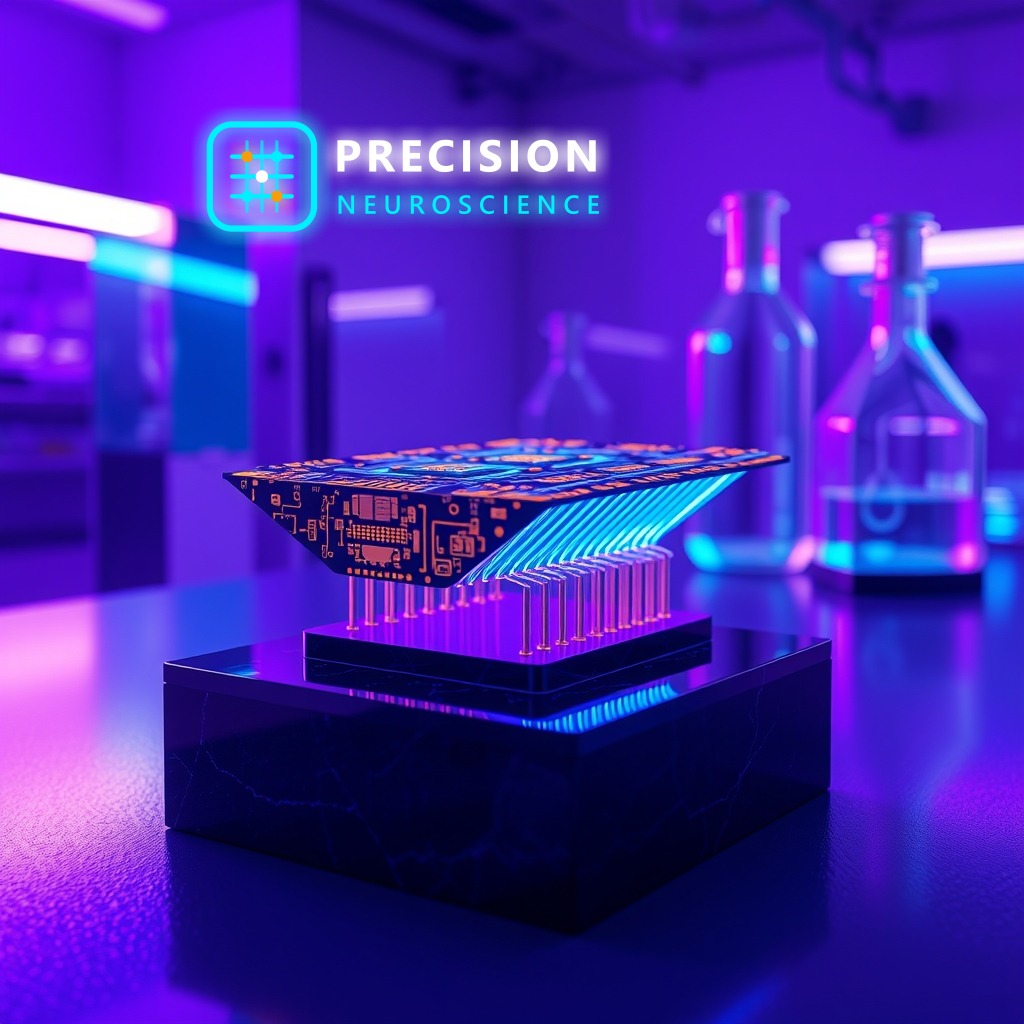 AI-generated
1. Context and Key Points
The brain-computer interface (BCI) sector has experienced a new financial and strategic milestone with the recent funding round of Precision Neuroscience. The New York-based company has secured $250 million in a Series D round that pushes its total valuation past the coveted $1 billion mark, solidifying its status as a unicorn company within advanced medical neurotechnology. With this capital injection, the company's cumulative funding now amounts to $430 million.
This move stands out not only for the volume of mobilized resources, but also for the entry of top-tier macroeconomic and technology investors. Among the financial backers, the figure of investor Bill Ackman stands out, whose participation intertwines traditional institutional capital with the cutting-edge neurotechnology sector. Thus, Precision Neuroscience positions itself alongside sector initiatives backed by figures like Elon Musk and Jeff Bezos, transforming the field of neuroprosthetics into one of the areas of highest competition and private capital attraction on a global scale.
For technology analysts, the transaction underscores a paradigm shift: brain-computer interfaces are transitioning from purely experimental academic research toward a phase of accelerated clinical commercialization and industrialization. This article thoroughly analyzes the technical, economic, and strategic implications of this historic agreement for the future of human-machine interaction.
2. Technical Highlights
The core of Precision Neuroscience's technological proposal lies in its architectural approach to recording and stimulating neuronal activity with minimal surgical invasiveness. Unlike traditional methodologies that require a deep craniotomy and direct penetration into cortical tissue, with the consequent risks of inflammation, scarring, and long-term tissue damage, Precision's design opts for a high-density superficial interface.
The technology is based on an ultra-thin, flexible electrode array, commonly described in the sector by its physical resemblance to a micro-perforated plastic film strip. This array is slipped through a minimally invasive cranial fissure, a surgical procedure that drastically simplifies the intervention compared to deep-needle insertion methods. By resting on the surface of the cerebral cortex (dura mater), the array is capable of capturing high-fidelity electrical signals from thousands of individual neurons without piercing the pia mater.
From a systems engineering perspective, this design poses colossal challenges in terms of thermal management, material durability, and real-time signal processing. The array must maintain its structural integrity and biocompatibility for years in a highly corrosive electrochemical environment such as cerebrospinal fluid. Likewise, the density of data acquisition channels generates massive flows of information that demand advanced compression and decoding algorithms on board or in associated peripheral devices.
The integration of these systems with advanced computing architectures is fundamental. Although the BCI acts as acquisition hardware, the translation of neural patterns into practical commands for motor prosthetics, communication systems, or software interfaces relies on complex computational models. Local processing capability and low latency are critical variables to ensure that the patient experiences a fluid, almost natural response when interacting with the digital or physical environment.
The efficient use of the capital raised in this Series D will go largely toward optimizing these high-density hardware components and refining neural decoding algorithms. The miniaturization of application-specific integrated circuits (ASICs) responsible for amplifying and digitizing signals directly at the implant represents the next major engineering challenge the company must solve to scale its clinical production.
3. Sector Impact
The valuation exceeding one billion dollars achieved by Precision Neuroscience marks a turning point in the neurotechnology economy. The brain-computer interface market is no longer an academic niche funded predominantly by government grants from agencies like DARPA, but has instead become a playground dominated by elite venture capital and heavy-hitting institutional investor backing.
Bill Ackman's entry into this ecosystem, combined with the historical presence of capital linked to tech leaders such as Elon Musk (Neuralink) and Jeff Bezos (an investor in other biotech and longevity initiatives), generates a market dynamic characterized by high rivalry and a race for clinical supremacy. This concentration of capital allows these companies to assume massive financial risks associated with human clinical trials, a process that is inherently costly and subject to strict regulatory compliance by agencies like the Food and Drug Administration (FDA).
| Company | Technological Approach | Level of Surgical Invasiveness | Commercial / Clinical Status |
|---|---|---|---|
| Precision Neuroscience | High-density surface array (flexible film type) | Minimally invasive (shallow cranial slit) | Advanced clinical trials / R&D expansion |
| Neuralink | Ultrafine threads inserted directly into the cortical parenchyma | Invasive (robot-assisted craniotomy) | Early human trials / Interface optimization |
| Traditional Competitors (e.g., Blackrock Microsystems) | Utah-style silicon arrays (rigid pins) | High (deep cortical penetration) | Established use in neuroscientific and clinical research |
At the B2B and corporate market level, the development of BCIs raises fascinating questions about the future of human-computer interaction (HCI). Although the initial medical focus is clearly oriented toward the rehabilitation of patients with severe paralysis, ALS, spinal cord injuries, or degenerative neurological disorders, the long-term horizon envisions the adoption of neural reading technologies in industrial and mass consumer applications.
Consumer technology companies are watching these movements with cautious attention. The possibility of controlling devices through direct intent opens up a gigantic potential market that could progressively displace traditional peripherals such as touchscreens, keyboards, and mice. However, the cost and complexity of a surgical procedure, no matter how minimally invasive, will limit its mass commercial adoption in the short term, restricting the primary market strictly to the medical and therapeutic field.
4. Market Perspectives
Biotech industry analysts agree that Precision Neuroscience's strategy of opting for lower invasiveness represents a significant commercial competitive advantage when navigating rigorous regulatory approval filters. Reducing surgical risk facilitates acceptance by medical ethics committees, patients, and healthcare professionals alike.
However, experts warn that lower invasiveness entails a technical trade-off: recording electrical activity from the surface of the dura mater implies lower spatial resolution and signal attenuation compared to electrodes that penetrate directly into neuronal tissue. The company's commercial and clinical success will ultimately depend on the ability of its signal processing algorithms to compensate for this loss of spatial fidelity through advanced filtering and computational decoding techniques.
From the perspective of strategic risk management, diversifying funding through the entry of pure financial profile investors like Bill Ackman demonstrates that the sector has matured enough to attract capital seeking economic returns based on market fundamentals, rather than merely speculative early-stage tech venture capital bets.
Strategic recommendations for corporate players evaluating this ecosystem include:
- Continuous regulatory monitoring: Closely track the regulatory frameworks that the FDA and European agencies are specifically developing for the evaluation of implantable medical devices with software components based on adaptive algorithms.
- Bioinformatics alliances: Establish collaborations with companies specialized in neural signal processing and machine learning to enhance precision in data translation.
- Intellectual property management: Rigorously protect patents related to the material science of flexible electrodes and non-disruptive implantation methods.
5. Next Steps
The timeline for Precision Neuroscience and the BCI industry as a whole is marked by very specific clinical and regulatory milestones over the coming years.
In the short term (a 12 to 18-month horizon), the company's primary focus will be on expanding its human clinical trials, using Series D funding to increase the number of recruited patients and validate the durability and efficacy of its surface arrays in real hospital environments. This period will be crucial to demonstrate the mid-term stability of the interface without significant signal degradation.
In the medium term (2 to 4 years), initial regulatory approvals are expected to commercialize the devices under compassionate use pathways or restricted commercialization authorizations for severe medical indications, such as restoring speech in anarthric patients or controlling orthopedic limbs and exoskeletons.
In the long term (more than 5 years), the evolution of the technology could point toward the extreme miniaturization of wireless power and data transmission components, completely eliminating any temporary percutaneous wiring and opening the door to fully implantable, long-lasting systems with external wireless recharging capabilities.
6. Conclusion and Evaluation
Precision Neuroscience's $250 million Series D funding round definitively solidifies the company's leadership in the development of minimally invasive brain-computer interfaces. By surpassing the billion-dollar valuation, the firm not only validates its high-density surface array proposal over deep cortical approaches, but also transforms the clinical landscape of neuroprosthetics.
For the neurotechnology industry, the success of this round demonstrates that the convergence of flexible device engineering and advanced computational processing is the viable path to commercialize transformative therapies for patients with severe paralysis and neurological disorders. Precision Neuroscience thus positions itself as an indispensable player in the global race to provide new human-machine interaction capabilities to the medicine of the future.