Español
 English
 Français
 Português
 Deutsch
 Italiano
Rockwell Automation Acquires Mobile Robot Manufacturer AGILOX: Massive Consolidation in Smart Intralogistics
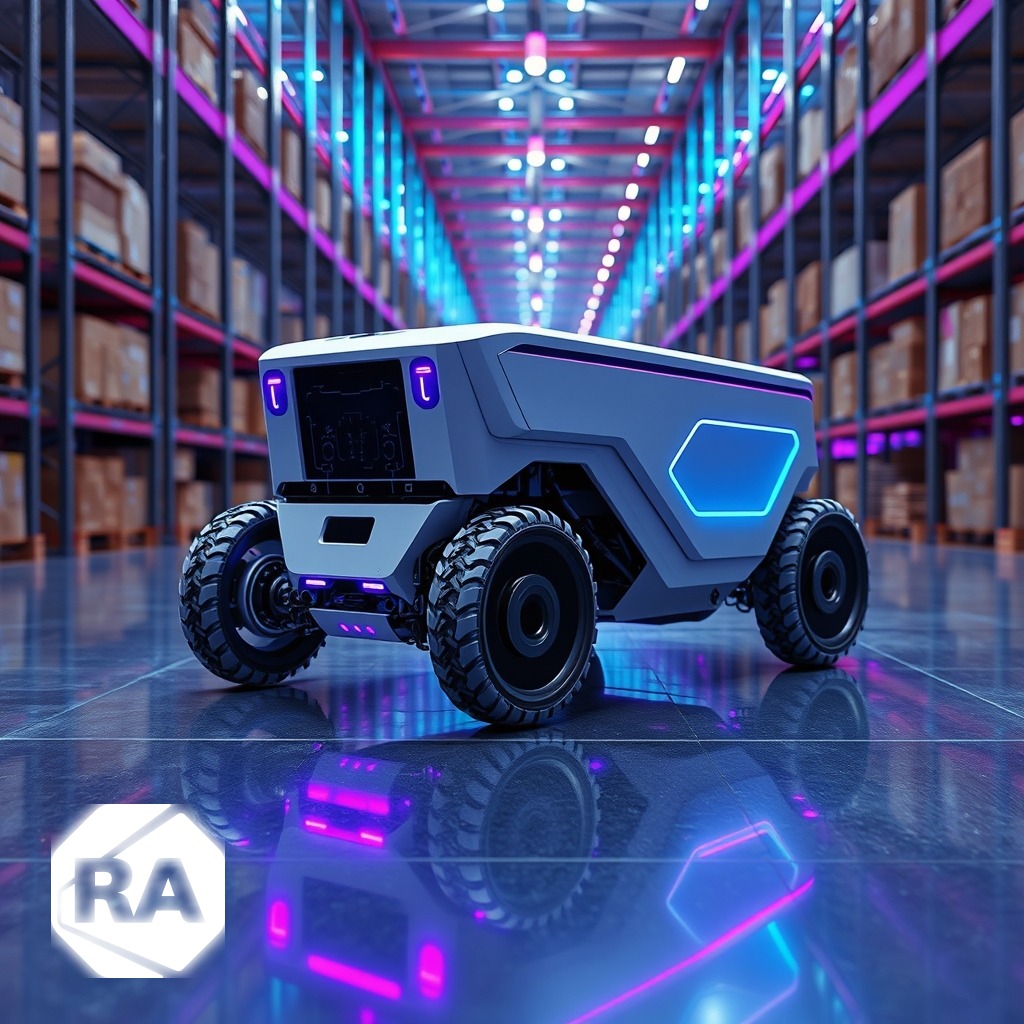 AI-generated
1. Context and Key Takeaways
Rockwell Automation has entered into a definitive agreement to acquire AGILOX, a pioneer in autonomous guided vehicle (AGV) and autonomous mobile robot (AMR) development based in Austria. This transaction represents a key strategic move to consolidate the U.S. multinational's presence in the flexible industrial automation sector, a market undergoing accelerated reconfiguration toward decentralized manufacturing and hyper-adaptive supply chains.
The integration of AGILOX adds to the previous acquisition of OTTO Motors completed in 2023, creating a mobile robotics portfolio with complementary technical capabilities capable of covering everything from heavy material transport in automotive environments to highly dense swarm navigation for next-generation intralogistics. With this step, Rockwell Automation not only expands its hardware catalog, but also deepens the convergence of its control software with advanced infrastructureless navigation algorithms. For operations directors, plant engineers, and industrial sector analysts, this acquisition marks a turning point. The blurring of technological boundaries between programmable logic controller (PLC) systems, manufacturing execution systems (MES), and mobile robot fleets is accelerating, forcing systems integrators to rethink entire automation architectures under a single unified platform.
2. Technical Highlights
AGILOX has distinguished itself in the mobile robotics market through its decentralized swarm architecture and its omnidirectional fork technology, features that differentiate its engineering from traditional approaches based on centralized fleets. Unlike conventional AMRs that rely on a central server to calculate routes and manage traffic conflicts, AGILOX's firmware implements a distributed consensus protocol inspired by biological behavior. Each unit in the swarm evaluates the operational status of its neighbors in real time across robust industrial wireless networks, autonomously recalculating trajectories without a central server outage compromising the operation.
The incorporation of this technology into the Rockwell Automation ecosystem presents notable technical synergies with the Emulate3D software platform and Logix control systems. To date, the OTTO Motors acquisition had provided Rockwell with robustness in heavy-duty industrial-grade transport featuring differential kinematics and high-capacity tricycles. However, AGILOX's architecture introduces a distinct competitive advantage in tight spaces thanks to its omnidirectional motion capabilities powered by a kinematic design of four independently motorized caster wheels, enabling pure lateral movements in narrow aisles without requiring turning maneuvers. From an edge computing perspective, AGILOX vehicles integrate high-precision safety LiDAR sensors and low-power graphics processing units to execute natural contour-based simultaneous localization and mapping (SLAM) algorithms. This completely eliminates the need to install magnetic reflectors, physical tape, or infrastructure beacons at customer facilities, drastically reducing commissioning time and costs compared to previous-generation technologies. The convergence of these platforms demands significant engineering effort to unify software stacks. Rockwell Automation will need to integrate AGILOX's proprietary communication protocols with open industry standards like VDA 5050, the European standard for autonomous guided vehicle fleet interoperability. The ability to manage heterogeneous fleets from a single control dashboard is the Holy Grail of modern intralogistics, and the success of this integration will determine how quickly end customers can scale their automated operations.
3. Industry Impact
The global autonomous mobile robot market is undergoing a consolidation phase where discrete component and traditional control players are forced to transform into turnkey solution providers. Rockwell Automation's purchase of AGILOX directly responds to competitive pressure exerted by tech giants and other automation conglomerates seeking to dominate the entire smart factory infrastructure.
Industrial market analysts note that the acquisition further fragments the ecosystem of independent AMR manufacturers, forcing mid-sized competitors to seek strategic alliances or mergers to avoid losing market share to large consolidated blocks. The ability to offer a comprehensive automation solution ranging from drives and variable frequency drives (VFDs) to mobile robots and warehouse management software (WMS) gives Rockwell a privileged negotiating position with major consumer goods, electronics, and automotive manufacturers.
| Technical feature | OTTO Motors Platform | AGILOX Platform |
|---|---|---|
| Main payload capacity | Heavy (up to 1,500 kg and tuggers) | Medium (up to 1,000 kg, optimized for Euro-pallets and specialty pallets) |
| Motion kinematics | Differential drive / Tricycle | Four independent wheels omnidirectional |
| Fleet management | Centralized server (OTTO Fleet Manager) | Autonomous decentralized P2P swarm |
| Infrastructure requirements | Natural mapping and optional beacons | Contour-based natural mapping (no beacons) |
| Ideal application scope | Assembly lines and heavy pallet handling | Narrow aisles, lean manufacturing, and congested spaces |
For industrial small and medium-sized enterprises (SMEs), this consolidation is a double-edged sword. On one hand, the technological maturity stemming from these corporate investments reduces the perceived risk of adopting mobile robotics and lowers long-term integration costs through standardization. On the other hand, there is a latent risk of becoming locked into proprietary closed ecosystems where interoperability with third-party hardware becomes complex or economically restrictive.
4. Market Outlook
Industrial strategy experts agree that Rockwell Automation's strategy reflects a clear thesis: mobility is the missing link to close the loop on total shop floor visibility. With the joint acquisition of OTTO Motors and AGILOX, the Austrian company and the U.S. parent firm form a block capable of addressing any material handling scenario, from goods receiving to the shipping dock.
However, integrating disparate corporate cultures and software architectures represents the greatest operational challenge for Rockwell's management. AGILOX maintains highly specialized engineering centers in Europe, whereas OTTO Motors operated predominantly under North America's rapid-innovation culture. Harmonizing software development cycles, unifying user interfaces, and maintaining the innovation agility of acquired startups within a multinational corporate structure will require rigorous execution. From a profitability standpoint, total cost of ownership (TCO) remains the core argument for CFOs approving these automation projects. Infrastructureless navigation and decentralized swarm technologies reduce operational expenses associated with maintaining physical guides and minimize downtime caused by fleet management server failures. Financial analysts advise industrial buyers to carefully evaluate the compatibility of new equipment with their existing OT networks before committing multi-year capital budgets.
5. Next Steps
The technological roadmap for the coming years in the industrial mobile robotics segment is moving toward advanced cognitive autonomy and deep integration with edge artificial intelligence models for bottleneck prediction. As Rockwell Automation consolidates the integration of AGILOX and OTTO Motors, a unified software platform is expected to emerge by the end of this decade.
- Immediate integration phase (2026-2027): Commercial unification of product portfolios, standardization of critical safety components, and initial harmonization of communication protocols under open standards like VDA 5050.
- Architectural convergence phase (2027-2028): Launch of hybrid fleet controllers capable of simultaneously managing heavy differential robots from OTTO and omnidirectional swarms from AGILOX from a common Rockwell interface.
- Cognitive autonomy phase (2028 onward): Incorporation of reinforcement learning-based route planning capabilities and dynamic fleet optimization via real-time digital twins powered by the Emulate3D platform.
6. Conclusion and Assessment
Rockwell Automation's acquisition of AGILOX confirms that mobile robotics is no longer a peripheral element on shop floors, but rather the fundamental circulatory system of the smart factory. By securing both heavy payload capabilities and omnidirectional swarm solutions, Rockwell positions itself as an essential end-to-end benchmark supplier in the advanced automation sector.
For engineering leaders and industrial technology executives, the strategic imperative is clear: evaluate internal logistics operations under a hardware-agnostic approach while preparing for native integration. The market trend toward consolidated ecosystems means that today's choice of automation vendor will determine operational flexibility and supply chain resilience for the next decade. Auditing current network infrastructures and requiring vendors to support open interoperability standards is essential to avoid technological lock-in as mobile automation reaches full maturity.