
 Español
 English
 Français
 Português
 Deutsch
 Italiano
Technical Guide XX, November 2026: Hardware Architecture: PCIe 5.0 Sub-systems, CAMM2 Modules, and Memory Bandwidth for Large Context Models
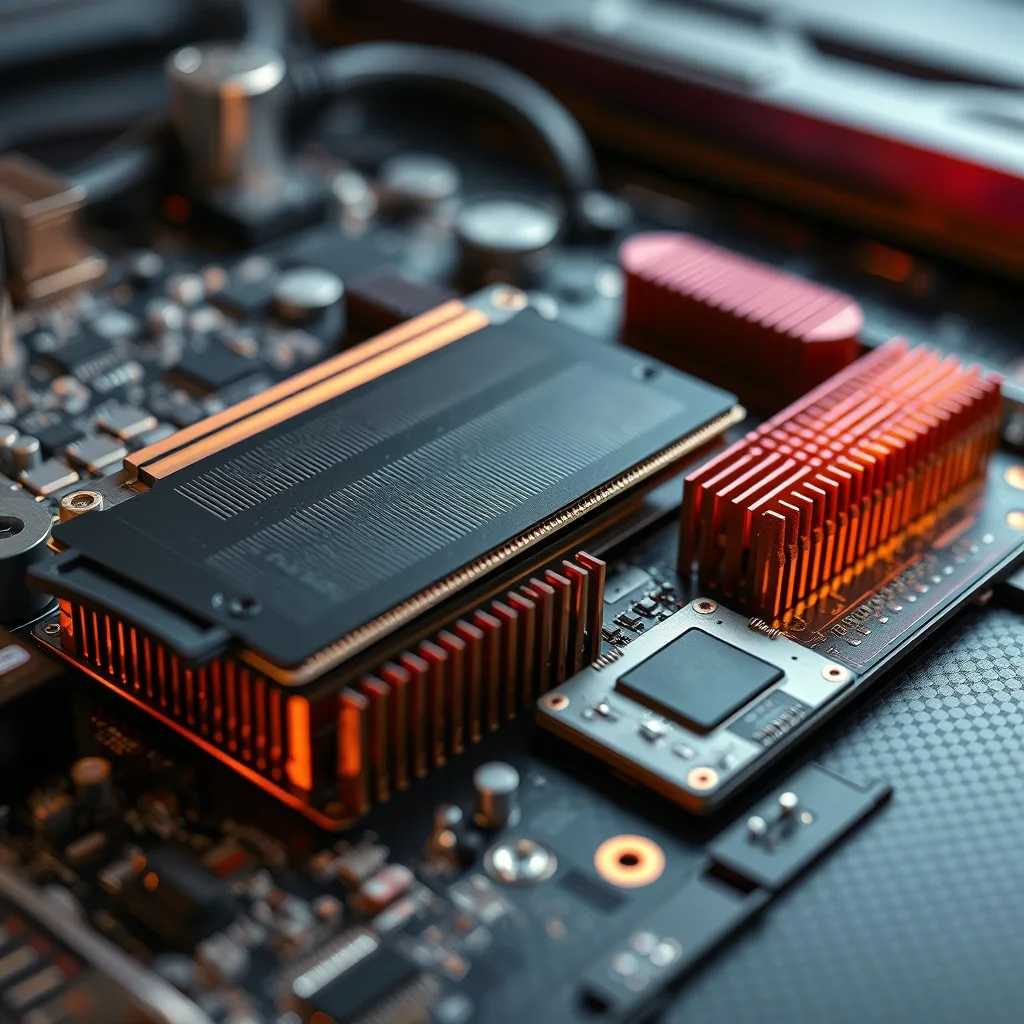 AI-generated
1. Executive Summary and Selection Criteria
The mobile computing ecosystem for artificial intelligence has reached a critical inflection point in November 2026. The widespread adoption of large-context language models and ultra-low-latency Mixture of Experts (MoE) architectures, such as Llama 4 Scout, DeepSeek-V4.1-Flash, and MiMo-V2.6-Pro, has shifted the traditional bottleneck from raw processing unit capacity to the memory hierarchy and interconnection sub-systems in mobile workstations and development laptops.
In this scenario, soldered LPDDR5X-type memory architectures have begun to show insurmountable limitations against the massive bandwidth demands required for loading and maintaining contexts exceeding 10 million tokens in unified memory. The convergence of PCIe 5.0 buses at x16 lanes in small form factor chassis and specialized memory standards redefine the limits of thermal and electrical performance in the mobile segment.
“Hardware design for AI at the Edge no longer relies exclusively on the computing power of NPU cores, but on the efficiency with which the memory subsystem eliminates KV cache access latency during autoregressive inference in ultra-extended contexts.” — Semiconductor industry analysts
The critical hardware selection parameters for high-performance mobile workstations currently are detailed below:
- Sustained Bandwidth: Minimum requirement of 150 GB/s per memory channel to avoid performance drops in models with over 70 billion active parameters.
- PCIe 5.0 Signal Integrity: Minimization of crosstalk and high-frequency attenuation in the interconnection between the dedicated GPU/NPU and high-density memory pools.
- Thermal Density Management: Passive and active dissipation capacity in modules up to 128 GB per socket without compromising the base operating frequency of the DRAM integrated circuits.
2. PCIe 5.0 Interconnection Architecture in Mobile Environments
The transition toward the PCI Express 5.0 standard in mobile platforms geared toward artificial intelligence has demanded a radical redesign of motherboards in workstations. With a transfer speed per channel of 32 GT/s, signal integrity management becomes the most complex engineering challenge for silicon manufacturers and OEMs.
Unlike desktop environments, where physical space allows for thicker traces and volumetric heatsinks, 16- and 18-inch mobile chassis operate under severe thermal constraints. This forces the use of advanced silicon equalization techniques to ensure that communication between the host processor and external graphic accelerators or ultra-fast storage units maintains a bit error rate (BER) below 10^-12.
| Bus Standard | Speed per Lane (GT/s) | x16 Bandwidth (GB/s) | Average Power Consumption (W) |
|---|---|---|---|
| PCIe 4.0 | 16 | 31.5 | 12 |
| PCIe 5.0 | 32 | 63.0 | 22 |
| PCIe 6.0 (Mobile pre-standard) | 64 | 126.0 | 35 |
The impact of PCIe 5.0 on the execution of models like DeepSeek-V4.1-Flash and Gemma 4 (12B) lies in the speed of downloading and uploading weights from NVMe storage to VRAM during dynamic context initialization. Reducing massive model load times from seconds to milliseconds drastically optimizes the workflow in local development environments.
3. Evolution and Thermal Performance of Advanced Memory Modules
For years, the SODIMM format has been the undisputed standard for laptop memory. However, the physical limitations of signal traces in SODIMM prevent exceeding transfer speeds above 6400 MT/s without compromising electrical stability, especially when configuring high densities of unified memory.
Modern modular memory standards (including LP-CAMM2 variants) have largely displaced traditional SODIMM in high-end mobile workstations of In latest-generation platforms. By utilizing surface compression contacts instead of angled insertion sockets, these layouts drastically shorten the length of electrical traces to the memory controller integrated within the processor.
Critical Technical Advantages over Traditional SODIMM
- Spatial Footprint Reduction: Board space savings of up to 64%, allowing for higher-capacity batteries or more efficient vapor chamber cooling systems.
- Optimized Signal Integrity: Elimination of stubs or parasitic branches typical of dual SODIMM design, allowing stable frequencies exceeding 8533 MT/s.
- Upgradability: Unlike LPDDR5X memory soldered directly to silicon, modular architectures preserve flexibility, allowing engineers to scale unified memory capacity up to 128 GB per module in optimized configurations.
- Unified Thermal Management: Flat contact surface that facilitates direct integration with graphene or copper heatspreaders, effectively dissipating heat generated under sustained inference loads.
4. Overcoming Bandwidth Bottlenecks for Large Context Models
The local execution of models with massive context capabilities, such as Llama 4 Scout with its native support for 10 million tokens, generates unprecedented pressure on the Key-Value Cache (KV Cache). As the input context grows, the size of the KV Cache expands linearly or quadratically, forcing the system to perform millions of random accesses per second to main memory.
If memory bandwidth is insufficient, the processing unit (NPU/GPU) enters memory starvation states, drastically reducing the tokens per second generated during the decoding phase. Current architectures mitigate this problem through three combined strategies:
- Dynamic KV Cache Quantization: On-the-fly compression of key and value tensors to lower bit formats via advanced algorithms executed by dedicated hardware.
- High-Performance Unified Memory Architectures: Use of 256-bit and 512-bit buses coupled to ultra-high-speed memory modules to achieve aggregate bandwidths exceeding 250 GB/s in portable devices.
- Attention Kernel Optimization: Deployment of optimized implementations in local execution libraries that reduce data traffic between external memory and processor internal registers.
| Memory Bandwidth (GB/s) | Short Context (8k tokens) | Medium Context (128k tokens) | Extended Context (1M+ tokens) |
|---|---|---|---|
| 100 | 45 | 18 | 4 |
| 180 | 72 | 34 | 11 |
| 256 | 98 | 55 | 24 |
5. Conclusions and Architectural Recommendations for Developers
The efficient deployment of next-generation advanced multimodal models in mobile workstations requires abandoning traditional hardware selection criteria based solely on the nominal amount of VRAM. Across modern silicon architectures, the critical metric is the symbiotic combination between the effective bandwidth of the memory bus and the transfer capacity of the PCIe 5.0 subsystem.
For infrastructure engineers, artificial intelligence developers, and technical content creators operating on the move, the applicable recommendations are clear:
- Prioritize Modular Configurations: Select equipment that allows memory expansion via high-density modules to ensure compatibility with future iterations of larger open-weight models.
- Verify PCIe 5.0 Certification on Main Lanes: Ensure that storage and secondary accelerators utilize full bandwidth to avoid bottlenecks when loading massive weights.
- Audit the Chassis Thermal Profile: Verify that the heatsink design maintains memory module temperatures below 85°C under continuous inference workloads with MoE models.