Español
 English
 Français
 Português
 Deutsch
 Italiano
The Reality of Industrial Autonomy: Critical Challenges in Deploying Autonomous Drones
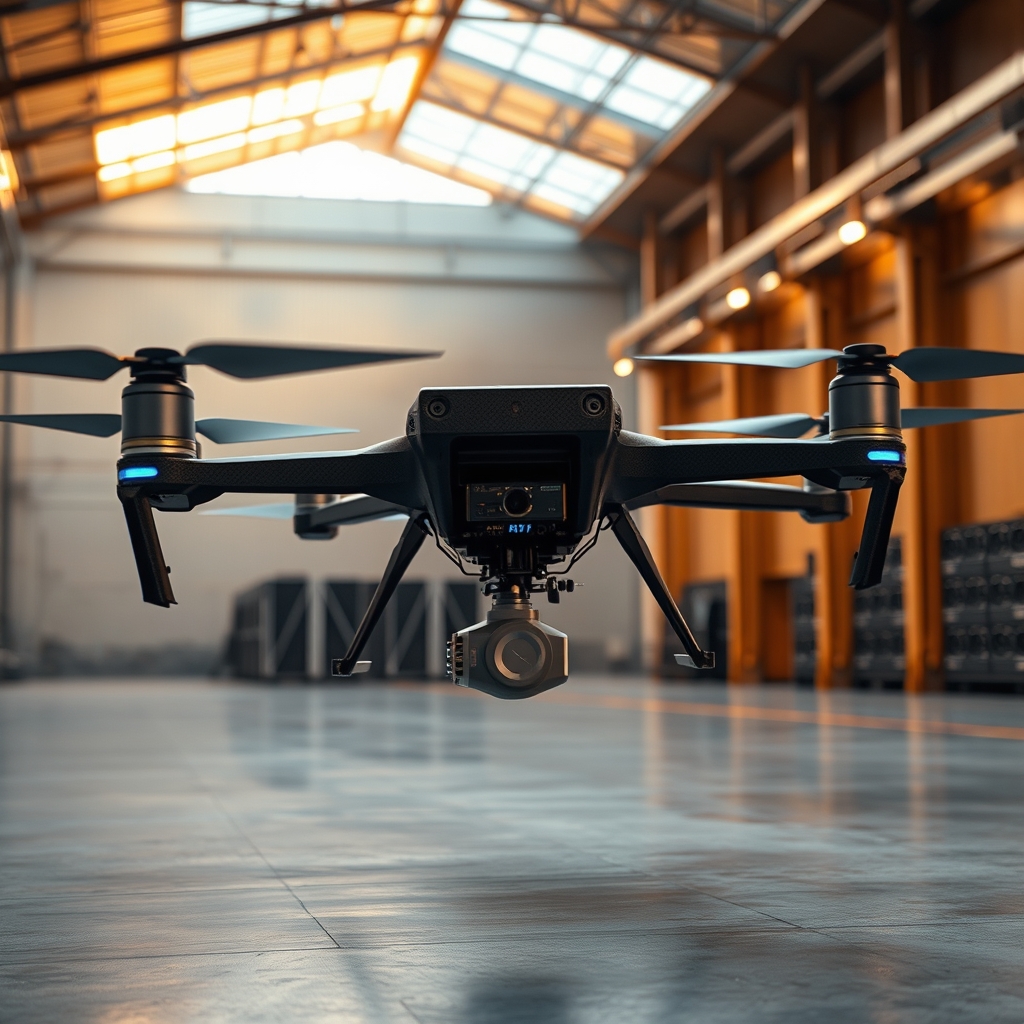 AI-generated
1. Context and Key Points
The adoption of Unmanned Aerial Vehicles (UAVs) in sectors such as infrastructure inspection, warehouse logistics, and perimeter surveillance has reached an inflection point. As companies seek to reduce operational costs and minimize human exposure to hazardous environments, autonomy emerges as the ultimate enabler. However, the gap between laboratory prototypes and the reliability required for 24/7 industrial operations remains significant.
This report analyzes the technical challenges defining the current frontier of aerial robotics. From the degradation of satellite navigation signals to the computational complexity of real-time Simultaneous Localization and Mapping (SLAM), engineers face a reality where the industrial environment is, by definition, hostile to conventional sensors. Understanding these challenges is essential for any Chief Technology Officer or operations manager seeking to integrate autonomous fleets into their workflows.
2. Key Technical Aspects
The core of the industrial autonomy problem lies in the triad of navigation, perception, and validation. In industrial environments, the reliability of GNSS (Global Navigation Satellite System) is often non-existent due to the presence of massive metal structures, electromagnetic interference, and the urban canyon effect in processing plants. This forces systems to rely on visual odometry and SLAM, techniques that require considerable local processing power.
Sensor fusion is the next bottleneck. While language models such as GPT-6.2 Astra or Claude Mythos 5.5 have revolutionized data processing, industrial drones operate under strict hardware constraints. The integration of data from stereoscopic cameras, LiDAR sensors, and Inertial Measurement Units (IMU) must occur with minimal latency to avoid collisions. The architecture of these systems must balance hardware weight with flight autonomy, a constant trade-off between on-board computing power and energy efficiency.
SLAM, in particular, faces challenges of cumulative drift. In dynamic environments where lighting conditions change or objects move, localization algorithms must be capable of re-mapping the environment without losing global reference. The implementation of deep learning techniques for real-time semantic segmentation allows the drone not only to avoid obstacles but to understand what constitutes an obstacle and what is a traversable part of the environment. The validation of these systems is perhaps the most underestimated challenge. Unlike traditional software, the validation of an autonomous drone requires testing in high-fidelity simulation environments that replicate extreme physical conditions. The ability to perform stress tests on digital twins before physical implementation is what separates successful deployments from failed ones. The robustness of flight control code, often written in C++ or Rust to ensure memory safety, must be formally verified to prevent erratic behavior. Finally, energy management and the thermal management of on-board AI processors limit mission duration. The optimization of inference models, through techniques such as neural network quantization and pruning, is fundamental for the drone to execute computer vision tasks without exhausting its battery in minutes.
3. Sector Impact
The maturity of industrial autonomy is reconfiguring business models. Companies no longer simply buy a drone; they acquire an "autonomy as a service" solution. This implies that the Total Cost of Ownership (TCO) shifts from hardware acquisition to software maintenance and data management. The ability to process and analyze data captured at the edge (edge computing) is now a key differentiating factor.
Standardization is another critical point. The lack of common protocols for communication between fleets from different manufacturers hinders scalability. Companies that successfully integrate their drones into existing asset management systems (ERP/EAM) gain a competitive advantage by automating not only inspection but also the generation of work orders based on drone findings.
The market is seeing a consolidation toward modular platforms. Drones that allow for the rapid exchange of sensors (thermal cameras, gas sensors, high-resolution LiDAR) offer greater operational flexibility. This modularity reduces the risk of technological obsolescence, allowing companies to update their detection capabilities without replacing the entire fleet. Cybersecurity has become a first-order concern. An autonomous drone is, in essence, a mobile IoT device. Protection against signal interception, GPS spoofing, and unauthorized access to telemetry data is mandatory. Companies that do not implement robust encryption protocols and hardware authentication expose themselves to significant operational and intellectual property risks.
4. Market Perspectives
Technical consensus suggests that full autonomy (Level 5) remains a long-term goal. Currently, the most strategic approach is "supervised autonomy." In this model, the drone executes complex missions autonomously, but under the supervision of a human operator who can intervene in case of anomalies. This configuration maximizes efficiency while maintaining an operational safety net.
Organizations are advised to prioritize interoperability. When selecting providers, the ability to integrate drone data into centralized analysis platforms is more valuable than individual flight specifications. Investment in data infrastructure is as important as investment in flight hardware.
Personnel training is another strategic pillar. Although the drone may be autonomous, maintenance staff and mission supervisors must understand the system's limits. Excessive reliance on automation without a deep understanding of sensor failures can lead to costly incidents. Safety culture must evolve to include robotic risk management. Finally, collaboration with regulators is essential. As regulations regarding Beyond Visual Line of Sight (BVLOS) flight become clearer, companies that have actively participated in pilot programs and demonstrated a history of safe operations will be better positioned to scale their deployments.
| Technical Challenge | Operational Impact | Mitigation Strategy |
|---|---|---|
| GNSS Degradation | Loss of position | Visual/LiDAR SLAM + IMU |
| Processing Latency | Evasion delay | Edge Computing / Quantization |
| Electromagnetic Interference | Link loss | Redundant communications |
| Software Validation | Erratic behavior | Digital Twins / Formal Verification |
5. Roadmap and Predictions
By the end of 2027, we expect to see a deeper integration of vision-language models in drone firmware, allowing operators to give instructions in natural language ("inspect the pressure valve in sector B") instead of programming complex flight paths. This evolution will drastically reduce the barrier to entry for end users.
On the long-term technological horizon, the standardization of autonomous charging ports and remote deployment hangars will enable truly persistent operations. Drones will be able to perform data loading and unloading cycles without human intervention, operating as a constant monitoring infrastructure.
The miniaturization of solid-state LiDAR sensors will continue to reduce cost and weight, allowing smaller and more agile drones to perform tasks that previously required much larger and more expensive platforms. The convergence between aerial robotics and generative artificial intelligence will be the main engine of this transformation.
6. Conclusion and Assessment
Industrial autonomy is not a destination, but a process of continuous improvement. For technology leaders, the imperative is clear: do not seek immediate perfection, but operational resilience. A system's ability to degrade safely (fail-safe) in the event of a sensor failure is more important than the sophistication of its navigation algorithms.
Organizations should focus on three immediate actions: audit the data infrastructure to ensure it can handle the information flow from drones, establish specific cybersecurity protocols for robotic fleets, and foster a culture of informed human supervision. Those companies that manage to balance technical innovation with pragmatic risk management will be the ones to dominate the next decade of industrial automation.