Español
 English
 Français
 Português
 Deutsch
 Italiano
The Trump Administration’s AI “National Champions” Program: Strategic Implications for Nvidia, Amazon, Microsoft, OpenAI, and Anthropic
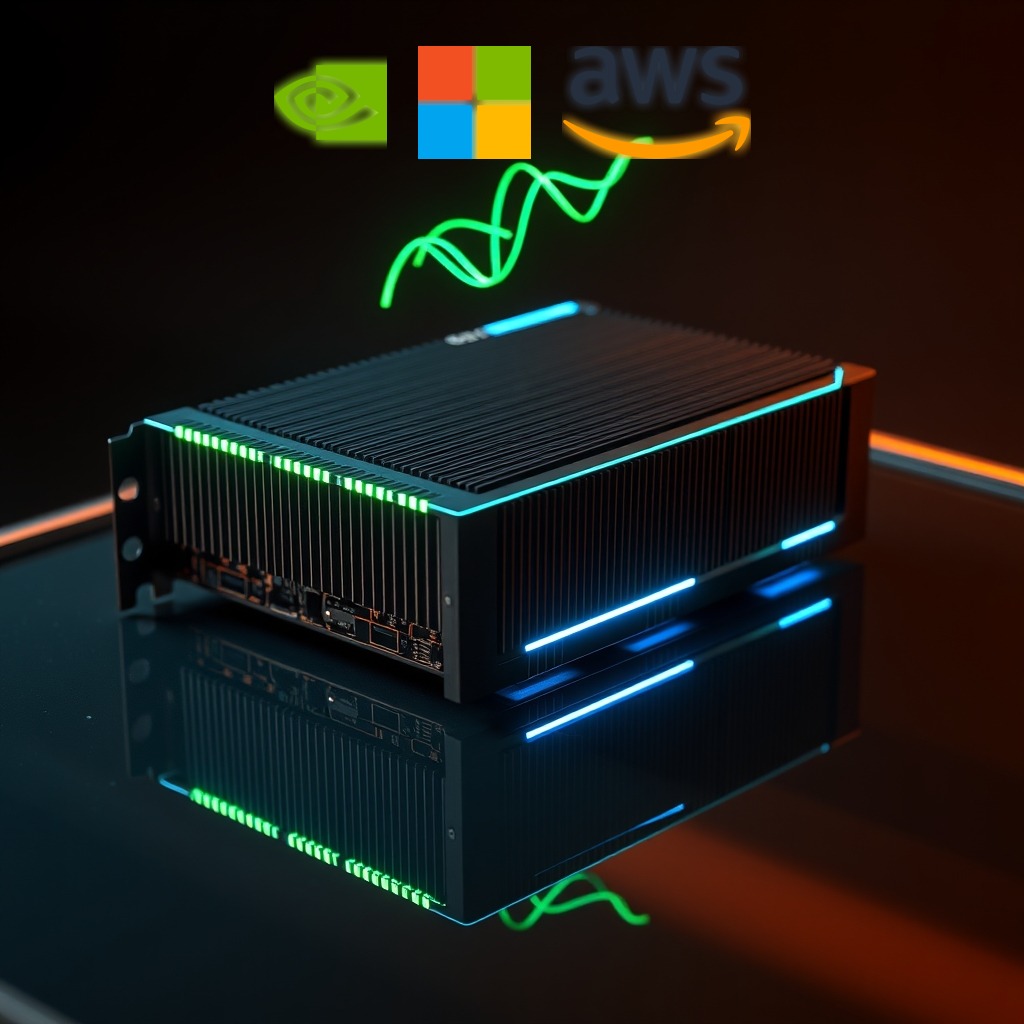 AI-generated
1. Context and Key Points
Reporting from The Wall Street Journal indicates that the Trump administration is close to publishing a list of AI "national champions," a designation intended to sharpen the competitiveness of U.S. companies in foreign markets. Nvidia, Amazon, Microsoft, OpenAI, and Anthropic appear among the first twenty-some candidates. The measure sits inside a broader policy push aimed at countering the rapid expansion of AI ecosystems in China and the EU, and seeks to channel federal resources, regulatory facilitation, and diplomatic support toward actors that can export high-value AI solutions at scale.
The announcement carries direct consequences for investment flows, for the architecture of the data centers that power large-scale models, and for the alliance strategy binding hardware vendors, cloud platforms, and research laboratories. Chief technology officers, compliance officers, and business development executives now have to assess how the designation reshapes their expansion plans, their operational costs, and their exposure to export controls on sensitive technology. The stakes are not abstract: a federal seal of approval can decide which vendor wins a sovereign AI tender and which one is left explaining why its stack was deemed a strategic risk.
2. Key Technical Aspects
The "national champions" program rests on a premise the industry has spent a decade proving: large-scale models demand an integrated supply chain that fuses cutting-edge silicon, high-performance cloud infrastructure, and robust alignment frameworks. Nvidia, as the dominant supplier of H100 GPUs and the incoming Blackwell generation, provides most of the compute needed to train and serve models such as OpenAI's GPT‑6.1 Astra. Those GPUs carry high-density NVLink interconnects and HBM3E memory, which is what makes it possible to hold KV-caches of several gigabytes in memory, an indispensable requirement once context windows stretch into the hundreds of thousands of tokens.
Microsoft, with its investment of more than thirteen billion dollars in OpenAI, has woven GPT‑6.1 Astra into Azure and the Copilot suite. The integration leans on an orchestration layer that distributes inference across GPU clusters and, in some workloads, across CPU instances paired with dedicated inference accelerators. Azure's architecture is tuned to keep response latency inside the envelope that critical enterprise applications tolerate, while the model itself benefits from DPO (Direct Preference Optimization) alignment and RLHF (Reinforcement Learning from Human Feedback) refinements that curb the propensity to generate misaligned content. Anthropic, backed by a four-billion-dollar investment from Amazon, runs its frontier models on AWS infrastructure. That relationship translates into preferential access to EC2 instances with H100 GPUs and, more recently, to inference nodes built on Graviton 3 with tensor accelerators. AWS also offers model-tuning services that let customers retrain specialized versions of Anthropic's frontier models on their own data, while keeping the security layer and the base model's intellectual property cleanly separated, a distinction that matters enormously when the customer is a defense ministry. On architecture, GPT‑6.1 Astra is built on a Transformer base that blends Mixture-of-Experts routing with dense layers to balance training cost against generalization capability. Anthropic's frontier models, for their part, keep a dense architecture but lean heavily on preference-alignment techniques that reduce the rate of unwanted responses in regulated environments. The engineering trade-offs differ, sparse routing buys throughput, dense stacks buy predictability, and the designation will reward whichever trade-off survives contact with government procurement. Nvidia's hardware support is central to the energy efficiency of these systems. Blackwell GPUs introduce fourth-generation tensor cores that lift performance per watt by roughly 30% over the H100 generation. That leap keeps operational costs per million tokens competitive, though the variability of electricity prices remains a decisive factor in where data centers get sited. The program also contemplates exporting AI solutions through software licenses and co-development agreements with local partners in Latin America, Africa, and Southeast Asia. The "national champion" designation grants companies a more flexible regulatory framework for transferring trained models, provided they comply with the requirements of the Office of Foreign Assets Control (OFAC) and the guidelines of the International Trade Commission.
3. Industry Impact and Market Repercussions
The official designation creates a seal of approval that can translate into competitive advantage in government tenders and in the pursuit of research grants. For Nvidia, the recognition reinforces its position as an indispensable provider of AI hardware, which could translate into increased demand for its H100 and Blackwell GPUs in markets where export regulations are tighter.
Microsoft and Amazon, as the primary cloud partners of OpenAI and Anthropic respectively, benefit from the heightened visibility of their AI platforms as critical services for defense and national security. That opens the door to long-term contracts with federal agencies and allied governments seeking to replicate U.S. AI infrastructure on their own soil. OpenAI and Anthropic, as model laboratories, gain access to additional research resources and greater ease in exporting their solutions under controlled licenses. The ability to offer localized versions of GPT‑6.1 Astra to international clients can accelerate adoption of generative AI in healthcare, energy, and manufacturing. On the competitive front, the measure intensifies pressure on Chinese conglomerates such as Baidu and Tencent, which have already launched models like advanced reasoning models. The U.S. can offer hardware, software, and support packages that surpass the combined offering of Chinese ecosystems, especially in regions where trust in the Western supply chain is a decisive factor. For investors, the news introduces a new valuation criterion: the probability of a company being included on the list of champions. Venture capital funds and institutional asset managers may rebalance their portfolios to favor the candidates, which in turn influences the market valuation of Nvidia, Microsoft, Amazon, OpenAI, and Anthropic. The risk cuts both ways, a company left off the list could face a discount precisely because the market reads exclusion as a signal of diminished strategic standing.
4. Market Outlook
Industry analysts broadly agree that the initiative represents an extension of U.S. industrial policy oriented toward technological sovereignty, a doctrine that treats AI infrastructure the way earlier eras treated semiconductors or aerospace.
From the perspective of chief technology officers, the immediate priority is to assess how much of their infrastructure touches export requirements. Companies operating data centers in jurisdictions with strict data regulations must review their model and data transfer policies, ensuring that information flows comply with the norms of the Bureau of Industry and Security (BIS). Cybersecurity officers must consider that the "national champion" designation also implies heightened attention from adversarial state actors. Protecting training pipelines and source code repositories becomes critical; any breach could be exploited to gain access to model weights or advanced alignment techniques. On alliance strategy, the consensus recommendation is that hardware and cloud providers keep deepening the integration of their software stacks. Nvidia could offer optimized kernel libraries for the attention kernels of GPT‑6.1 Astra, while Microsoft and Amazon could expand their model-as-a-service offerings with automatic compliance layers that verify conformity with export licenses in real time. Analysts also point out that the list of champions will be dynamic. Companies that demonstrate the ability to scale their models to long contexts, reduce operational costs, and maintain robust ethical alignment will be more likely to remain on it over the coming years. The designation is a starting gun, not a finish line.
5. Next Steps
In the short term, the Department of Commerce is expected to publish the official list before the end of the year, accompanied by an incentive framework that includes tax credits for the acquisition of AI hardware and grants for collaborative research projects between universities and companies.
In the medium term, the national champions will likely launch regionalized versions of their models, adapted to privacy requirements and local languages. These versions could include specific alignment adjustments for content regulations in each market, a technical and legal exercise that will test how far a single base model can be bent before it fractures. In the long term, the initiative could evolve into the creation of an AI export consortium, where members share security best practices, interoperability standards, and model certification protocols. Such a consortium would serve as a counterweight to standardization efforts led by China and the EU, and would give the U.S. a formal venue for coordinating the export of AI systems the way it once coordinated the export of aircraft and telecom gear.
6. Conclusion and Assessment
The "national champions" program is, at bottom, a bet that the U.S. can convert private AI leadership into state-backed export power. The five named candidates, Nvidia on silicon, Microsoft and Amazon on cloud, OpenAI and Anthropic on frontier models, map almost perfectly onto the integrated supply chain the policy assumes, which is precisely why the designation carries weight: it formalizes an alliance that until now existed only in contracts and equity stakes.
For technology leaders, the immediate imperative is to map the regulatory exposure of their pipelines and ensure compliance with export norms, while reinforcing hardware architecture and software integration to keep cost efficiency and latency in production environments under control. The deeper lesson is that the designation changes the calculus of alliance-building: hardware vendors, cloud providers, and model labs now have a shared incentive to present a coherent, certifiable stack to allied governments. Whether the program endures will depend less on the list itself than on whether the champions can deliver localized, compliant, and competitively priced AI to foreign markets before Chinese and European alternatives set the standard. The seal of approval is the easy part; the export machine behind it is what will be judged.